


How should loafers fit? The complete fit guide
Created: 2026.08.16 | Modified: 2026.08.16
Loafers should hug, not pinch. Heel slip, toe room, break-in — the full loafer fit checklist.
How should loafers fit? A perfect fit, never tight: the heel stays seated with only slight lift, and the throat of the shoe holds your instep firmly without digging in.
How should loafers fit? The short answer
A well-fitting loafer holds your foot in three places at once. The collar keeps the heel seated, the vamp or saddle presses gently across the instep, and the toe box stays out of the way entirely. Nothing pinches, nothing rubs against a bone, and you stop noticing the shoes two minutes after you put them on.
A loafer isn't a lace-up with the laces removed. A lace-up can be tightened until it holds; a loafer has to hold by shape alone. A trace of heel lift as you walk is part of how a laceless shoe works, and a slightly firmer instep does the job the laces would otherwise do. Judge a loafer by lace-up rules and you'll buy half a size too small.
What follows works whether you're buying online without trying anything on or checking a pair that has just arrived: five fit checks, a sizing method, what to do when loafers feel too tight, and what break-in changes.

The five fit checks every loafer has to pass
Five checks tell you almost everything: heel hold, toe length, toe width, instep pressure, and overall volume. Do them on a hard floor rather than carpet, standing and walking rather than sitting, late in the day when your feet are at their largest. Carpet flatters a bad fit; a kitchen floor tells the truth.
Heel: how much slip is normal
Some heel slip in loafers is expected and not a fault. Walk ten steps and watch the back of the shoe: a small lift that returns to the foot on each step is normal, especially in a new pair with a stiff sole. What isn't normal is the heel leaving the collar entirely, the shoe walking off at the top of the stair, or rubbing that turns hot within minutes. That means the shoe is too long, too high in the collar, or the wrong shape for your heel. Slip usually eases as the sole learns to flex.
Toe room: why there is no gap
Stand up and find the end of your longest toe, which is not always the big toe. Your foot should fill the footbed from heel to toe, so there is no need to leave space ahead of it. The leather is soft, will gently stretch where needed, and moulds to your foot with wear, which is why a perfect fit from the start is the right start. Toe box room matters just as much and gets ignored far more often: your toes should spread sideways rather than funnel into a point. If they press against each other more than they do barefoot, the shoe is too narrow at the front, whatever the length says.
Throat and instep: where loafers actually grip
The throat, the opening your foot slides through, is where a loafer earns its hold. It should lie flat against the instep with firm, even contact. A pressure line in one place, a red mark when you take the shoe off, or tingling across the top of the foot all signal too much instep pressure, usually a high-volume foot in a shoe cut for a lower one. Even, all-over firmness is right; a single hard ridge is not.
Width and volume: the check most people skip
Volume, the amount of foot between the sole and the instep, decides fit as much as length does: two people with identical foot length can need noticeably different shoes. High-volume feet feel the throat first. Low-volume feet feel heel slip first, and often find the shoe roomy everywhere except where it needs to hold.
If conventional pairs pinch across the joints, wide feet loafers built on an anatomically shaped last change the calculation: you no longer buy extra length to buy width, which is what leaves so many shoes loose at the heel. Measure, then compare against the VIBAe size chart rather than the number printed in your last pair.
| Fit check | Good fit | Poor fit | Does break-in help? |
|---|---|---|---|
| Heel slip | Slight lift as you walk; the heel stays inside the collar | The heel leaves the collar entirely, or the shoe flaps off | ✗ — a heel that escapes is a size or shape issue |
| Toe room (length) | Toes touching the front gently is normal | Toes are pushed to the front, or a large space in front of the toes | ✓ — the leather gently stretches where needed as it moulds |
| Toe box (width) | Toes splay sideways without being funnelled together | Pressure across the toe joints; red marks after wear | ✓ — a little, leather relaxes in width |
| Throat and instep | Vamp holds the instep flat and firm, no digging | Pressure ridge across the instep that does not ease within a week | ✓ — a firm instep usually softens with wear |
| Volume | Foot sits level in the shoe, no rattling and no cramping | Too roomy for low-volume feet, or tight over high-volume feet | — adjust with the removable Carbon Step™ footbed or a thin sock |
| One specific pain point | No single hot spot anywhere in the shoe | Pain in one fixed place regardless of size | ✗ — the shape is wrong for your foot; try another last |
Loafer fit guide: measuring and choosing your size
The durable method is short: measure both feet in centimetres in the evening, standing, then size from the longer foot and compare that number with the brand's own chart. Sizes don't carry reliably between brands, and a loafer that has to hold without laces is the wrong shoe to guess on.
Here's how to measure foot length properly:
- Tape a sheet of paper to a hard floor, one short edge against a wall, in the evening rather than first thing in the morning.
- Stand on it with your heel touching the wall and your weight fully on that foot. Sitting shortens the measurement, which is how people end up a half size under.
- Mark the tip of your longest toe, then measure from the wall to the mark in centimetres. Repeat for the other foot.
- Take the longer figure. A half size difference between feet is common, and you fit the larger one.
- Read that measurement against the size chart for the shoe you want, not against your usual size in another brand.
Two situations come up constantly in loafer sizing. If you land between two lengths, go up a size. The leather relaxes with wear and gently stretches where needed. And a familiar number doesn't transfer across brands, even inside a single unisex collection spanning sizes 35 to 48. Our walkthrough on How to get the correct fit goes deeper into reading your measurement against the chart; the store holds live sizing, stock, and price, and this loafer fit guide is a method rather than one number.
Loafers with actual room for your toes — work to weekend, no pinching. Explore Loafers & Mules
Loafers too tight: what to fix and what to accept
When loafers feel too tight, one of three things is happening: the shoe is too small, it's correctly sized but still stiff, or it's the wrong shape for your foot. Only the middle one resolves itself.
Too small announces itself as broad, spread-out pressure: toes that go numb, a burning line across the ball of the foot, or a big toe meeting the front of the shoe when you stand. That means length or width, and no amount of wear fixes it.
Correctly sized but stiff feels different. A firm instep eases within the first week or two, the sole resists flexing at first, and nothing goes numb at any point. That's the leather and the sole doing what they should.
The wrong shape hurts in one fixed spot while the rest of the shoe feels fine: a single seam over a bunion, a bone at the outside edge, a collar catching one heel and not the other. Sizing up won't move that seam; a different last might.
Vegetable-tanned leather softens and gently stretches where needed as it moulds to your foot, though it will not rescue a shoe that is a full size short. If the shoe is short, exchange it. If one spot hurts persistently, or if you have a foot condition that changes how pressure lands, please see a podiatrist or another health professional rather than trying to wear the problem out. Shoes can give your feet room; they can't diagnose anything.

How should loafers fit after break-in? Leather, socks and settling
After break-in, a loafer should feel moulded around your instep, because in a sense it has been. Breaking in leather loafers changes three things: the leather softens and takes the shape of your foot, the sole becomes more willing to flex, and the heel settles with less lift than on day one.
Vegetable tanning is the reason. Tanned with plant-derived tannins rather than chrome, the leather stays firm at first and then relaxes with body heat and wear, which is why the first week feels tighter across the instep than the second. It gently stretches where needed as it moulds, so a pair that feels close on day one is meant to.
The sole asks something of you too. Barefoot-style shoes fit low to the ground with a flexible sole and far less built-up support than a conventional shoe, so your feet start doing work that thicker, stiffer shoes were doing for them. Short wears at first are kinder than an eight-hour day straight out of the box.
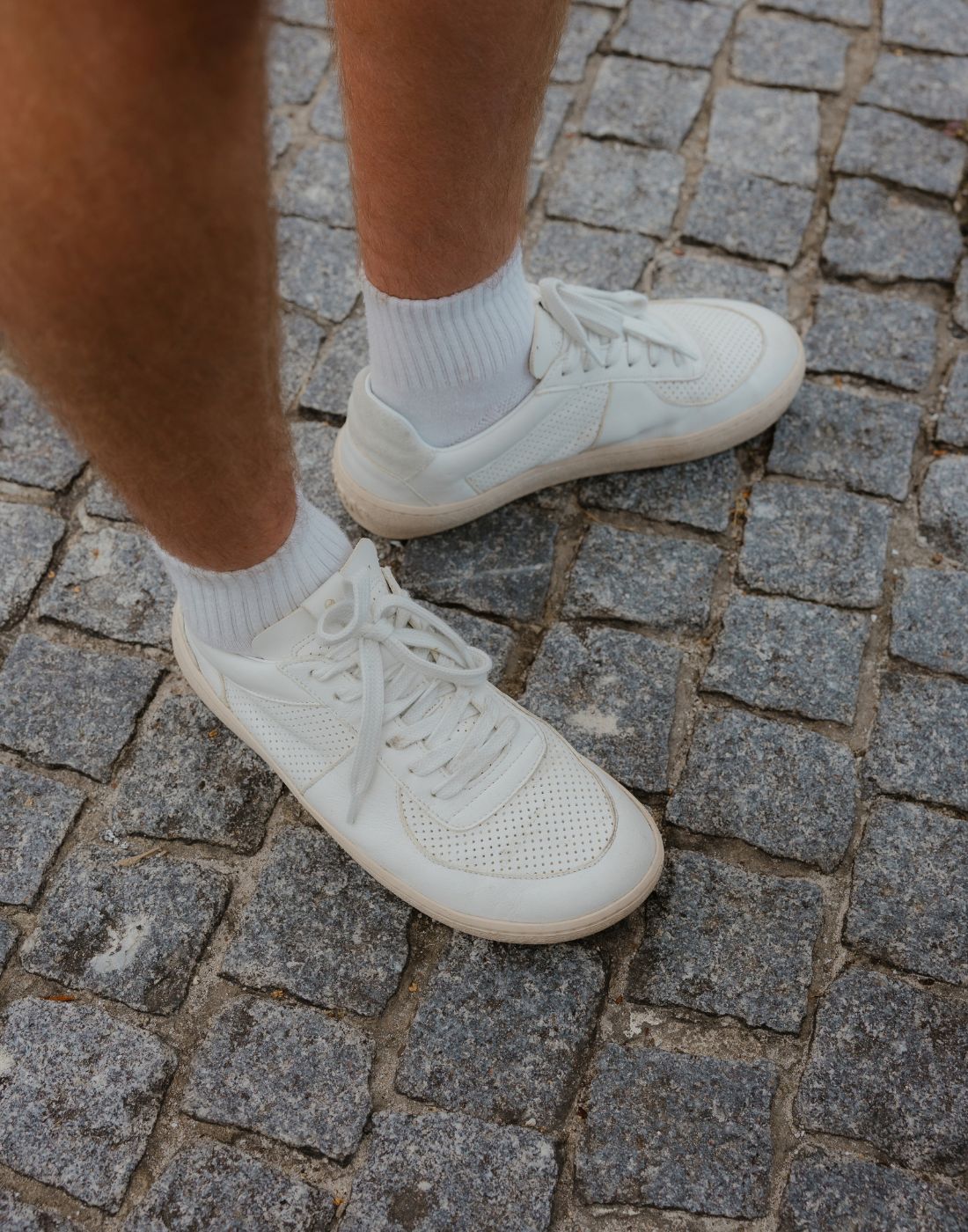
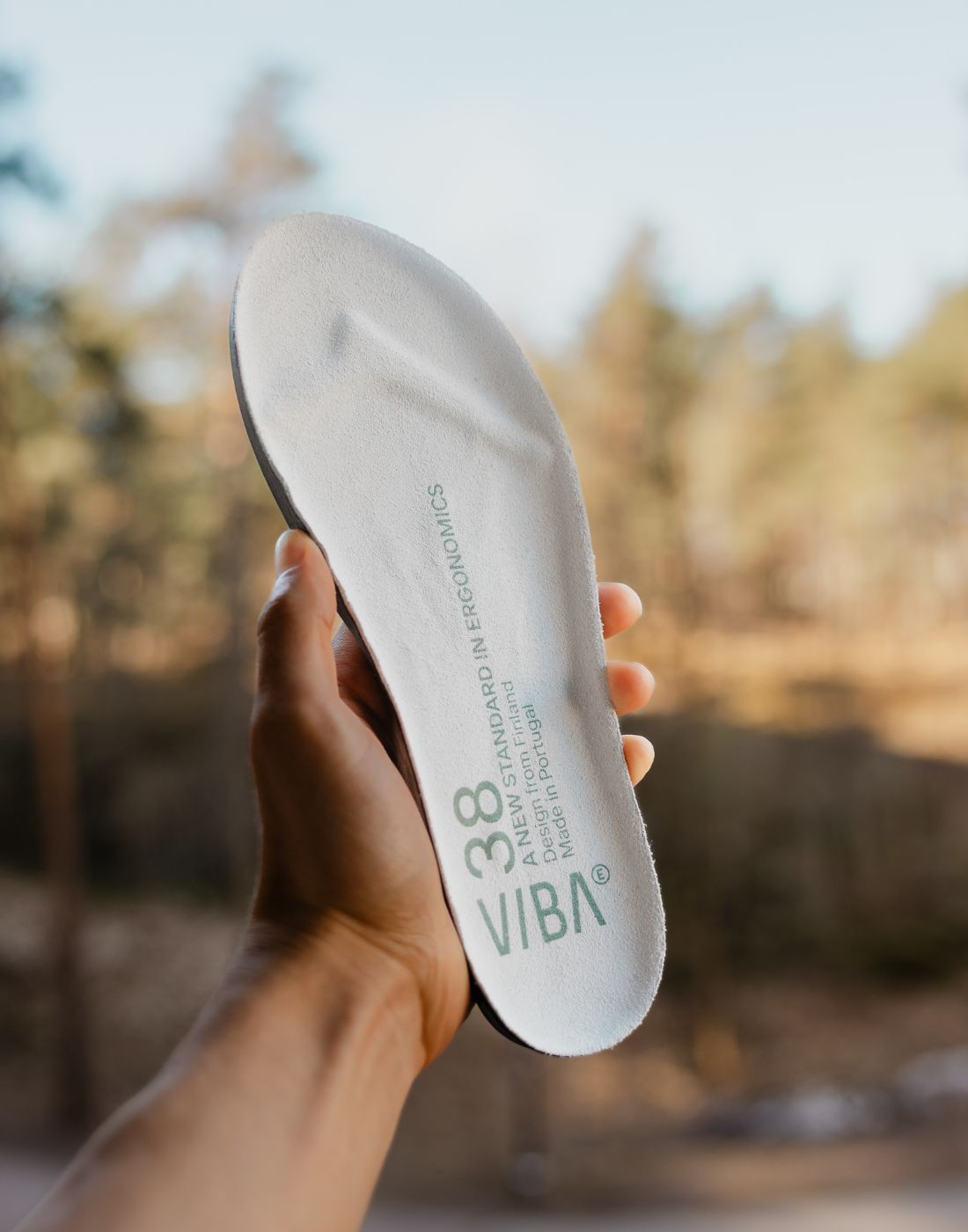
Two levers help in practice. Bare feet give the most room, no-show socks with loafers add a whisker of volume that can quieten mild heel slip, and a thick sock will often tip a well-fitted pair into feeling tight. The removable Carbon Step™ footbed adjusts volume directly: leave it in for a closer hold, take it out to free up space if the instep feels firm. Because it's replaceable, a worn footbed doesn't retire the shoe, which matters when you buy one pair of comfortable leather loafers instead of three cheaper ones.
Frequently asked questions about loafer fit
Should loafers feel tight at first?
Firm contact across the instep is normal in a new pair; tight anywhere else is not. Expect firm, even pressure over the top of the foot that eases within a week or two. Numb toes, or toes touching the front, mean the shoe is too small.
How much heel slip is too much in loafers?
Slight lift that returns to your heel on each step is normal in a laceless shoe. Too much slip means the heel leaves the collar entirely or the shoe threatens to come off on stairs, which points to excess length or a collar shape that doesn't match your heel.
Should you size up or down in loafers?
Measure first, then decide. If your foot length falls between two sizes, go up a size. The leather will gently stretch where needed as it moulds, and your foot should fill the footbed from heel to toe for the Carbon Step™ to work as it should. Take the bigger size only if you wear thick socks or prefer a looser feel.
Do loafers stretch over time?
Yes. Vegetable-tanned leather softens noticeably and gently stretches where needed as it moulds to your foot. That is why VIBAe loafers are meant to start as a perfect fit rather than roomy.
Can you wear loafers with socks?
Yes, and the choice affects fit. Bare feet give maximum room, while no-show or thin socks add a small amount of volume that can reduce mild heel slip and keep the lining fresher. Thick socks usually make a correctly fitted loafer feel tight, so try them before committing to a winter pairing.
Your loafer fit checklist
Run this list once when a new pair arrives, standing on a hard floor at the end of the day. If all five pass, you have the right size.
- Heel: slight lift that returns on each step, no rubbing that turns hot, no escape at the stairs.
- Toe length: toes may touch the front gently.
- Toe width: toes spread sideways as they do barefoot, without pressing against each other.
- Instep: firm, even contact across the throat, with no single pressure ridge and no red marks afterwards.
- Volume: the shoe holds your foot without gripping; adjust with the Carbon Step™ footbed or a thin sock if it sits between the two.
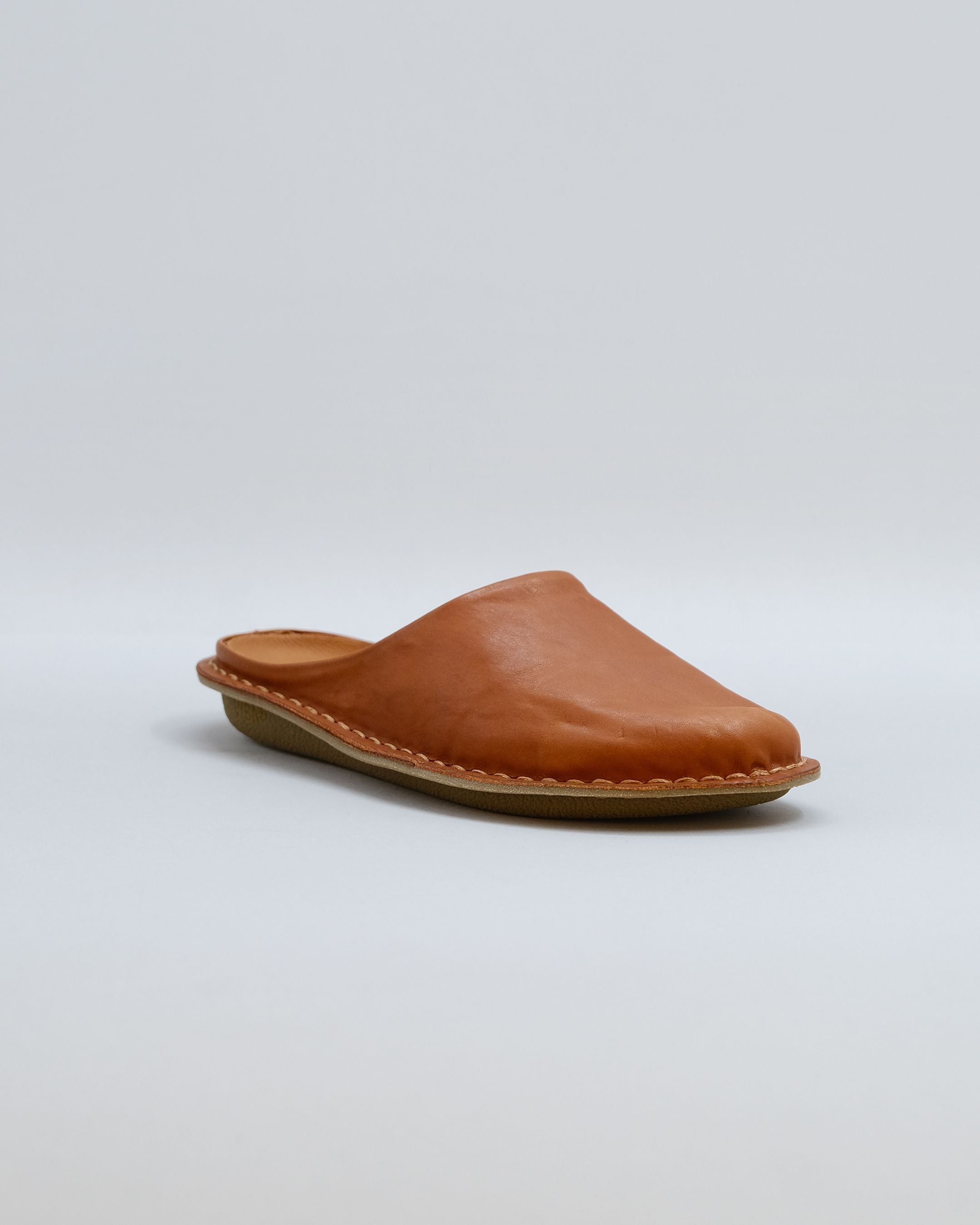
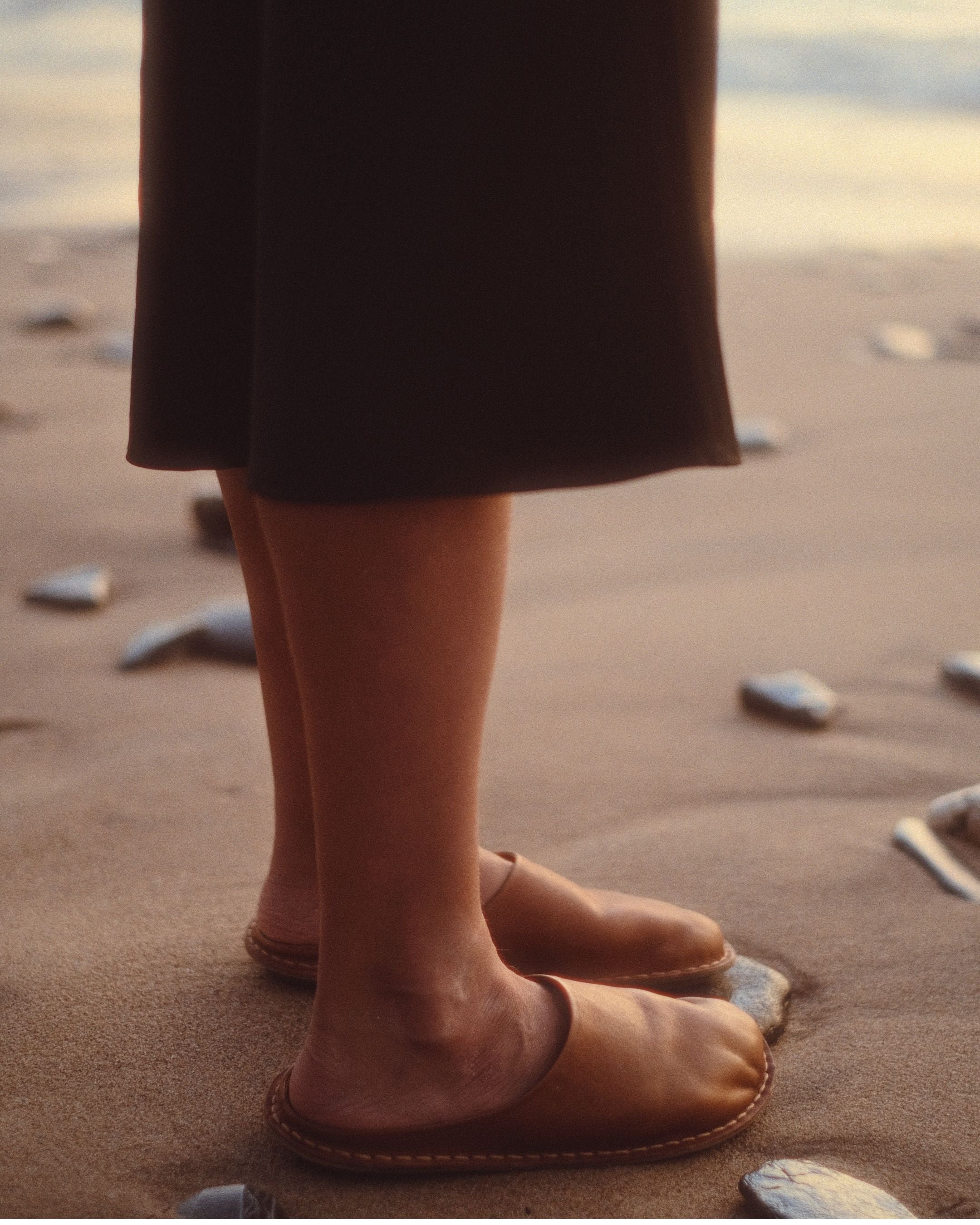
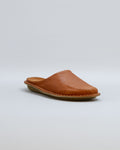
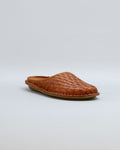
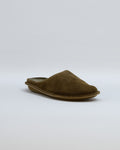
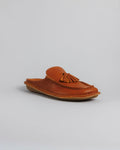
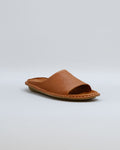
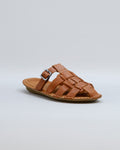
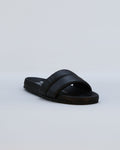
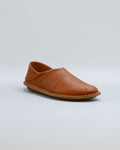
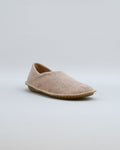
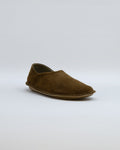
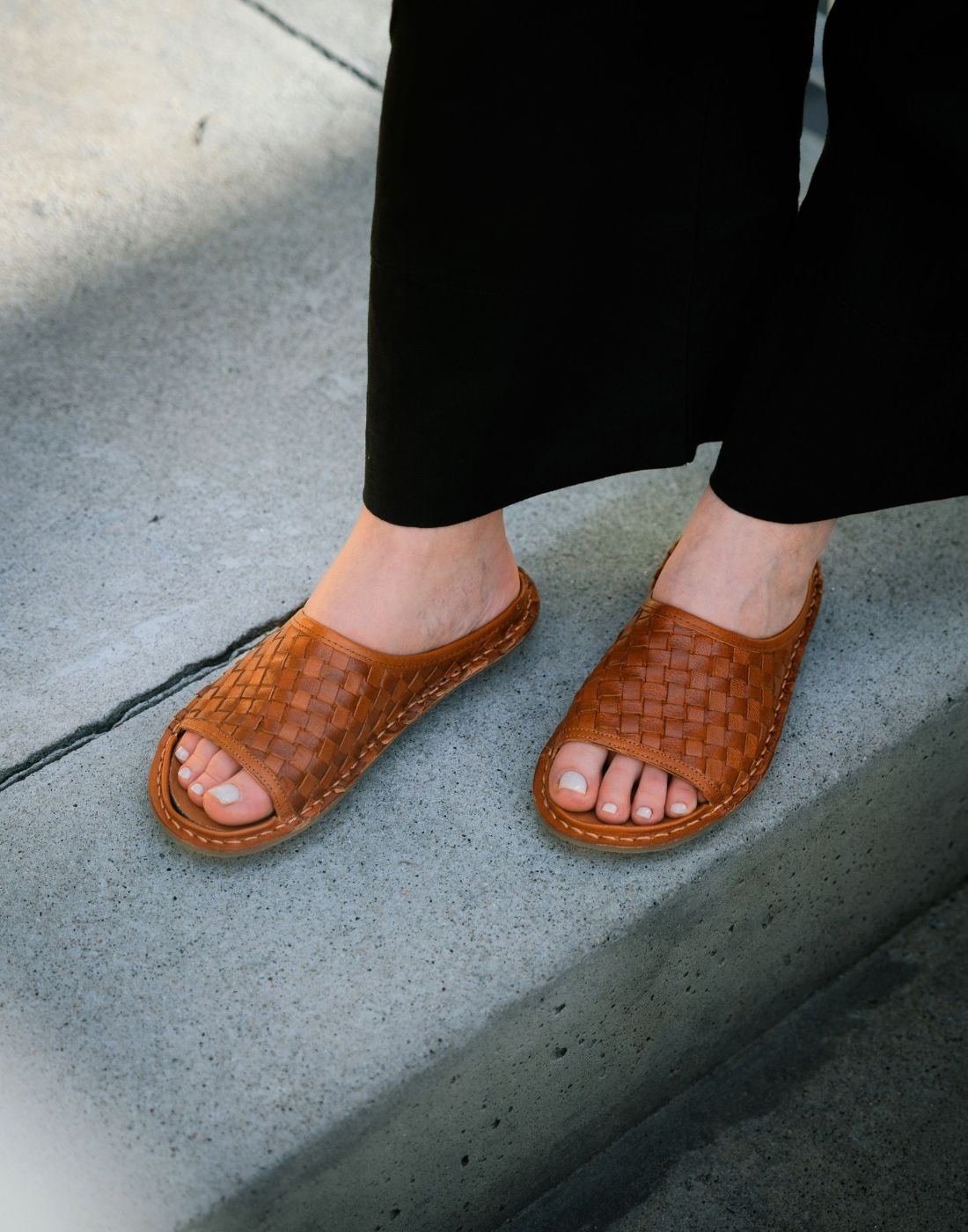
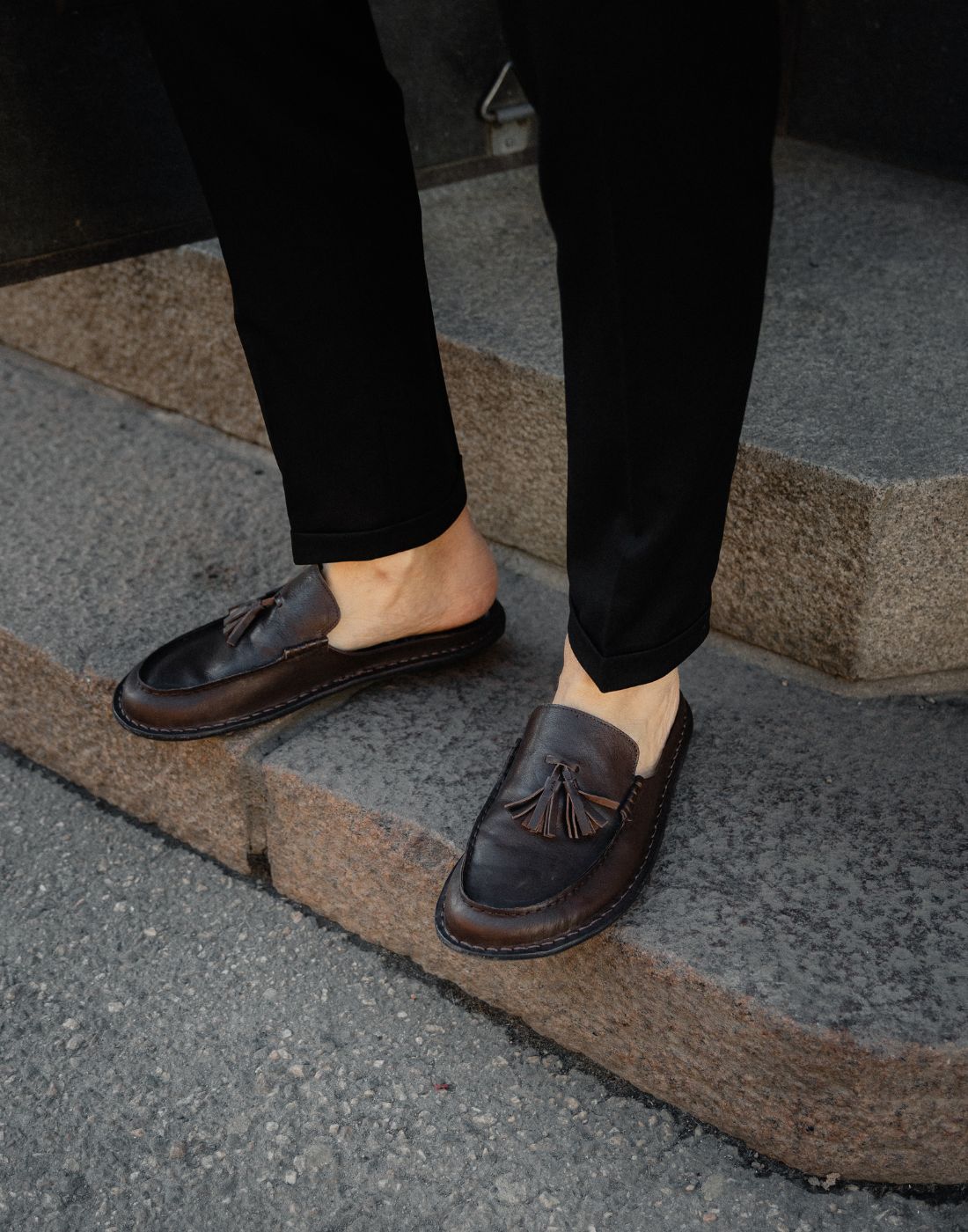
Both of our slip-on shapes are handmade in Portugal at the same family-run factory, in leather tanned with plant-based tannins and built on a wide, low-drop last. The TRIBECA loafers lean sharper and more architectural; the ROMA mule is the softer, rounder open-back shape most people reach for first. Both take the same replaceable footbed, and both come back into circulation through Pre-Loved resale when their first owner is ready to pass them on. We're not perfect on any of this, but we'd rather tell you exactly how the shoes are made than describe them in adjectives.
Most of us started with ROMA. One pair in, you'll understand the fuss. Shop ROMA