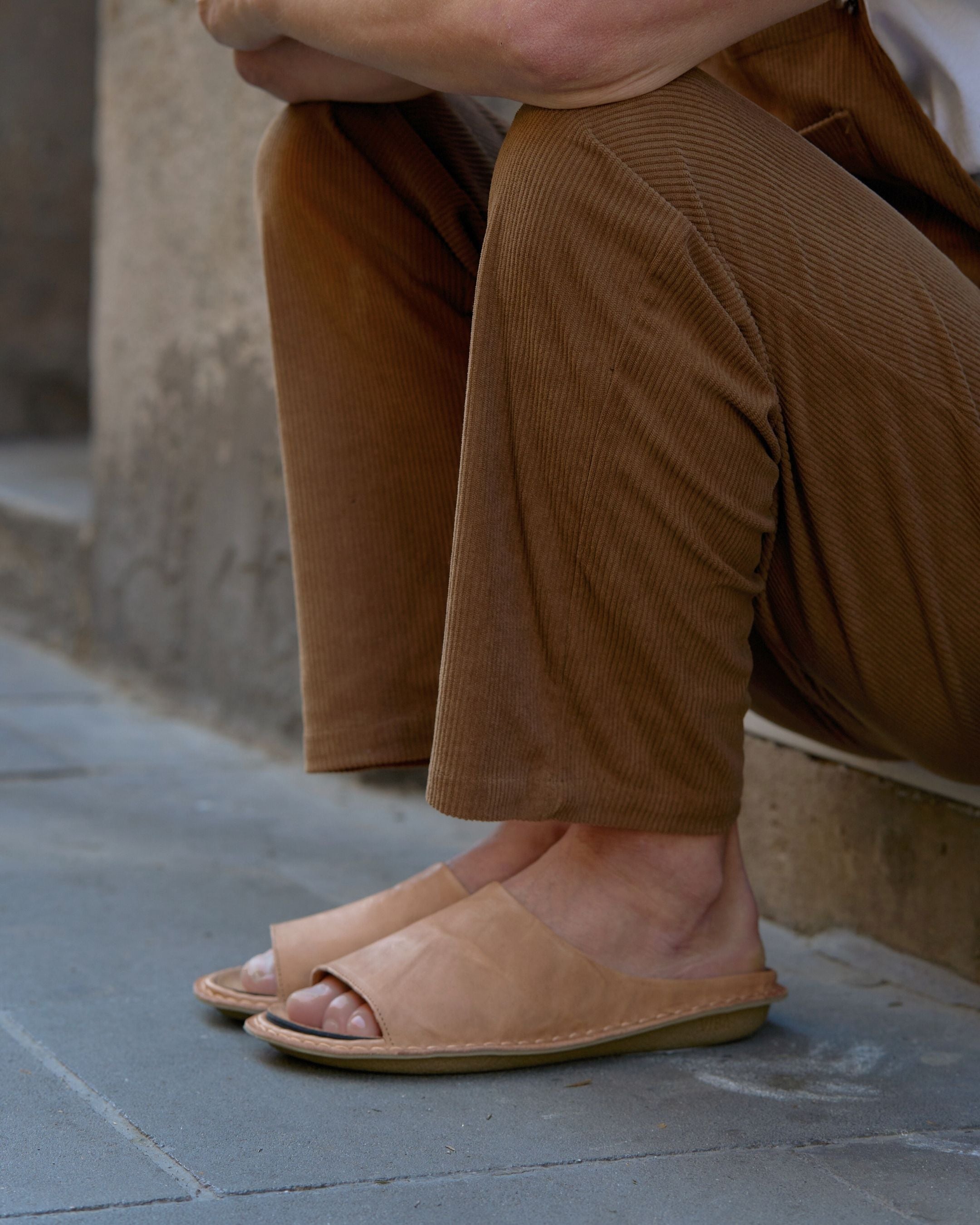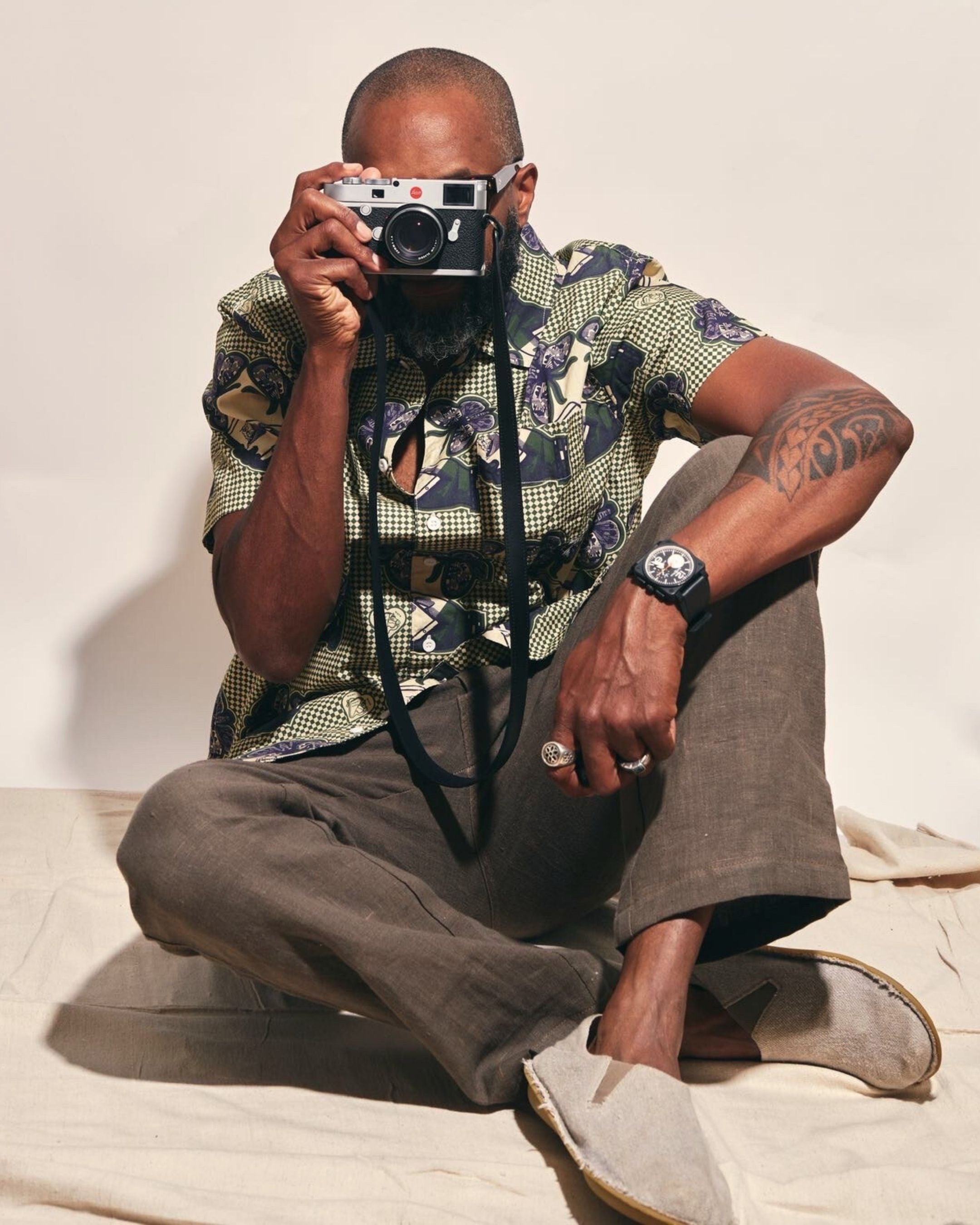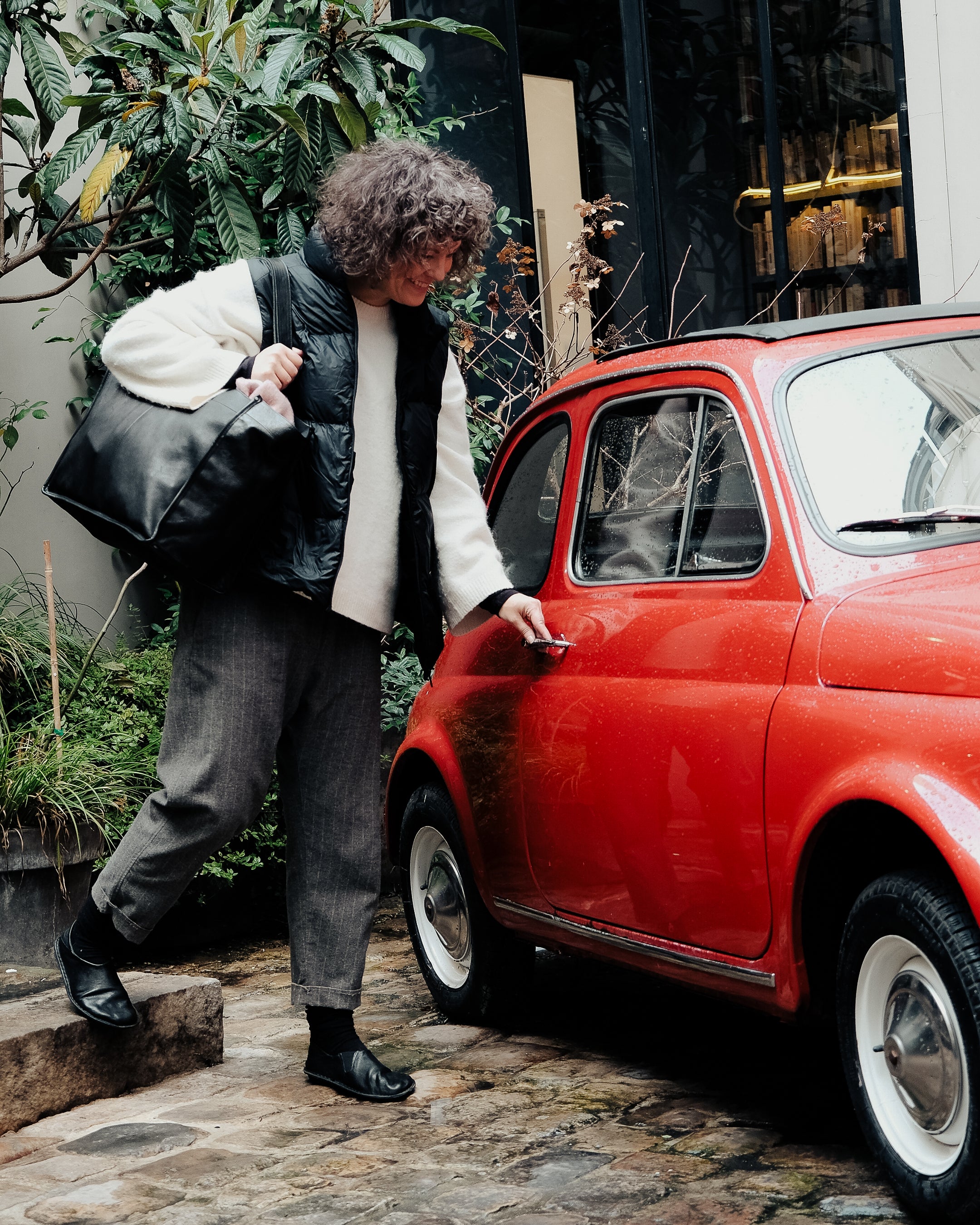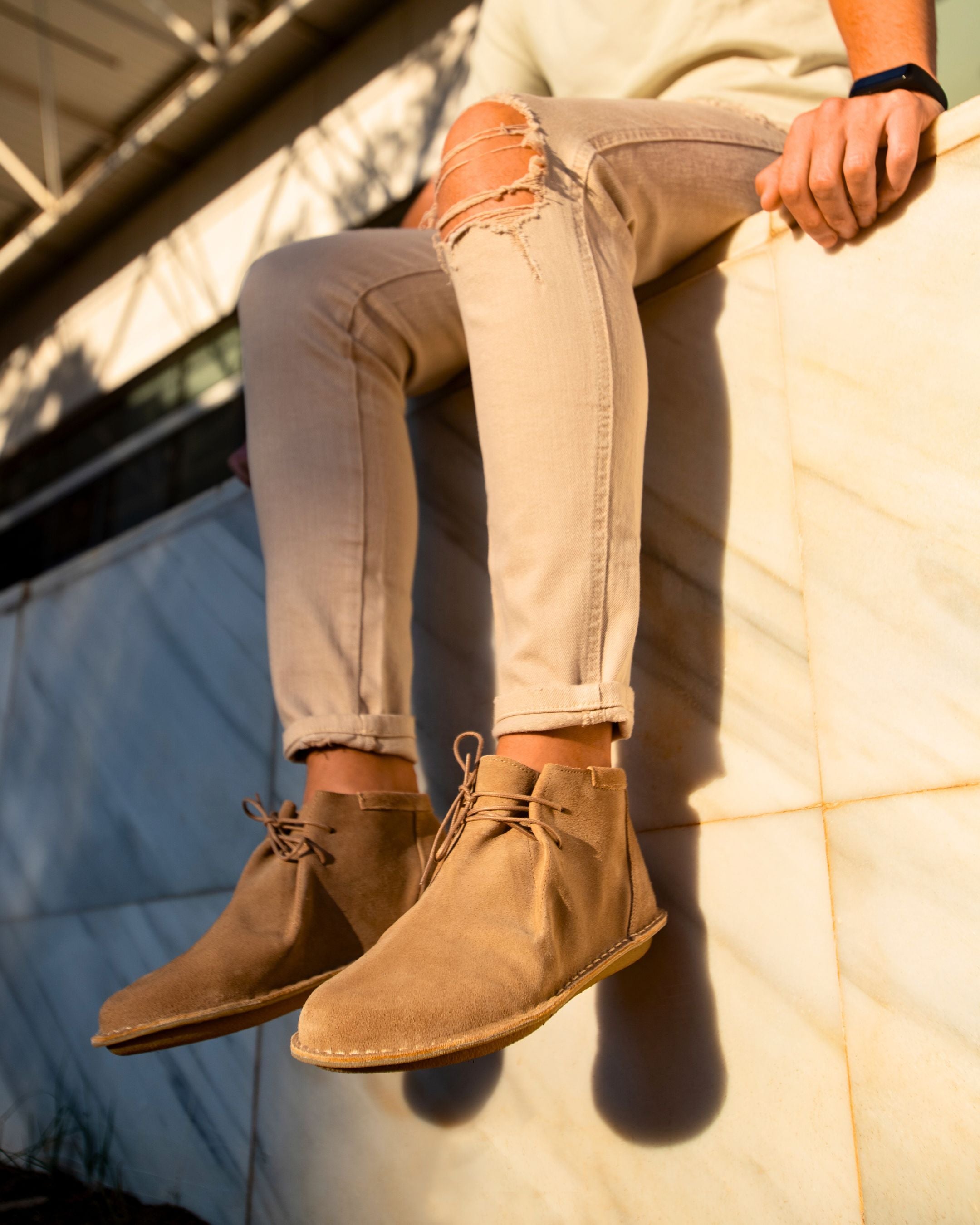


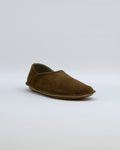
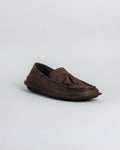
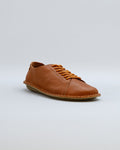
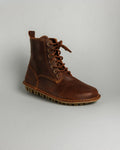
Shoes for wide feet need width, not length. Sizing up adds length at the heel and toe while the forefoot stays tight. The fix is a foot-shaped last with a wide toe box, chosen by measuring foot length and width at the widest point and matching both to a size chart.
The short answer for wide feet
Shoes for wide feet are a shape problem, not a length problem. A broad foot needs a last that stays generous across the forefoot and lets the toes splay, which is why sizing up so rarely works: it adds length and a little depth, not width where you actually need it.
If you've been buying a size longer than your feet for years and living with a heel that slips, you're not doing anything wrong. You're compensating for a shape that was never going to fit. Search "shoes for wide feet" and you'll turn up plenty of lists; what settles it is your own forefoot measurement held against the shape of the shoe.
- Measure width as well as length. Two numbers, five minutes, one sheet of paper.
- Know what your forefoot needs. Width at the ball of the foot is where most fits fail, not at the toes.
- Understand the difference between a wide fitting and a wide toe box. They solve different problems, and only one changes the shape at the front.
- Check a size chart rather than guessing. Sizes run in centimetres, and the size you've always bought is a habit, not a measurement.
Why sizing up doesn't make shoes for wide feet fit
What you want is a shoe that stops pressing across the ball of your foot from the first wear. Length won't give you that. A last, the foot-shaped form a shoe is built around, is a three-dimensional object, and every size in a run is the same shape scaled up. Add a size and you gain heel-to-toe distance and a little depth. The forefoot widens only fractionally, because the proportions stay where the pattern maker put them.
The results are familiar. Your heel lifts out on stairs. The shoe's flex line sits past your ball joint, so the upper creases in the wrong place and the leather buckles instead of folding. And the front still tapers towards a point, which means your big toe is still being steered inwards by a shoe that's now too long. Sizing up for width is a common workaround and an unreliable one: it can feel like relief for a week and like a different problem for a year, as the heel rubs and your foot slides forward on every downhill.
VIBAe doesn't make half sizes. If you land between two sizes, prefer thicker socks, or simply like a looser feel, go one size up. Vegetable-tanned leather will gently stretch where needed as it warms to your foot, so a fit that's a touch generous on day one settles rather than sags.
How to measure your foot width at home

Five minutes with a sheet of A4 will tell you more than a decade of buying by habit, and it's one of the most effective ways to avoid a return. Knowing how to measure foot width properly takes a pencil, a tape measure and a floor. Do it standing, because a foot under load is wider than a foot in the air.
- Measure at the end of the day, when your feet are at their fullest after walking and standing.
- Put a sheet of paper on a hard floor with one edge against a wall, and stand on it with your heel touching the wall and your weight through that foot.
- Trace around the foot with the pencil held upright, not angled underneath, or you'll draw a foot smaller than the one you have.
- For length, mark the back of the heel and the tip of your longest toe, then measure between the two marks in centimetres.
- For width, find the widest points across the ball of the foot, mark both, and measure straight across.
- Repeat for the other foot. Your two feet are rarely the same size, so work from the larger one.
- Do the whole thing again in the socks you'll actually wear if those are thick wool ones.
Your length figure tells you which size to order. Your width figure tells you something the length never will: whether a tapered last has any chance of working for you. Most people have never taken that second measurement, which is why a foot length and width chart is more useful than a length conversion alone. The VIBAe size chart covers EU 35–48 (22.0–30.7 cm) with UK and US equivalents, so you can translate your centimetres directly.
Get the right fit first time — check the size chart, and go one size up if you're between sizes. Check the Size Chart
Wide fit vs wide toe box: two different promises

This distinction decides most purchases, and shop labels rarely spell it out. A wide fitting takes a conventional, tapered last and scales it outwards: the whole shoe gets broader, from heel to forefoot, while the front still narrows towards the big toe. A wide toe box changes the shape at the front instead, so the widest part of the shoe sits where the widest part of your foot sits and your toes can fan out. Our deeper guide to wide toe box shoes covers that shape change in more detail.
Which one you need depends on where your fit fails. If the whole shoe feels tight, including the midfoot and the topline, a wide fitting addresses it. If the shoe fits everywhere except that last third, and your big toe is being angled inwards, width alone won't help you: the taper is the problem. Plenty of feet want both, and plenty of broad feet find that a generous wide fitting delivers a loose midfoot they never asked for.
| Wide fitting | Wide toe box (anatomical last) | |
|---|---|---|
| What changes on the shoe | The same tapered last, graded outwards; a broader shoe overall, often with more depth | The shape of the front section itself: rounded or squared rather than pointed, widest at the forefoot |
| Where the room lands | Spread across heel, midfoot and forefoot, thinning out towards the point | Concentrated across the forefoot and toes, where toe splay actually happens |
| Who it suits | Feet that are broad and deep throughout, including high insteps and full midfeet | Feet with a broad forefoot, toes that press outwards, or anyone who wants the foot to spread under load |
| The trade-off | Can leave a roomy midfoot and heel you don't need; letter grades vary between makers | One shape can't suit every foot, and a flexible, low-drop sole takes an adjustment period |
| Underfoot | Varies by maker | Carbon Step™ footbed (removable on most styles), 11 mm at the heel, 14 mm at the arch, 7 mm at the front |
UK width fittings, E to 4E, and the anatomical last
Search wide feet shoes UK and you'll mostly get letter fittings: D, E, EE, 4E and their variants, laid out as though they were a standard. They aren't. Each maker sets its own grading against its own base last, so two shoes both marked EE can measure differently across the forefoot, and an E, EE or 4E width fitting only means something relative to that one brand's medium. Any UK shoe width guide you find online is, in practice, a guide to how one factory grades its patterns.
An anatomical last works from the other direction. Rather than adding a separate width code on top of a narrow base shape, the last is cut to the outline of a foot in the first place, so the room lives in the shape of the shoe. That's why VIBAe makes one width and one unisex collection across EU 35–48, from the same family-run factory outside Porto where the shoemaking family works alongside around a hundred other artisans. Sizing becomes a length conversation again, which is how it should have been all along.
Be clear about the limit, though: one last cannot suit every foot. A very high instep may find the topline firmer than you'd like, and if you have a wide forefoot with a narrow heel, a shoe that fits your toes beautifully may still need a lacing adjustment or a thicker sock at the back.
What actually makes shoes for wide feet roomy across the forefoot
Toe box shape, and the first sign of a bad fit
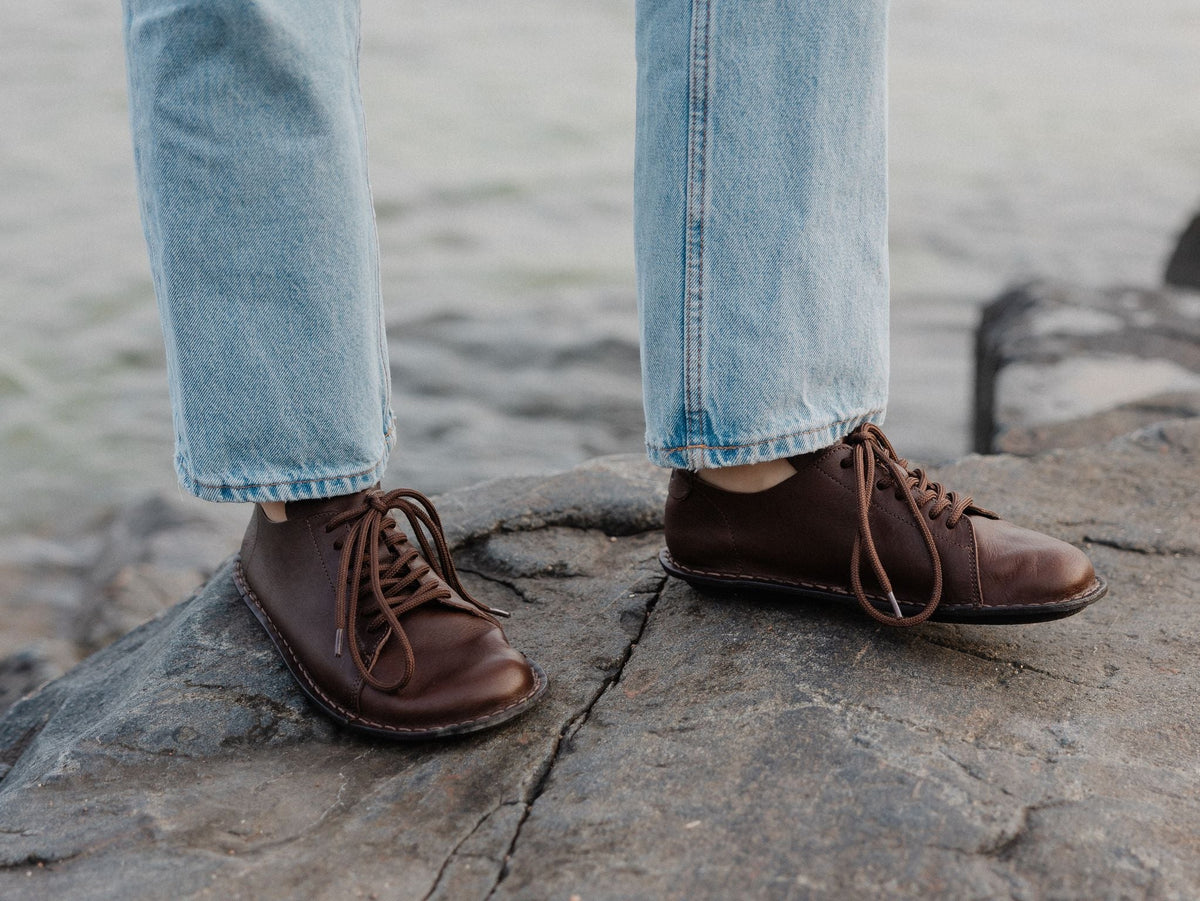
You can read most of a shoe's fit before you ever put it on. Look at the front from above: does it follow the line of a toe row, rounded or gently squared, or does it converge on a point somewhere over your second toe? Look at the widest part of the upper. Good news looks like leather that folds softly when you flex it. Bad news looks like leather pulled taut, with a hard shine across the ball joint. Wide toe box shoes are sold under a dozen different names, so trust the outline of the shoe rather than the label on it.
Upper material, lasting and flexibility
VIBAe uppers use vegetable-tanned leather that softens with wear. It is made from food-industry by-products in LWG-audited tanneries. The uppers sit on a natural-rubber outsole that flexes to let the foot spread; soft leather is still no substitute for the right shape at the last.
What the footbed does
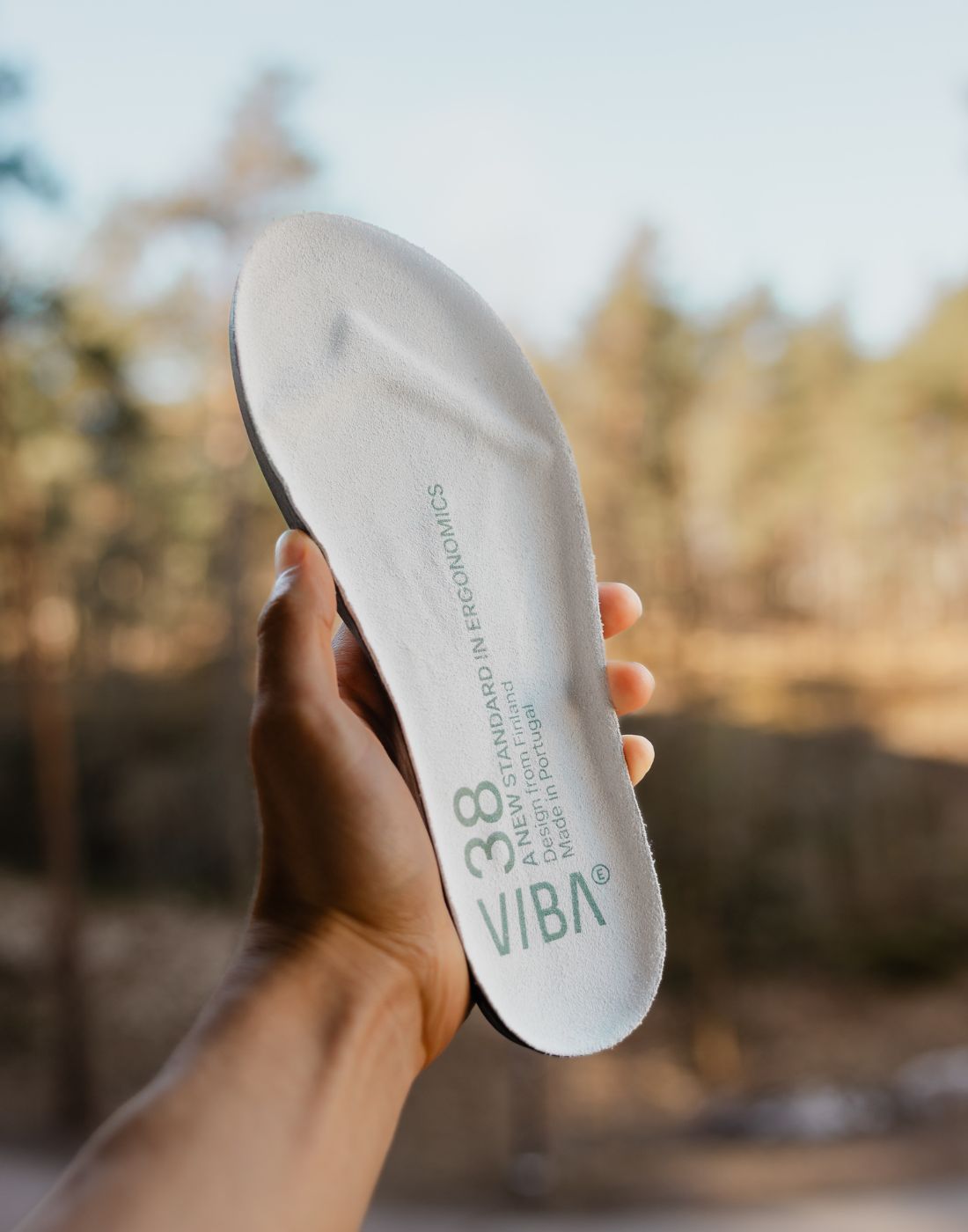
Every pair carries the Carbon Step™ footbed, removable on most styles, built to the 11/14/7 Formula: 11 mm of cushioning at the heel, 14 mm of support at the arch, 7 mm of cushioning at the front. Because it lifts out, the depth of the shoe can be adjusted to your foot rather than the other way round, and when the footbed wears out before the shoe does, you replace the Carbon Step™ footbed and keep wearing the shoes. The same logic runs through Pre-Loved, VIBAe's resale and recycling programme with partner Ninyes: a pair that no longer suits you can find someone it does.
Choosing a VIBAe style for a broader foot
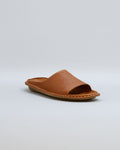
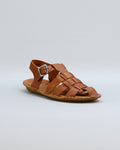
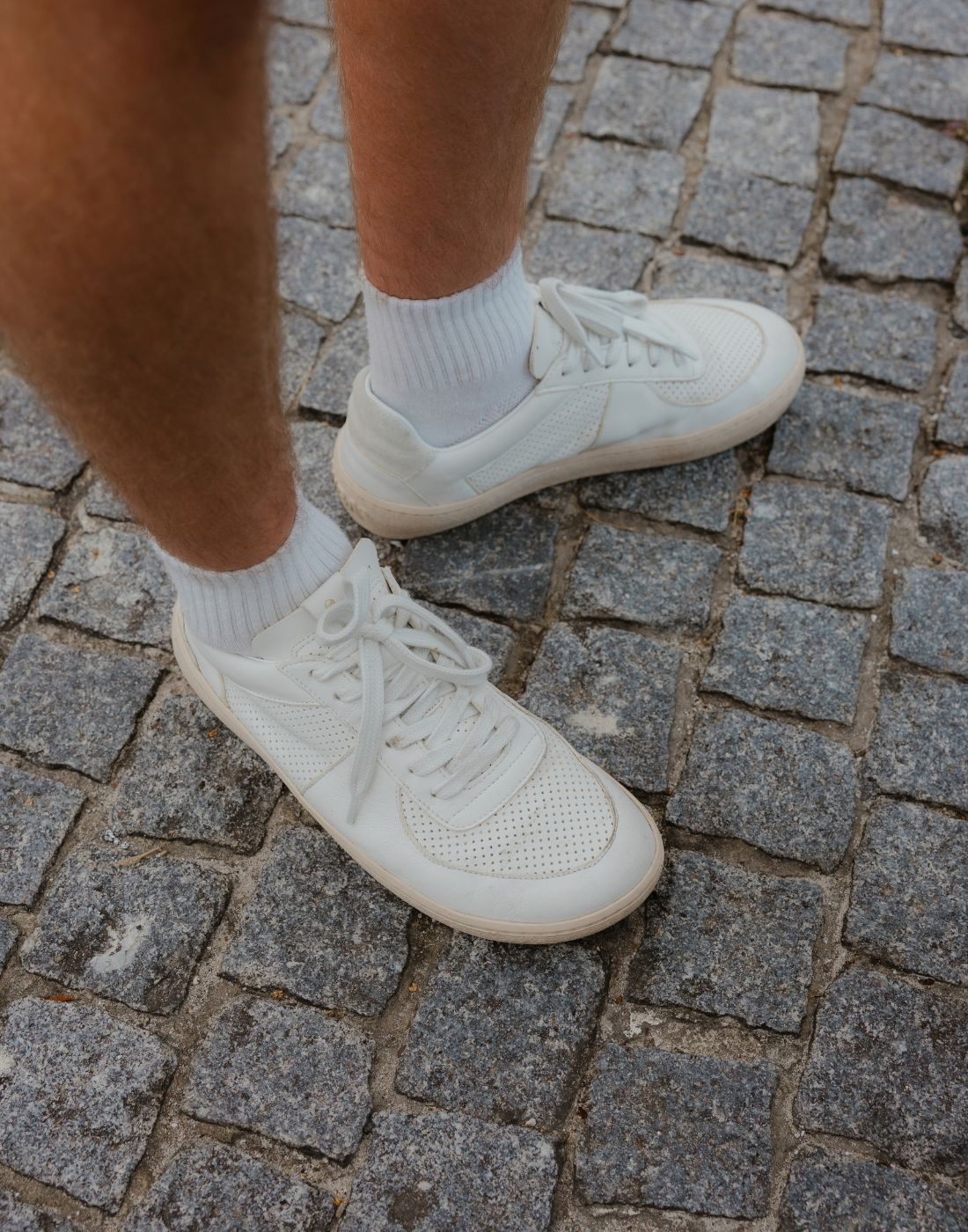
Match the style to your week, not to a trend. Round-ups of shoes for wide feet tend to sort by brand; sort by your days instead, by what you stand on and how long you're standing on it. Everything is handmade outside Porto, unisex, and runs EU 35–48, so the decision is about how you live rather than which shoe is widest. Most styles sit on a roomy, foot-shaped last (the PORTO slide is the narrower exception), which has a second benefit: the silhouettes are quiet on purpose, so a pair bought this year still looks right next to the pair you bought three years ago.
Everyday and work-to-weekend
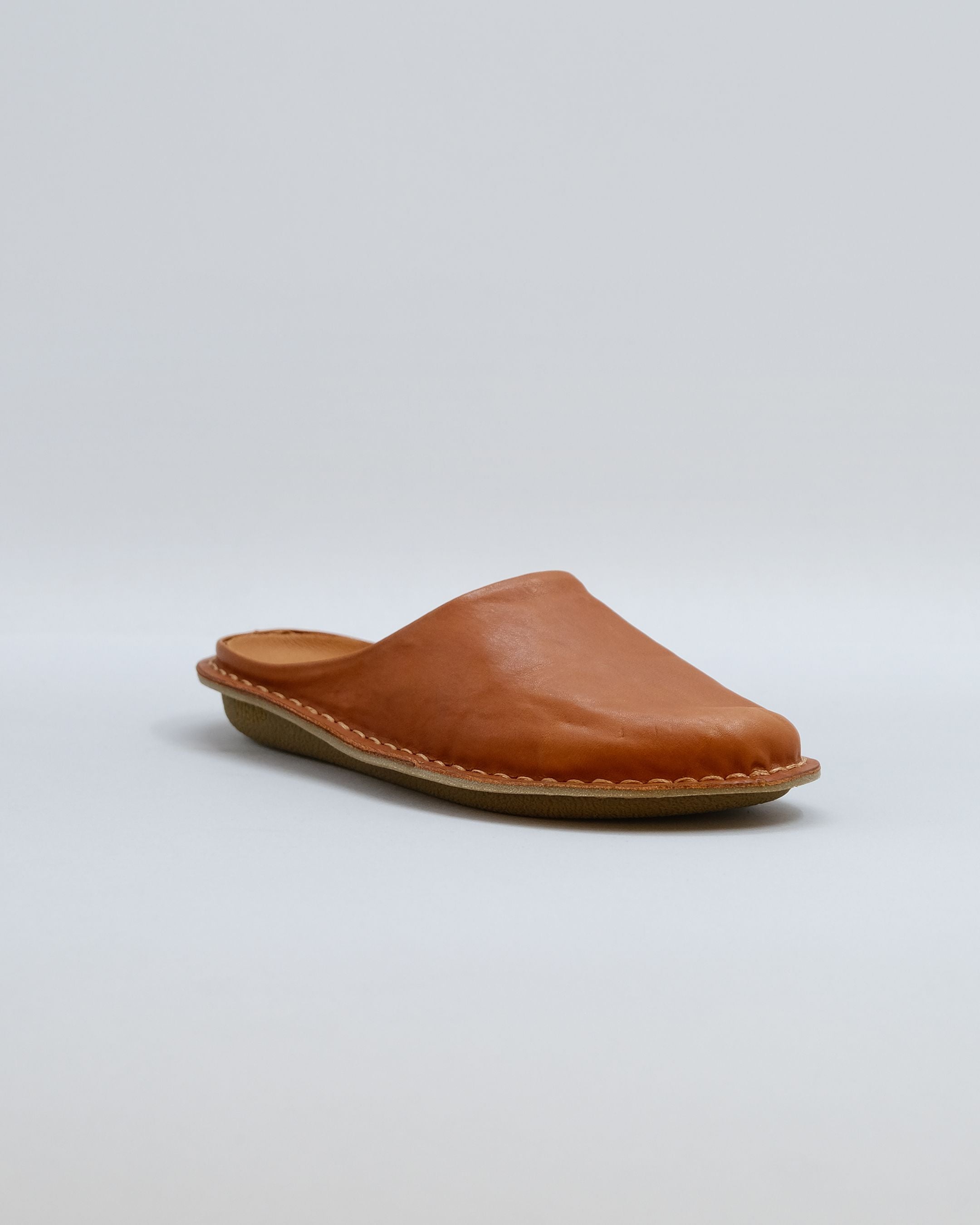
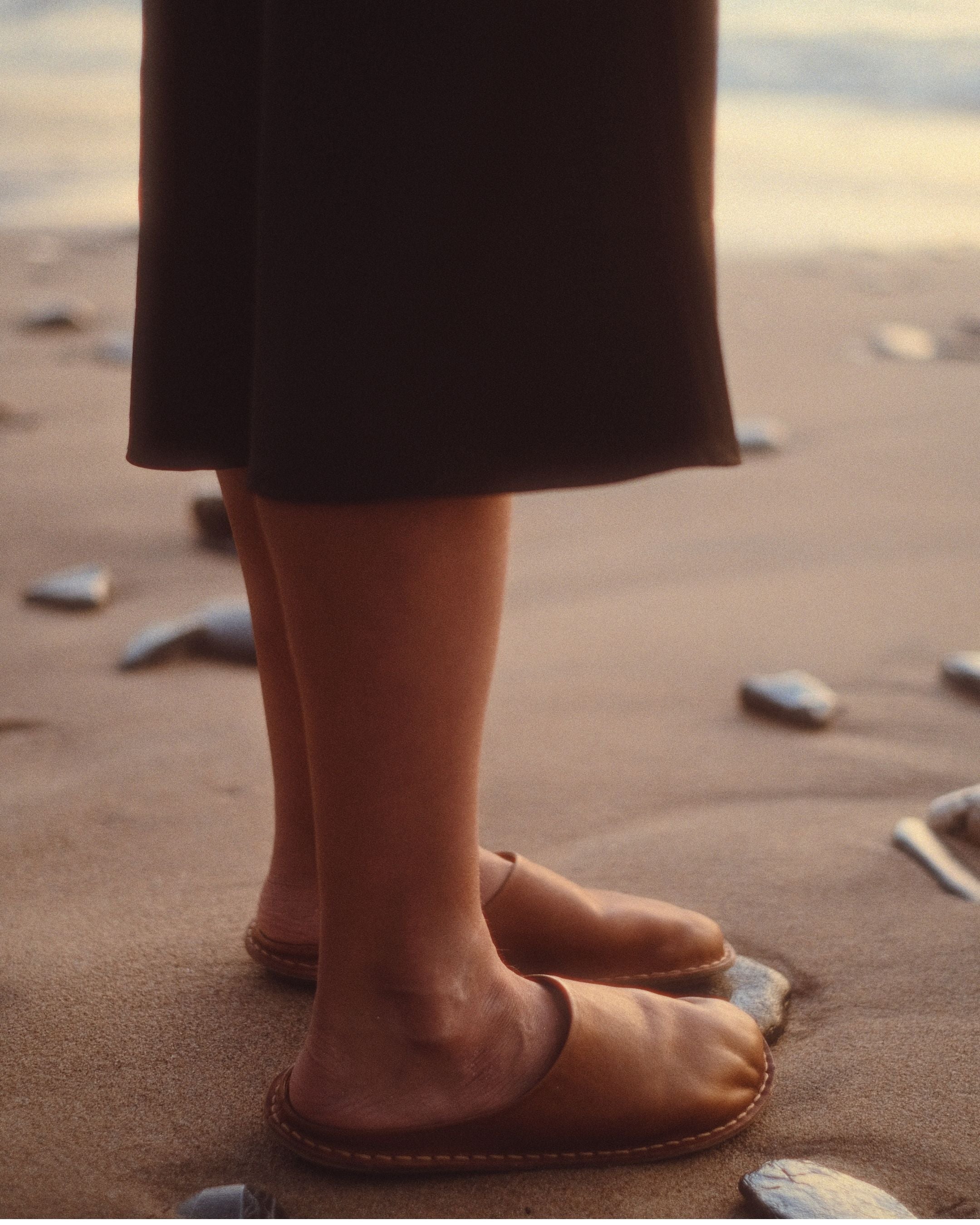
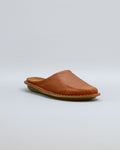
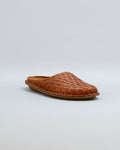
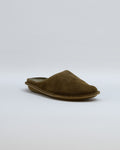
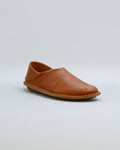
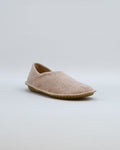
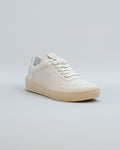
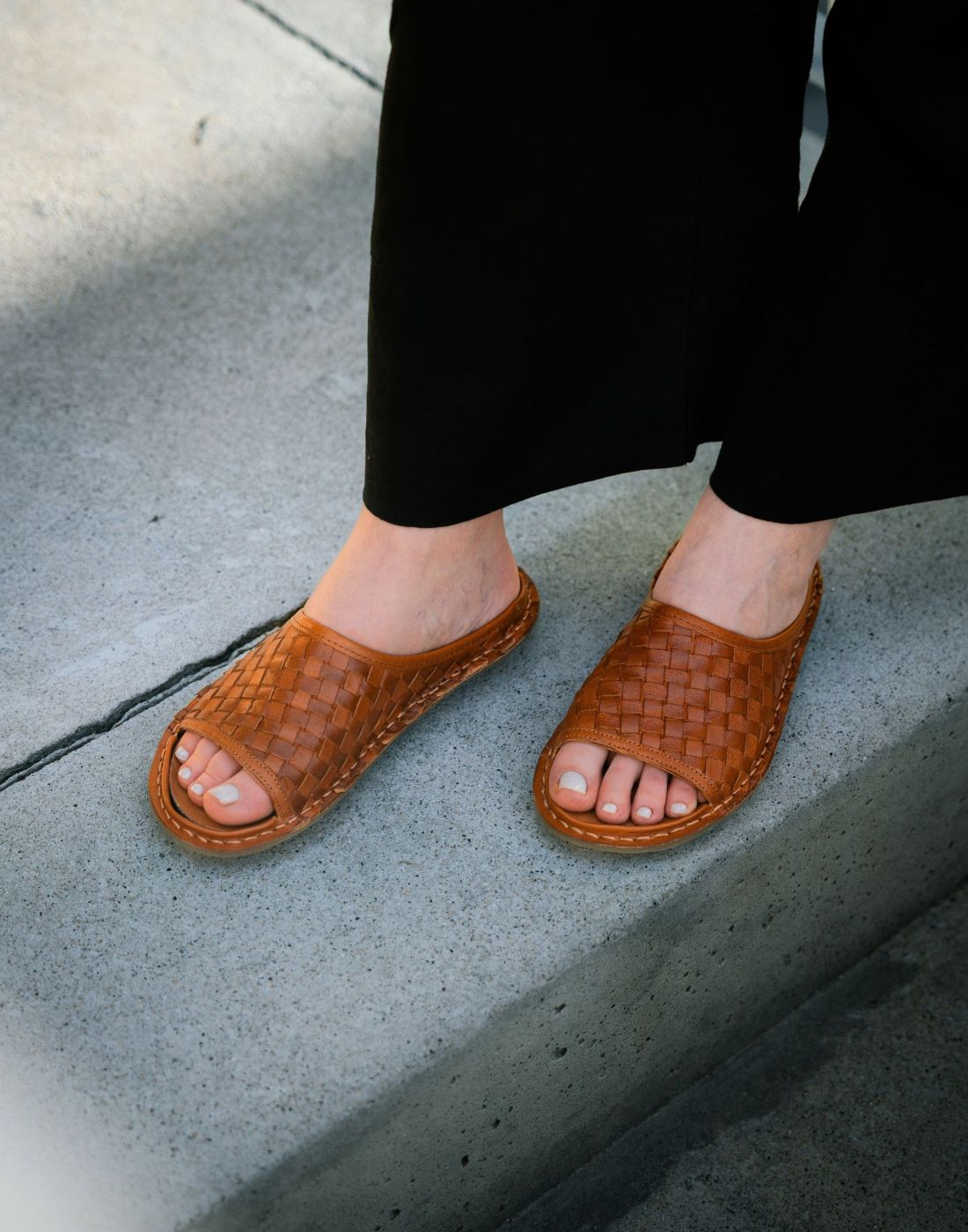
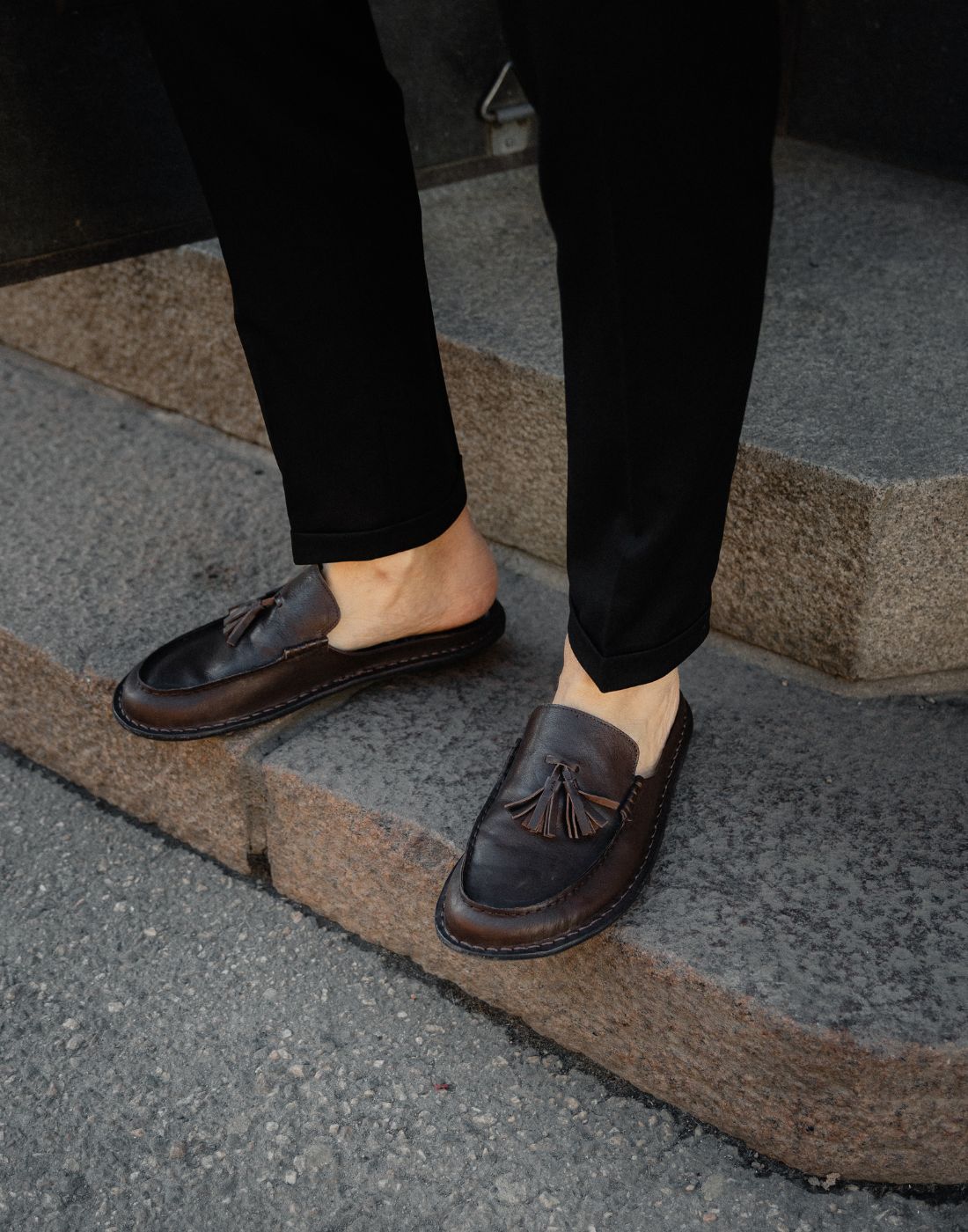
If you're new to a foot-shaped last, start with ROMA — roomy toe box. It's a forgiving introduction to the shape, and it reads as a clean, minimal silhouette rather than anything clinical. ROMA Leather Preto Black sits at £150 on the store today, and the same last turns up in suede and in woven leather if you want the shape with a different surface. For people after roomy leather shoes for standing all day, in a form you can slide on at the door, the loafers and mules collection covers the same ground with less fuss.
Colder months and longer days on your feet
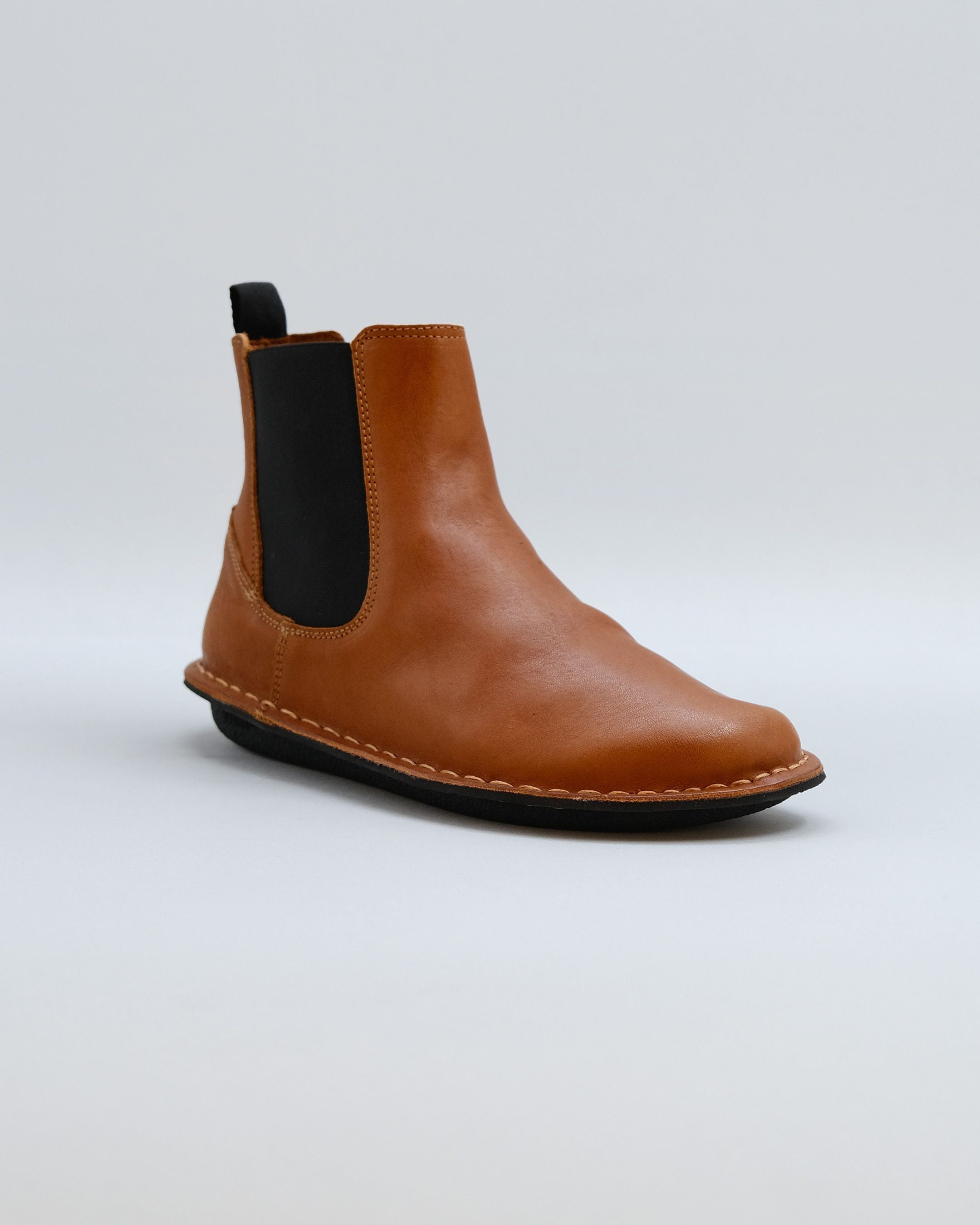
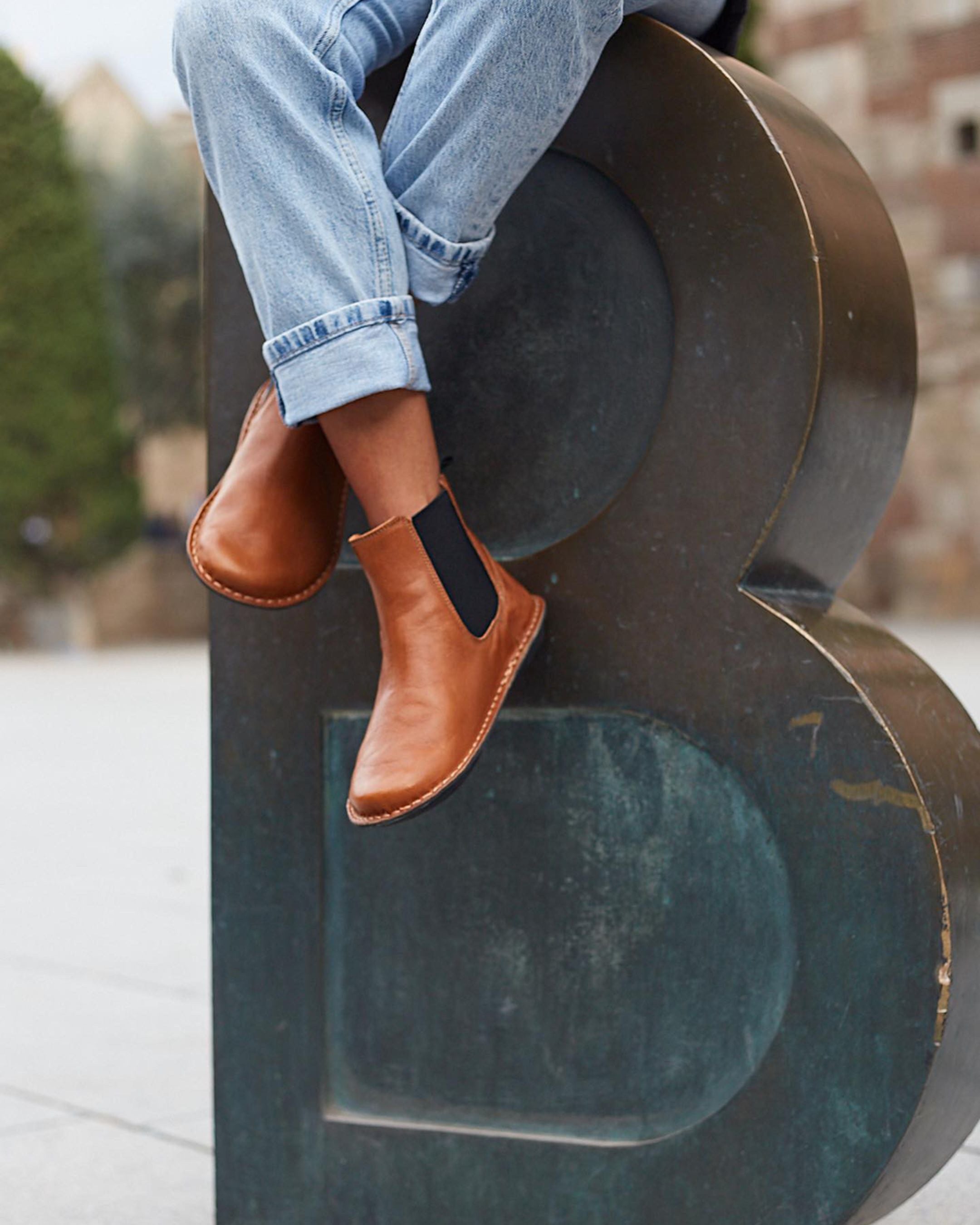
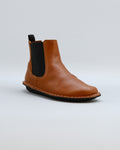
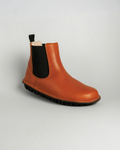
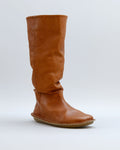
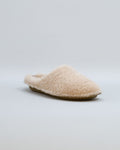
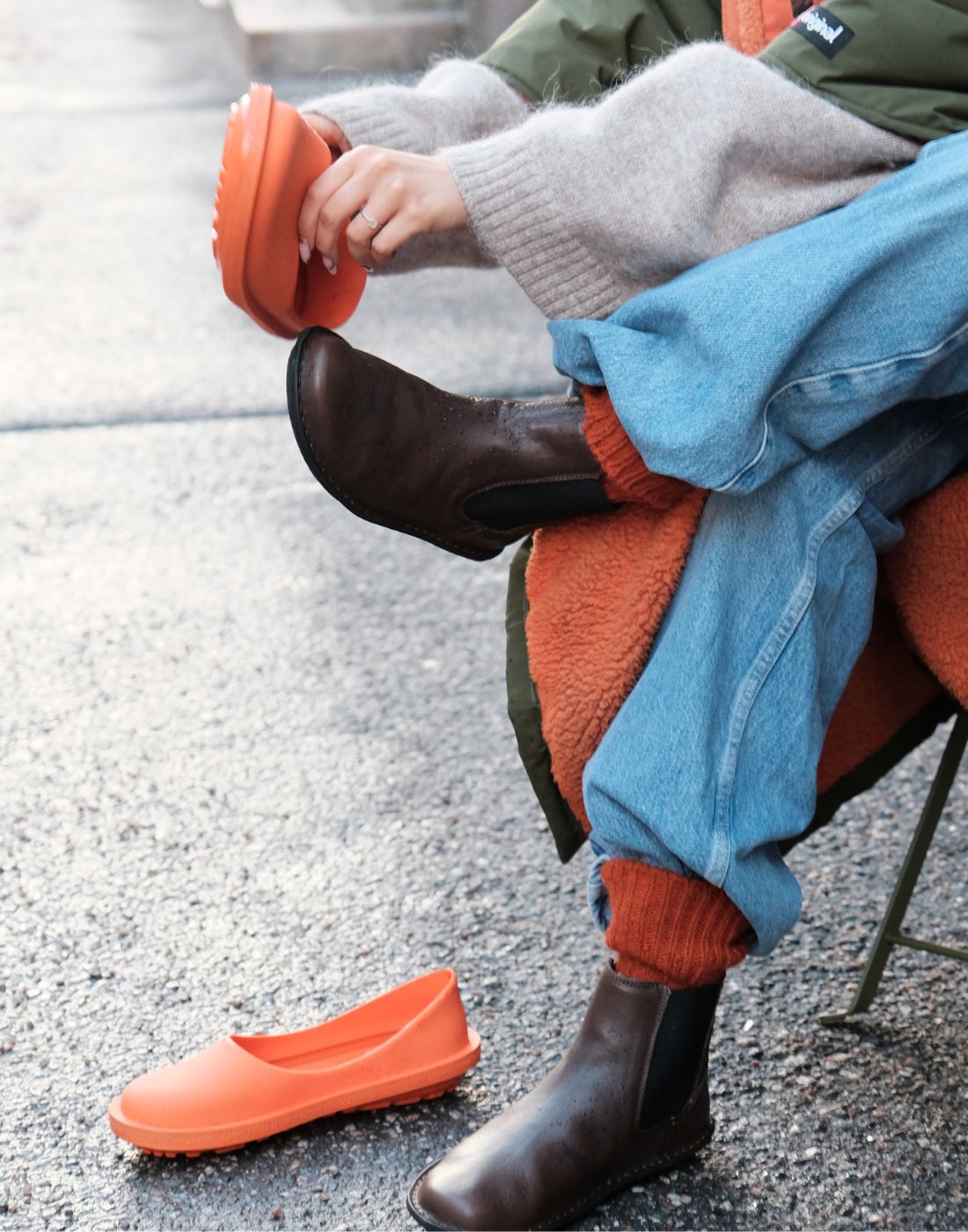
For winter, the boots collection gives you coverage without giving up the forefoot room, and our guide to wide fit Chelsea boots goes deeper on the HELSINKI shape specifically. If you run cold, ROMA Shearling Natural White (£205) lines the same shape, though shearling fills some of the room a thick sock would otherwise use. One honest caveat: a thick wool sock changes the arithmetic. If you plan to wear one most days, factor it into your measurement and lean towards the larger size.
When a VIBAe shoe isn't the right call
Plainly: if you've been prescribed a certified orthopaedic width fitting, if you use a custom insert that won't sit in the footbed cavity once the Carbon Step™ footbed is out, or if you need a raised heel for a specific reason, this collection isn't your answer. Bunions, plantar fasciitis and generally sensitive feet are the context many readers arrive with, and a roomy, flexible shoe is a comfort choice rather than a treatment. Persistent foot pain belongs with a health professional, not with a shoe brand.
Try them on and feel it yourself — find VIBAe near you. Find a Store
Settling into a roomier, low-drop shoe
Expect an adjustment period. A flexible, low-drop sole asks the muscles that spread your forefoot wide to finally pull their own weight, so build up wearing time over a couple of weeks rather than starting with a twelve-hour day. An hour or two around the house, then a short walk, then a full day once nothing complains the following morning.
If you buy wide toe box leather shoes online, the practical safety net is the returns policy: a free return within 30 days of delivery, minus a €10 restocking fee, or a free exchange within 30 days. If you're shopping for wide feet shoes UK-side, the UK store shows prices in pounds, and free standard shipping applies to purchases over €100. For first-wear checks once your pair arrives, read how to get the correct fit with VIBAe shoes. Policies, prices and specifications can change, so treat the store as the source of truth.
Leather asks for something back, which is the unglamorous half of slow fashion. A wipe when it's dusty and a protective cream when the surface looks dry will keep the upper supple for years rather than seasons. And when the footbed gives out before the shoe does, as it usually will, the Carbon Step™ Suede Original replacement is £45 and your pair carries on.
Frequently asked questions
Are barefoot-style shoes a good choice for wide feet?
Often, yes. Whether barefoot shoes are good for wide feet comes down to the last rather than the label: the useful feature is a front section shaped to allow toe splay, not the thinness of the sole. The trade-off is real, though. A flexible, low-drop shoe takes a few weeks of gradual wear before it feels normal.
Should I size up if I'm between sizes?
Yes. VIBAe doesn't make half sizes, so go one size up if you're between sizes, prefer thicker socks or simply like a looser feel. The vegetable-tanned leather will gently stretch where needed as it warms to your foot, so the fit settles with wear rather than loosening away from you.
Do VIBAe shoes come in different width fittings?
No. There's one width and one unisex collection across EU 35–48, because the room is built into the anatomical last instead of being added as a separate letter grade. That suits many broad feet, and not all of them: a very high instep or an unusually narrow heel may be better served elsewhere.
Does the Carbon Step™ footbed take up room across the forefoot?
The Carbon Step™ footbed follows the 11/14/7 Formula, with 7 mm of cushioning at the front, so the shoe is lasted to accommodate it. On styles where it's removable, you can also adjust the depth to your own foot, and swap a worn footbed for a fresh one without replacing the shoes.
What happens if the fit isn't right when the shoes arrive?
You have 30 days from delivery for a free exchange, or a free return with a €10 restocking fee deducted. Measuring both feet before ordering and checking the size chart is still the quickest route to getting it right first time, so the box only makes one journey.
Don't take our word for it — friends & family said it first. Read Customer Reviews