


Loafers vs mules: choosing your slip-on
Created: 2026.08.20 | Modified: 2026.08.20
Loafers vs mules: formality, seasons, fit — a quick decision guide to the right slip-on.
Loafers vs mules at a glance
Loafers vs mules comes down to the heel. Loafers are closed-heel slip-ons that hold the foot front and back; mules are backless and leave the heel open. Loafers suit dress codes and cooler months, mules suit warm weather and quick on-off wear.
This comparison is for anyone choosing their next everyday leather slip-on and wondering which shape will actually get worn. Both silhouettes sit in the same VIBAe range of unisex leather shoes in sizes 35 to 48, both are handmade in Portugal at the family-run factory we've worked with from the start, and both use the same roomy last and flexible sole. So the choice isn't about quality. It's about what the back of the shoe does for you.
A loafer captures the heel, which buys you security on longer walks and a tidier signal in smarter rooms. A mule leaves the heel free, which buys you airflow, a shoe you can step out of at the door, and a looser feel for anyone who dislikes pressure around the heel. Everything below is the detail behind those two sentences.
| Situation | Loafers | Mules | Our pick |
|---|---|---|---|
| Office or smart-casual day | Closed heel reads as a finished shoe with trousers or a skirt | Open heel reads more relaxed, fine in creative or informal offices | Loafers |
| Long walking day | Heel counter holds the foot, so your toes don't grip to keep the shoe on | Foot works harder to keep the shoe with you over distance | Loafers |
| Warm weather | Wearable, but less airflow around the heel | Open back vents heat and takes bare feet comfortably | Mules |
| Cooler weather with socks | Closed heel keeps a sock in place and the draught out | Sock can shift and the heel stays exposed | Loafers |
| Travel and quick on-off | Slips on without laces, but you'll still use a hand at times | On and off in one motion, hands free | Mules |
| Indoor wear at home or the studio | More shoe than you need for short indoor distances | Easy to step in and out of all day | Mules |
What is a loafer, and what does it do well?
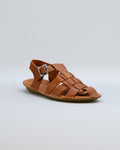
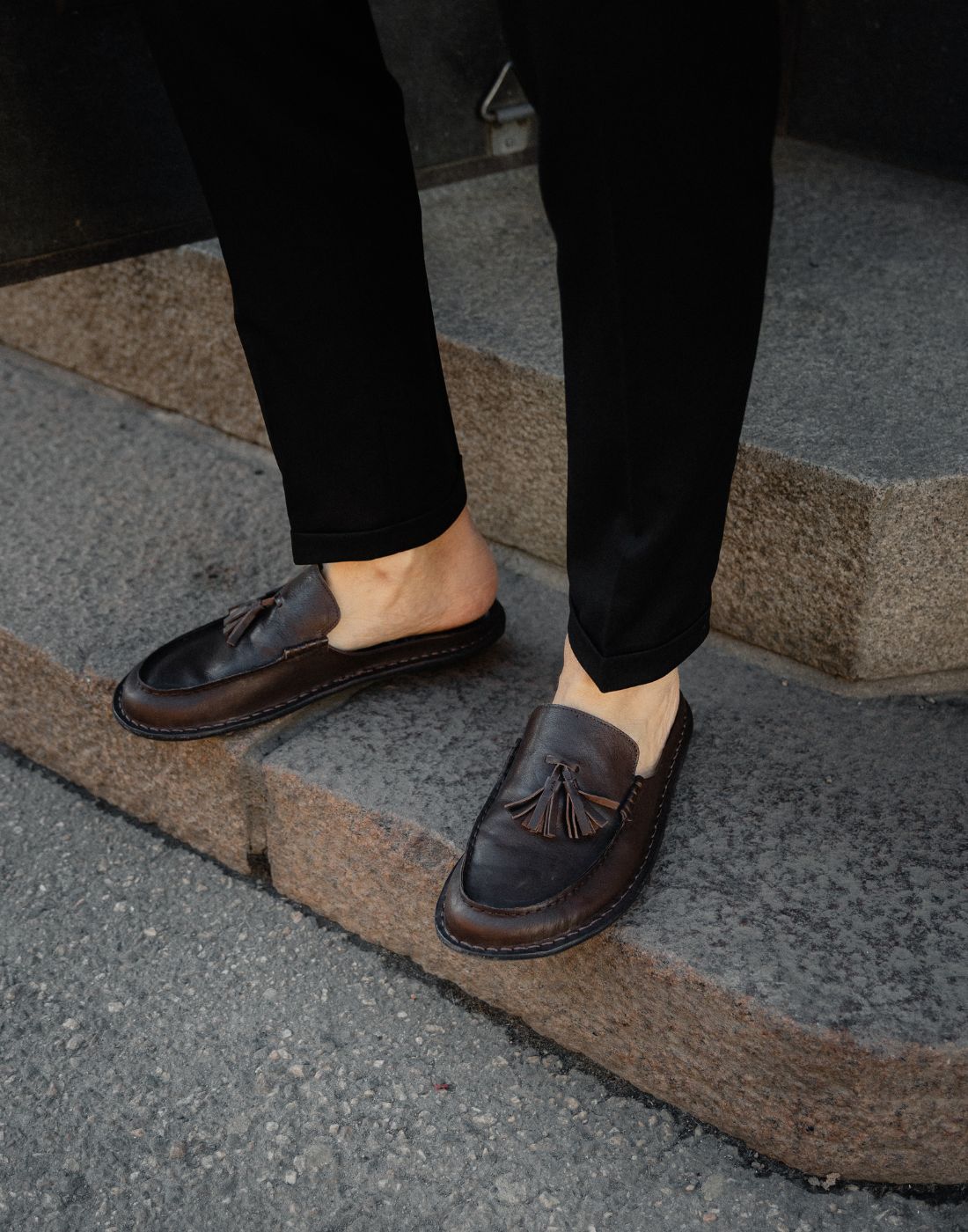
A loafer is a laceless shoe with a closed heel and a low-cut topline: the upper wraps the forefoot, the heel counter closes behind the ankle, and nothing fastens. Because the heel is captured, the shoe stays on without your foot doing anything to hold it. That's the whole engineering idea.
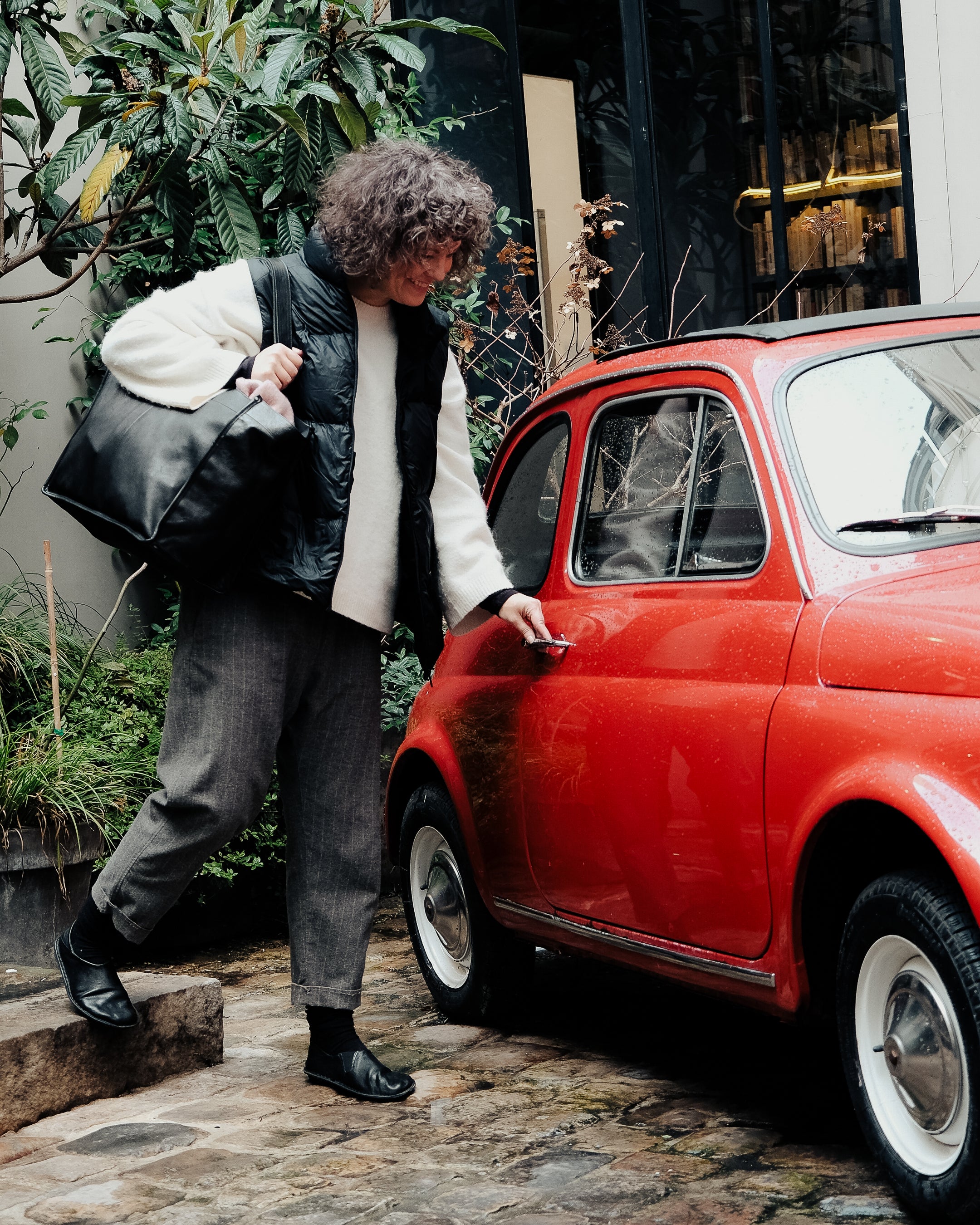
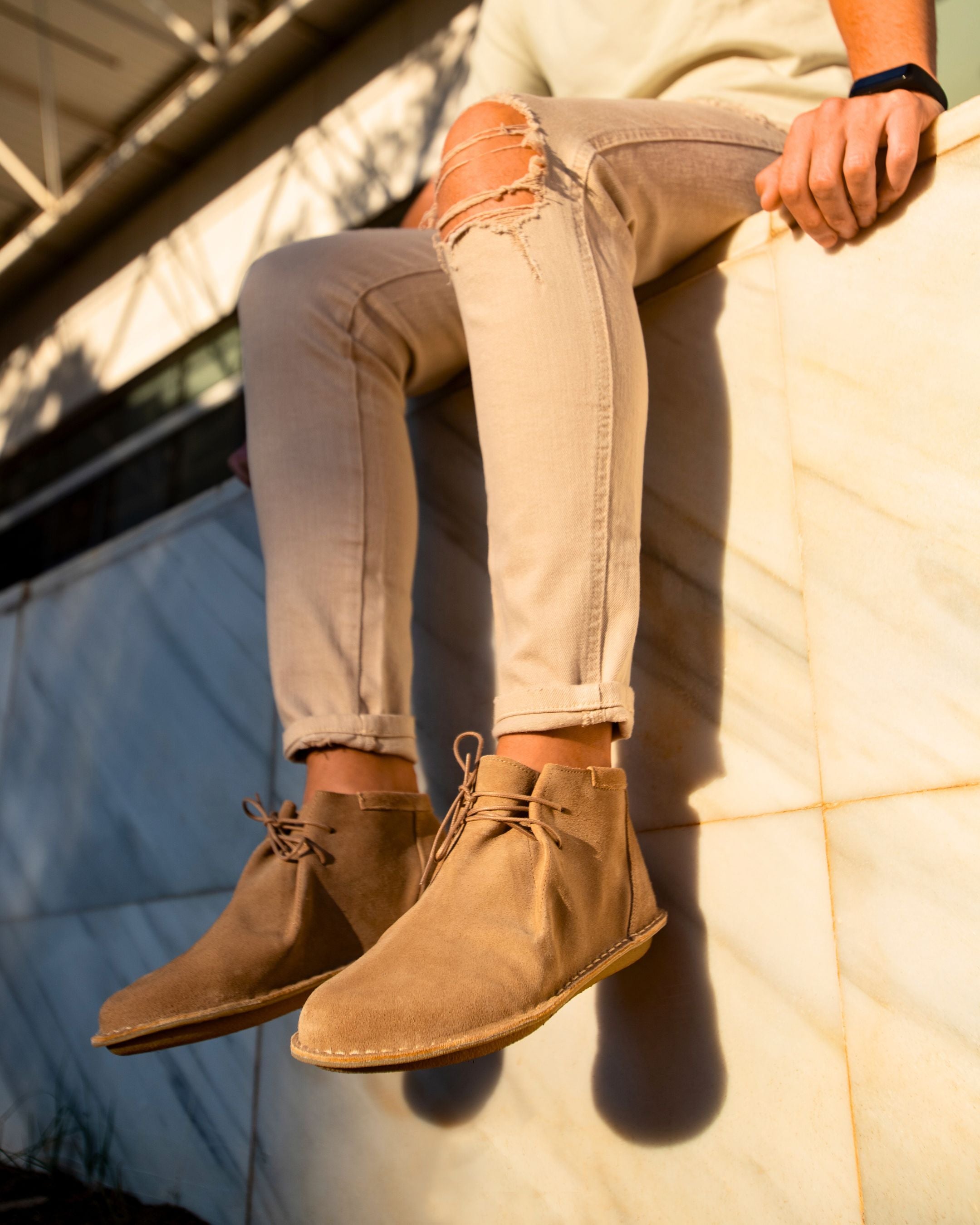
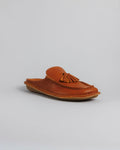
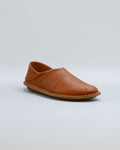
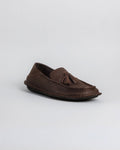
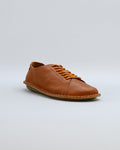
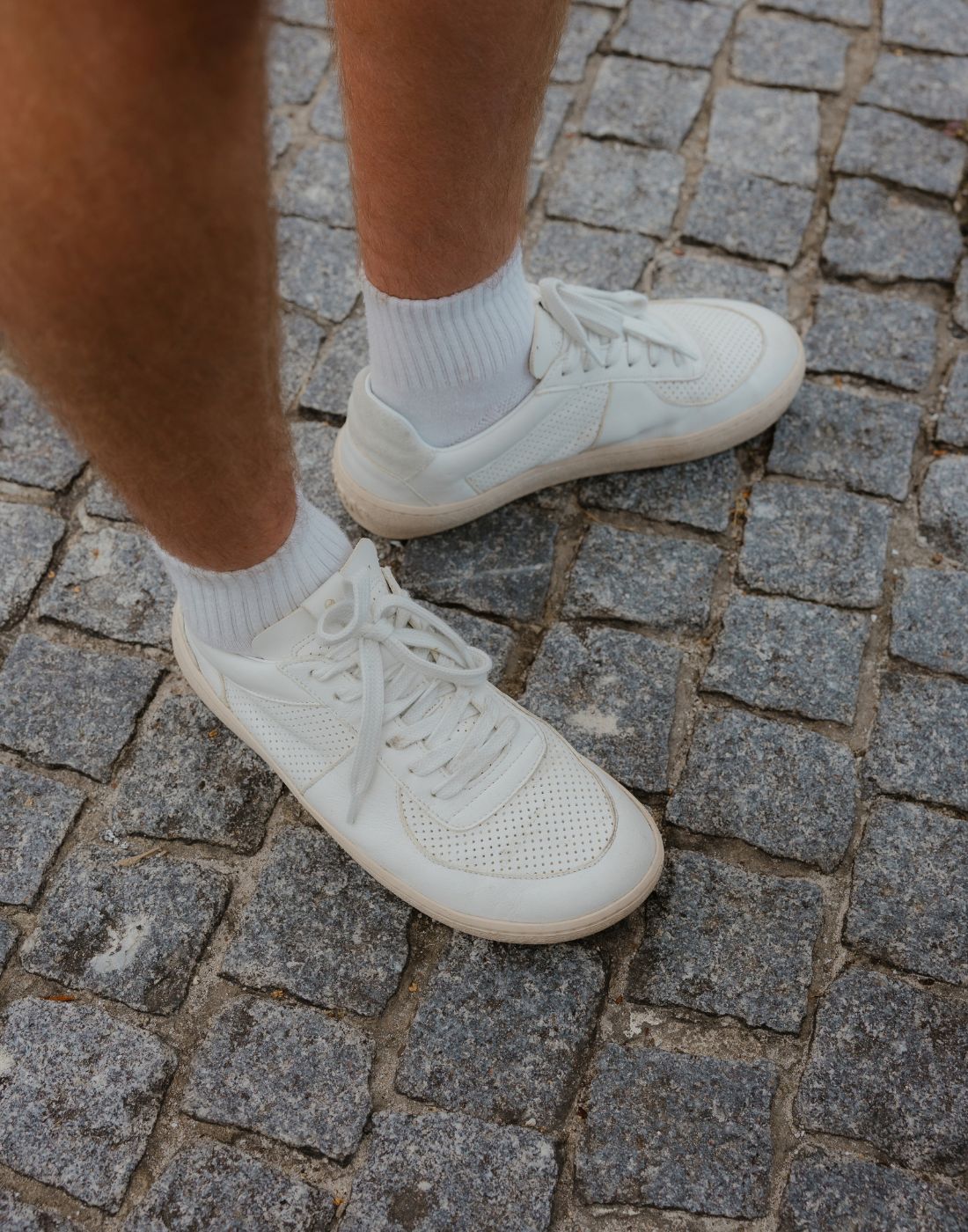
Practically, a closed heel loafer gives you three things. It stretches further across dress codes, because a finished heel reads as a proper shoe rather than a house shoe. It holds position on stairs, gravel, cobbles and long pavement days, so your toes can stay relaxed instead of quietly gripping. And it works with socks through the cooler half of the year, which extends the wearing season by months rather than weeks. Our TRIBECA loafers are the concrete example of this silhouette in the range: closed heel, clean topline, vegetable-tanned leather, and a sole flexible enough to move with your foot rather than splint it.
The trade-offs are real and worth naming. A closed heel moves less air than a backless pair, so in genuine heat a loafer will feel warmer. And like all barefoot-style shoes, the flexible, low-drop sole takes an adjustment period: your foot muscles have work to do that a stiff, cushioned shoe was doing for them. Most people ease in over a couple of weeks by starting with shorter days. Some feet want longer, and there's no prize for rushing it.
Loafers with actual room for your toes — work to weekend, no pinching. Explore Loafers & Mules

What a mule is, and where backless wins
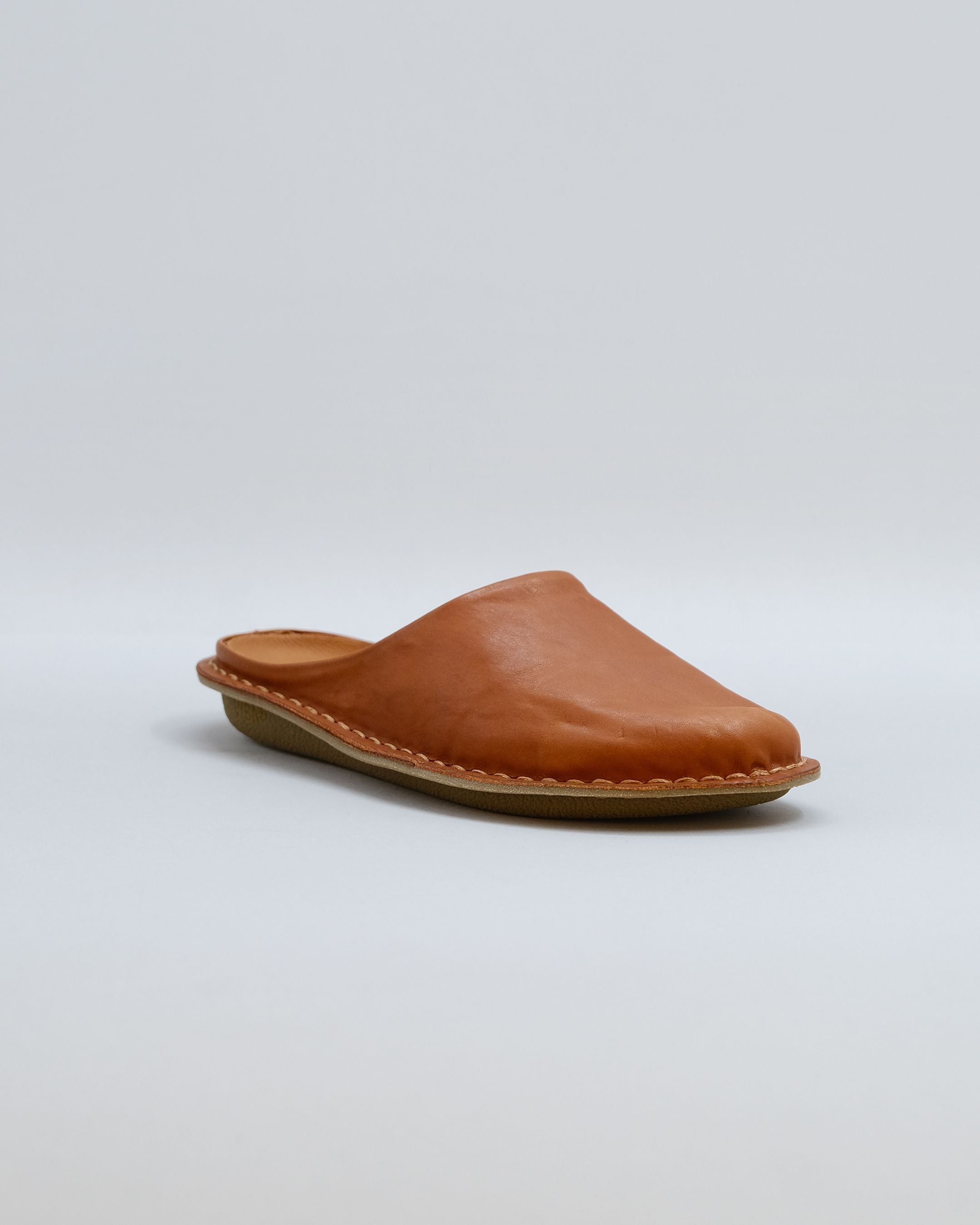
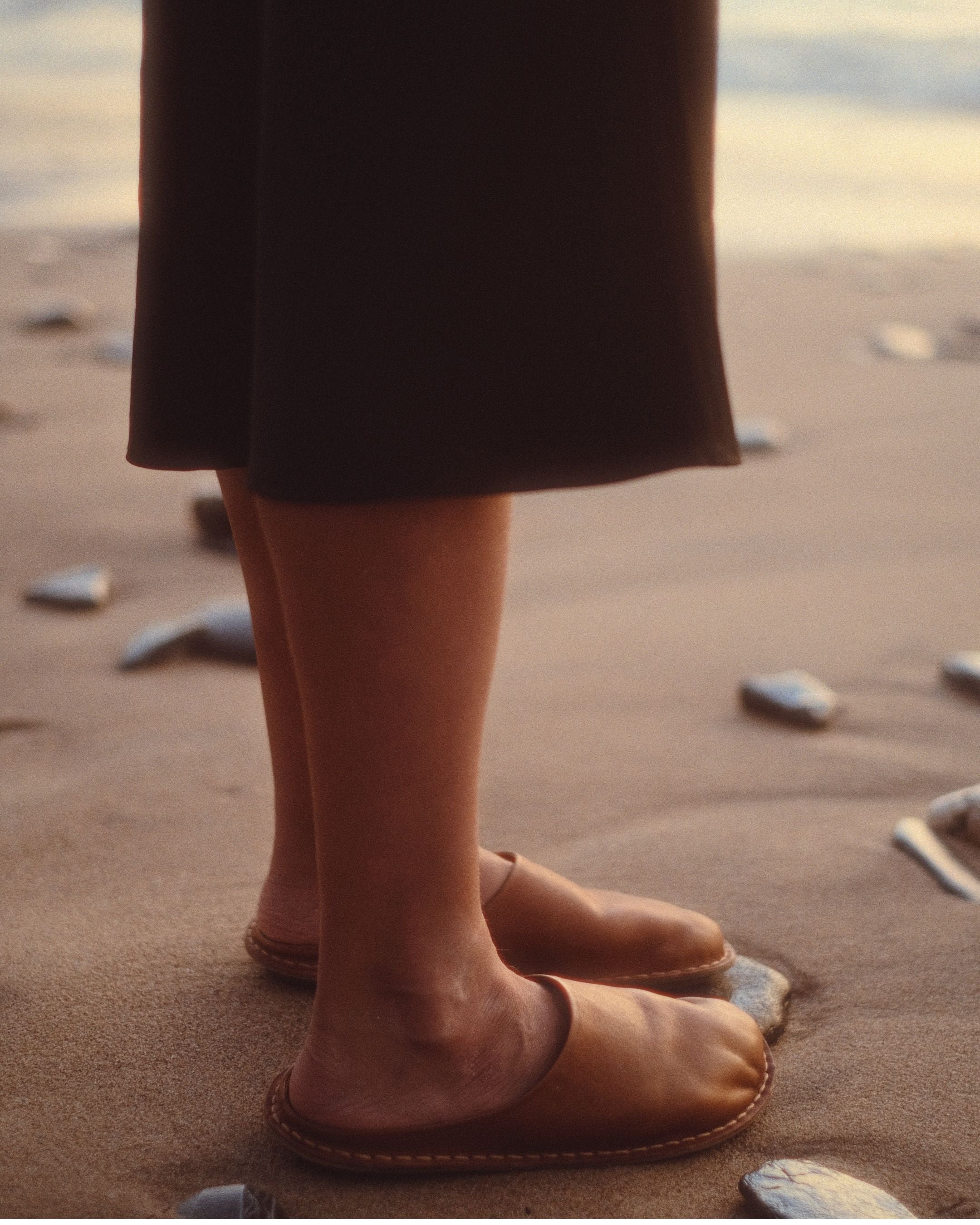
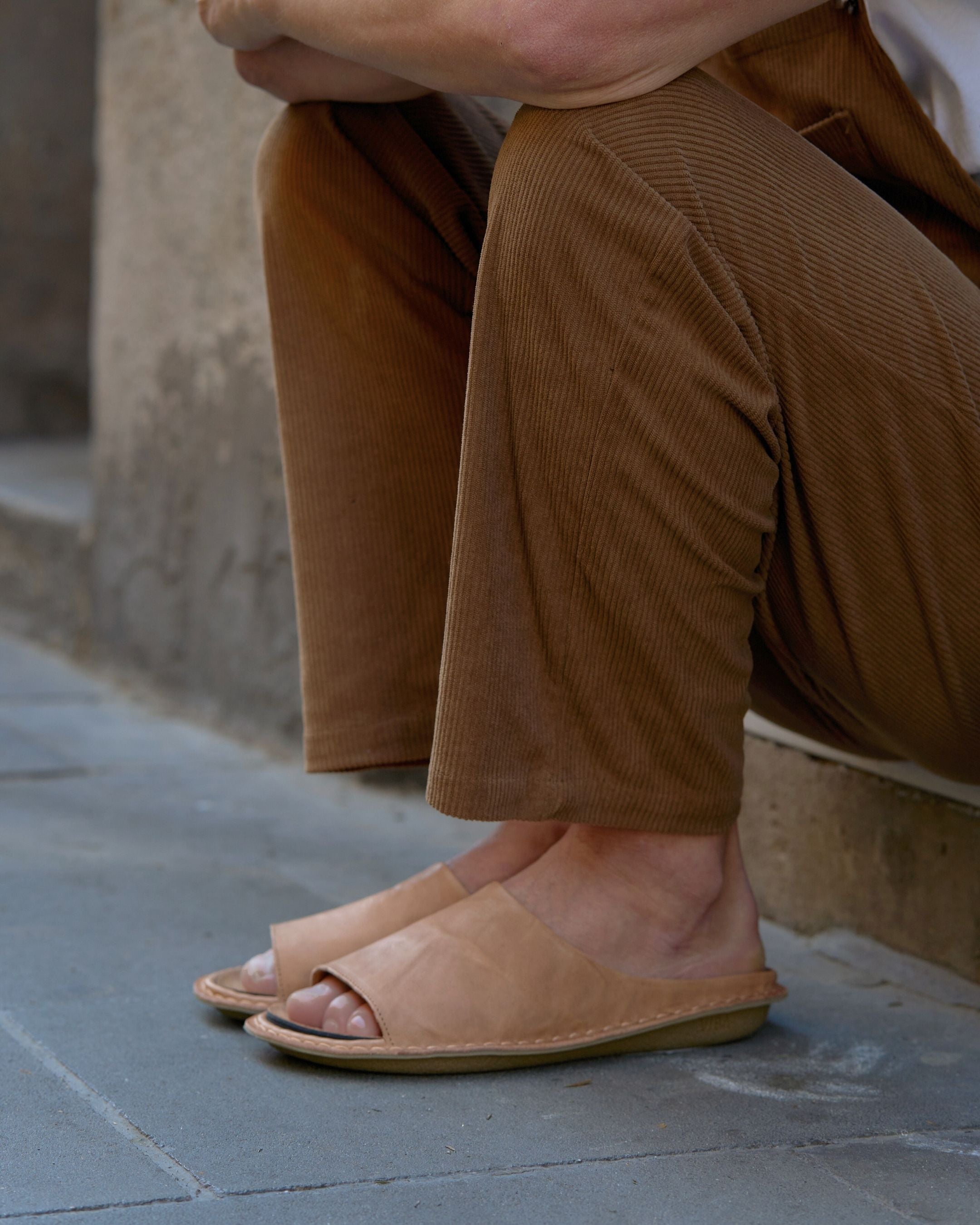
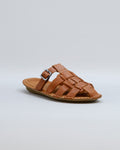
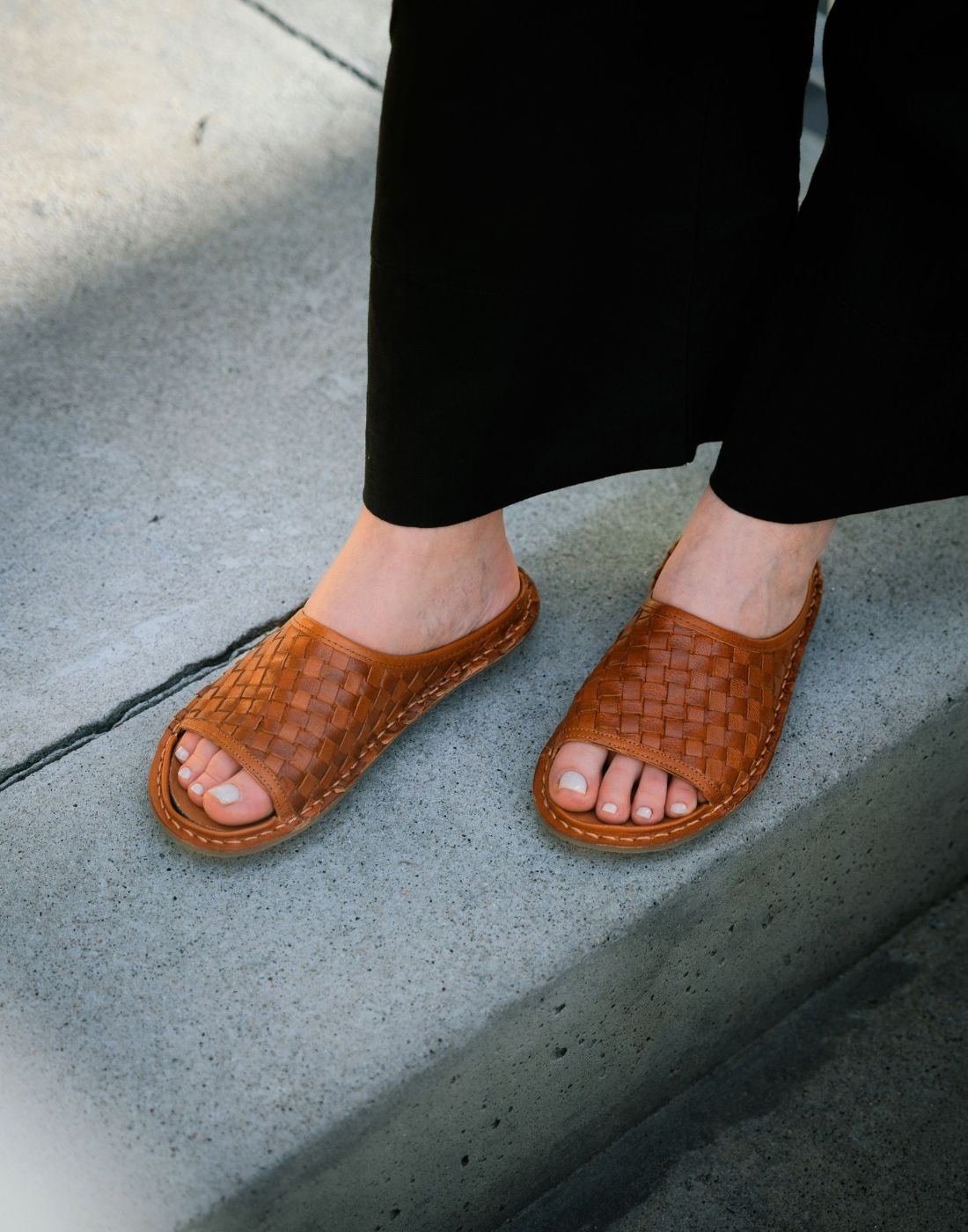
A mule is a slip-on with an open heel: the upper covers the forefoot and midfoot, and there's nothing behind the ankle. The foot sits on the footbed rather than being held front and back, which is why mules go on in one motion and come off just as fast.
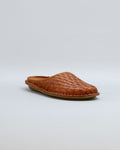
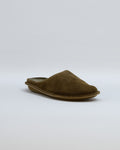
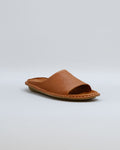
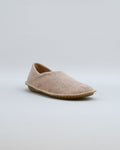
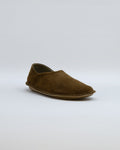
That construction pays off in three situations. Heat, because an open back vents warmth instead of trapping it, which makes leather mules a sensible choice for summer slip-on shoes. Routine, because a shoe you can step into at the door without bending down changes how often you actually wear it. And sensitivity, because feet that dislike anything gripping the heel, or that swell across a long day, get a shoe with nothing pressing there at all. If you're wondering how to wear mules beyond the obvious, they carry a wide trouser hem well, sit neatly under a midi length, and look intentional with a visible sock in shoulder season.
The honest limits: a mule gives you less security on stairs, hills and long walking days, and the relationship between foot and footbed is looser, so you'll notice the shoe moving under you in a way a closed heel prevents. That looser fit also changes how you judge length, because there's no counter behind you setting the reference point. Live sizing guidance for every silhouette sits on our size chart, and it's the source of truth rather than anything we could generalise here. If you want to see how the closed and open ideas play out across the wider range, the ROMA slip-on collection and LISBOA laced collections are worth a look.
Loafers vs mules head-to-head: formality, fit, comfort and season
Compared criterion by criterion, loafers take formality, foot security and cool-weather wear, while mules take airflow, on-off speed and heel-pressure relief. Comfort splits by distance rather than by silhouette. Each verdict below comes from construction, not preference, so you can weigh it against your own week.
Formality and dress code
A closed heel finishes the foot, and dress codes read finished shoes as more formal. That makes loafers the safer choice for smart casual shoes for the office, client meetings, dinners and anywhere a bare heel would look like you'd come from the garden. Mules read deliberately relaxed. In a creative studio, on a Friday, or through a whole summer of informal workplaces, that's an asset rather than a compromise.
Winner: loafers, on range alone. They cover the mule's territory downward; the mule can't cover the loafer's upward.
Fit, foot security and sizing
The heel counter is the variable. In a loafer it sets your heel in a fixed position, so length and instep volume behave predictably and your toes sit where the last intends. In a mule, the foot can slide fractionally forward, so people sometimes read a well-fitting pair as too long or reach for a smaller size and lose toe room they needed. Both silhouettes are built on the same roomy last with a wide toe box, so your toes can splay instead of stacking, and the point of that room is lost if you size down to chase heel security. Treat the size chart as your loafer sizing guide for both shapes and check it before ordering.
Winner: loafers, for predictability. If you'd like to see both fits side by side, the full Loafers & Mules collection keeps them in one place.
Comfort and all-day wear
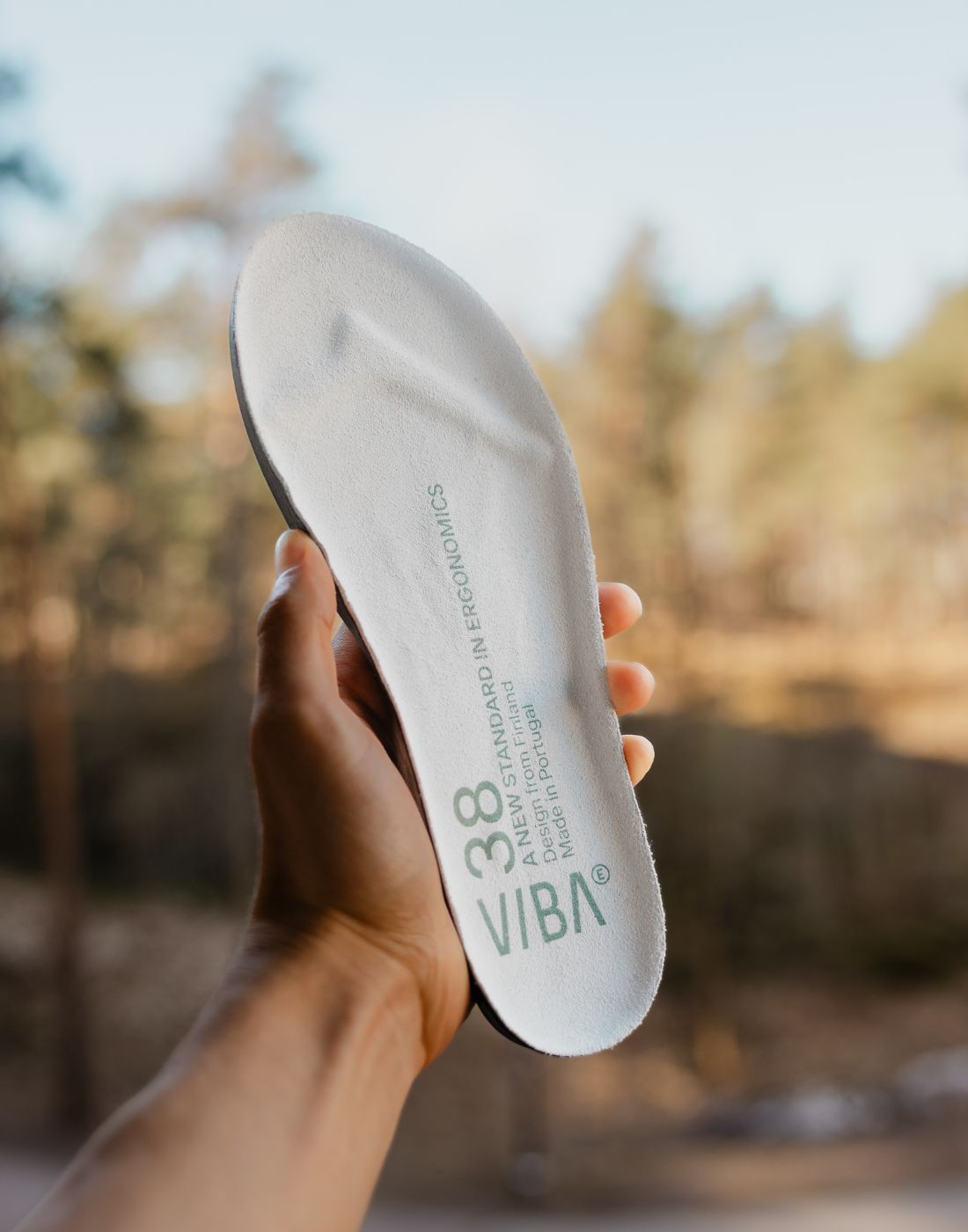
Comfort here is a shared platform: a flexible, low-drop sole, room across the forefoot, and a replaceable Carbon Step™ footbed. That footbed matters twice over. It carries your foot day to day, and when it wears out before the shoe does, you swap the footbed rather than the pair, which is the practical reason we made it removable in the first place.
Over nine hours the silhouettes diverge. A loafer keeps working because the heel counter does the holding, so your foot can stay soft. A mule quietly asks your toes and forefoot to keep the shoe with you, and by late afternoon on a high-step-count day you'll feel that. So, are mules good for walking? For short distances, errands, indoor days and travel days with a lot of standing in queues, yes. For a full day on your feet across a city, a closed heel is the more comfortable choice. Comfort is always personal, and if you have persistent foot pain, that's a conversation for a health professional rather than a shoe description.
Winner: a genuine draw, decided by distance rather than by shape.
Seasonality and socks
Mules own the warm months. Bare feet, an open back, and no heel to trap heat make them the natural summer slip-on shoes, and they're equally at home indoors when you want something on your feet but not much of it. Loafers own the cooler end. Wearing loafers with socks is straightforward because the counter holds the sock where you put it, which keeps the shoe in rotation from early autumn through spring. In shoulder season both work, and a sock with a mule is a styling decision rather than a rule.
Winner: split by calendar: mules for heat, loafers for everything cooler.
Backless loafer vs mule: where the two overlap
Terminology first, because it causes most of the confusion. Backless loafers keep loafer detailing, such as the low-cut topline and the loafer vamp, on a mule construction. So in a backless loafer vs mule comparison, you're comparing two names for the same open-heel build, differing in how dressy the front of the shoe looks.
When does the distinction matter? For dress code, a little: loafer detailing pushes a backless shoe slightly upward in formality, which can be the difference between a shoe that passes in a smart-casual office and one that doesn't. For fit, comfort and season, backless loafer vs mule makes no difference at all, because the heel is open either way and the trade-offs above apply identically. Choose on the heel first, then on detailing.
Loafer or mule: which should you choose?
Choose loafers if you need one pair to clear a dress code, if your days involve real distance, if you wear socks for a good part of the year, or if you want a slip-on that holds position on stairs and uneven ground. The closed heel is doing all of that work, and the pay-off is toes that stay relaxed instead of gripping.
Choose mules if your warm months are long, if your days are short-distance or largely indoors, if you're in and out of shoes constantly, or if your feet want nothing touching the heel at all. The pay-off there is a shoe you'll reach for without thinking, plus airflow no closed shoe can match.
The honest answer to loafer or mule, if you can only have one pair for mixed use: loafers cover more ground. They handle heat less gracefully than a mule, but they handle offices, long walks, socks and cold mornings that a mule simply can't, so the closed heel wins on total days worn per year. Buy the mule as the second pair, and it stops being a compromise and starts being the shoe you live in from June onwards. Whichever way you go, both shapes are handmade in Portugal from vegetable-tanned leather, both take a replaceable footbed, and both are eligible for Pre-Loved resale when you're ready to pass them on. We're not claiming a perfect footprint; those are the specific practices behind it.
Can't decide? Browse the whole unisex collection, sizes 35–48. Shop Now
Frequently asked questions
What is the difference between loafers and mules?
A loafer has a closed heel that holds the foot front and back. A mule is backless, leaving the heel open. Both are laceless slip-ons with a low-cut front, so the heel is the only structural difference, and it drives everything else: formality, security, airflow and sizing.
Are mules or loafers better for walking?
Loafers, over distance. A heel counter keeps the shoe with your foot, so your toes stay relaxed. Mules ask the forefoot to hold the shoe on, which is fine for errands and short-distance days but tiring across a long walking day on hard pavement.
Can you wear mules with socks?
Yes, and it's a practical way to stretch a mule into shoulder season. A visible sock reads as a deliberate styling choice rather than a mistake. The caveat is movement: with no counter behind you, a sock can shift more than it would inside a closed shoe.
Is a backless loafer the same as a mule?
Structurally, yes. A backless loafer is a mule with loafer detailing on the front, such as a low-cut topline and a loafer vamp. That detailing nudges it slightly upward in formality, but the open heel means it fits, breathes and behaves exactly like any other mule.
Should I size loafers and mules the same way?
Start from your usual VIBAe size for both, then check the size chart, because a mule's open heel changes how length feels. Resist sizing down a mule to chase heel security: you'd lose the toe room the wide last is there to give you.
The short version
Loafers hold the heel, so they travel further across dress codes, walking distance and cold weather. Mules leave the heel open, so they win on airflow, speed and freedom from heel pressure. Comfort is shared ground, since both sit on the same roomy last, flexible sole and replaceable Carbon Step™ footbed. If you're buying one pair, choose the loafer. If you're building a two-shoe rotation, the loafer carries autumn to spring and the mule carries the summer.
When you buy loafers online in the UK you can't try before you order, so spend two minutes with the size chart first. It carries the current sizing guidance for every silhouette, along with live availability, which is always the store rather than an article.
Get the right fit first time — most of us wear our usual size. Check the Size Chart