


What are desert boots? History, style and modern fit
Created: 2026.08.16 | Modified: 2026.08.16
Desert boots explained: crepe soles, suede uppers, chukka height — and how the classic got comfortable.
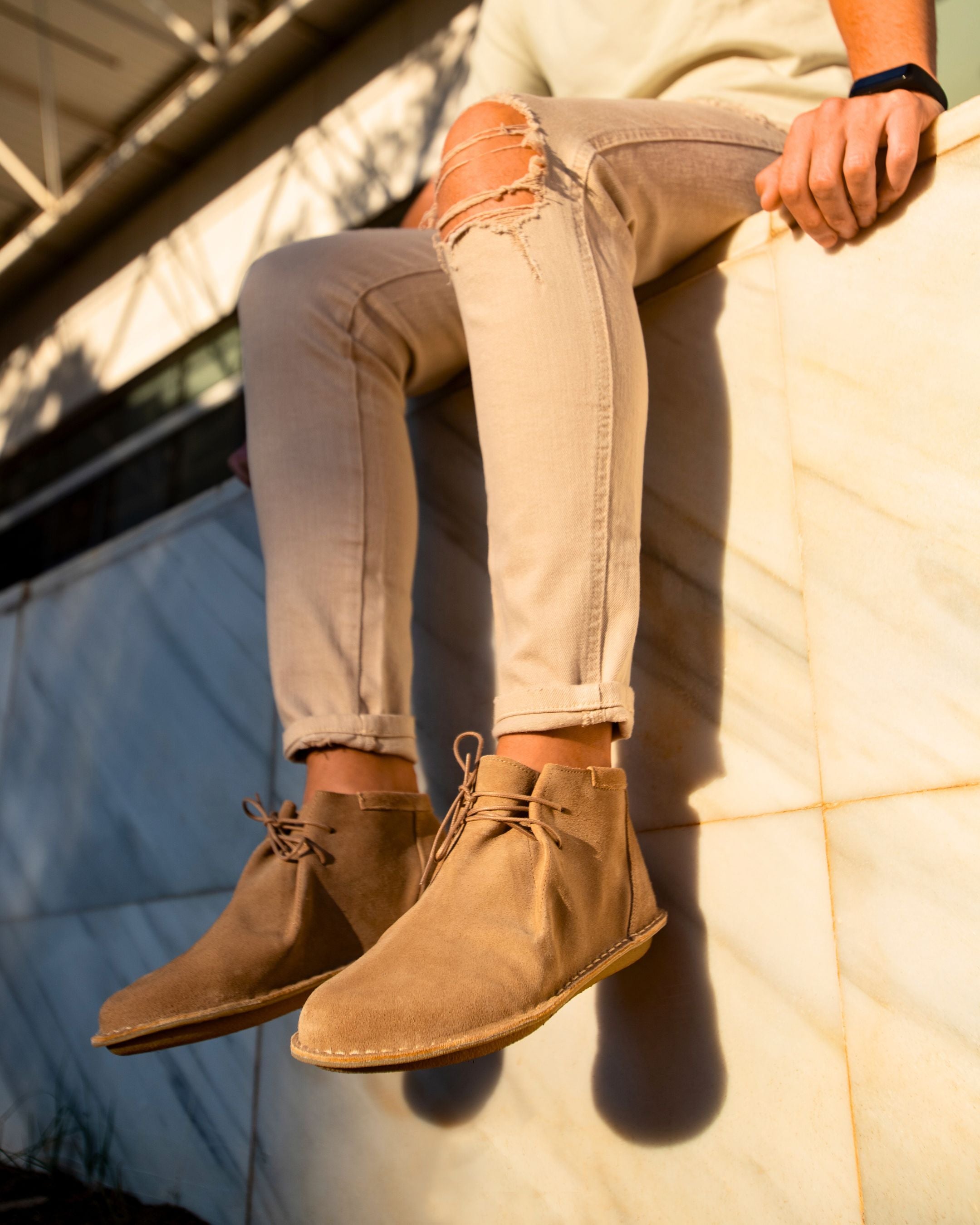
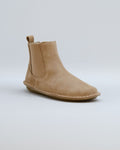
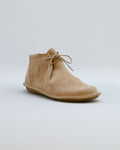
What are desert boots? A desert boot is an ankle-height lace-up boot with two or three pairs of eyelets, a soft suede upper, and a cushioned crepe rubber sole — a type of chukka boot cut for casual wear rather than formality.
That covers the construction, not the reason the shape has outlived nearly every boot invented alongside it. A desert boot sits between a trainer and a dress boot: relaxed enough for jeans on a Saturday, tidy enough for chinos and a jacket on a Tuesday. Almost nothing about it is decorative, which is why it has never needed updating.
What are desert boots, exactly?
A desert boot is defined by three things at once: an ankle-height suede upper with minimal panelling, open lacing through two or three eyelet pairs, and a soft, flexible sole. Remove any one of the three and you have a related boot, but not a desert boot. It is a construction, not a colour and not a season.
In its simplest form it's a two eyelet lace-up boot with almost nothing going on: two quarters, a vamp, a tongue, a collar that stops at or just below the ankle bone. No toe cap, no brogueing, no storm welt, no hardware beyond the eyelets. That absence is the design, and because there's so little structure in the upper, the boot moulds around the foot early rather than fighting it for a fortnight.
Desert boots meaning in plain terms
The desert boots meaning behind the name is literal rather than poetic: the original boots were made for men serving in North African desert conditions, where a soft sole and a breathable napped upper beat a stiff welted dress boot in sand and heat. The word describes where the design came from, not where you're allowed to wear it.
The term doesn't stretch as far as catalogues stretch it. A desert boot isn't a hiking boot with a suede upper, it isn't a work boot, and it isn't any tan ankle boot. Sand and mid-brown suede are the classic finishes, but a desert boot in black suede or smooth leather is still a desert boot as long as the construction holds. A three-eyelet boot on a heavy commando outsole has crossed into different territory: the sole changes the character of the whole thing.
Where desert boots came from
Desert boot history begins in the bazaars of Cairo during the 1940s, where officers stationed in North Africa had soft-soled suede boots made to order: light, cool, quick to slip on, and far kinder in sand than issued footwear. The shape travelled home with them and was reinterpreted for civilian wardrobes shortly afterwards.
Cairo matters because the boot was a field solution before it was a style. Nobody was designing a wardrobe staple. They were solving for heat, grit, and long days on foot with what a local workshop had to hand: napped leather, a simple two-piece upper, and a sole soft enough to walk hard ground without punishment. The commercial versions kept the logic and tidied the execution.
Three things then carried the design through the decades:
- A low cost of entry compared with a welted dress boot, so it reached students and workers as readily as officers.
- Comfort almost immediately, with none of the ceremonial break-in stiffer boots demand.
- A silhouette that never depended on a fashion cycle to make sense, so it aged out of nothing.
How a desert boot is built
A desert boot is built from two materials doing most of the work: napped suede for the upper and natural crepe rubber for the sole, joined by simple stitching rather than a heavy welt. For the wearer that means a light boot, a short break-in, a quiet step, and a foot that bends where it wants to.
The suede upper
The suede upper is cut from few pieces, which is why the boot looks calm on the foot and softens rather than creasing into hard folds. Unlined or lightly lined quarters mean the leather takes the shape of your ankle over the first weeks, with no rigid counter working against your heel.
Suede asks for something in return. It needs brushing to lift the nap back up, it drinks water, and it marks. A protector spray helps and a rubber-bristled brush undoes most of what a day's walking does, but suede is a material you maintain rather than ignore. If that upkeep doesn't appeal, smooth leather is the honest alternative; VIBAe's Hanko leather styles wipe down with a damp cloth instead, and each product page lists which leather that pair uses. Leather choice also decides how a boot ages: smooth leather burnishes at the flex points, while suede goes softer and quietly darker where your hands and the weather reach it.

The crepe sole
A crepe sole is natural rubber, tapped from latex and pressed into a springy slab rather than moulded into a tread pattern. Underfoot it is cushioned, notably quiet, and grippy on dry pavement or packed ground.
It is also the part of the boot most people misunderstand. Crepe picks up grit and holds it, scuffs, yellows, softens with heat, and on wet smooth surfaces such as polished tile or painted metal it offers less than you'd like.
A thin, flexible rubber outsole handles those conditions better and gives more honest ground feel, which is the trade-off at the heart of barefoot style boots: less material between you and the pavement means more information from the ground, at the cost of some insulation and cushioning. Neither sole is correct for everyone. It depends on whether you want the pillow or the feedback.
The chukka last and ankle height
The collar of a desert boot sits at or just below the ankle bone, which is why it reads as an ankle boot rather than a boot proper. High enough to hold the heel and keep the shape when you're not wearing it; low enough that the joint moves freely and a trouser hem falls over it without bunching.
Toe box width is the fit variable that changes the day, not ankle height. A traditional chukka last narrows towards the front, which looks neat and asks your toes to cooperate. A wider, foot-shaped toe box lets the toes splay as you load the foot, which is what people are really after when they search for wide toe box boots and don't want anything that looks orthopaedic. The difference shows up around hour eight.
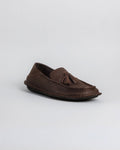
VIBAe's own reading of the shape is the JTREE Boots , handmade in Portugal at the family-run factory that makes every pair we sell, with a roomy toe box and a flexible sole rather than a rigid shank. Check the product page for materials and sizing, since that's the source of truth for stock and price.
Suede desert boots, made slowly by hand in Portugal. Shop JTREE
Chukka vs desert boot vs Chelsea boot
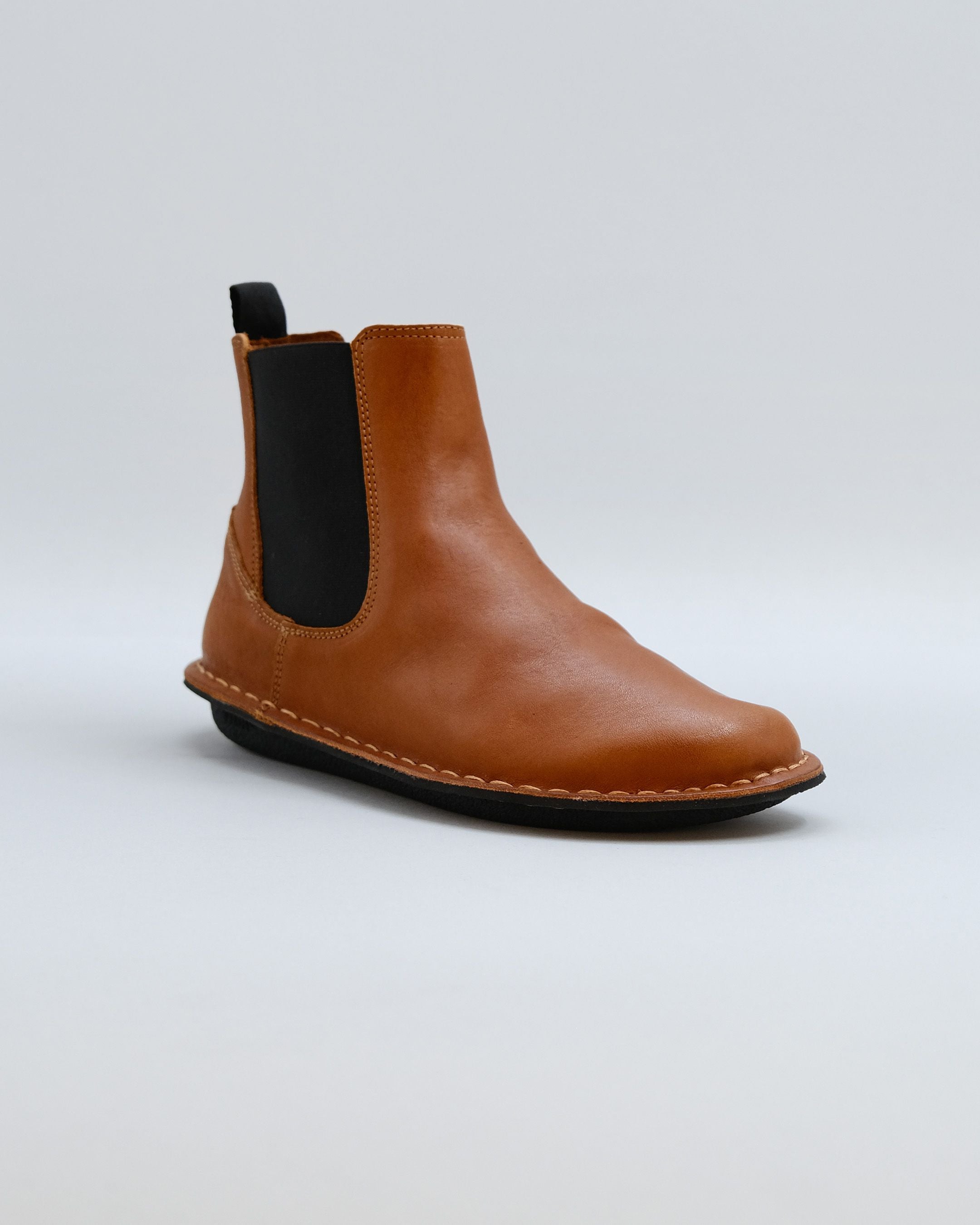
Every desert boot is a chukka boot, but not every chukka is a desert boot. Chukka is the family: any ankle-height boot with two or three eyelet pairs and open lacing. Desert boot is the specific member of that family with a suede upper and a soft crepe sole. A Chelsea boot has no laces at all.
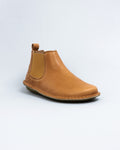
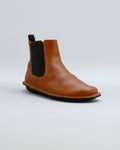
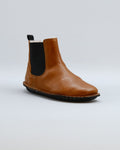
The chukka vs desert boot distinction is one of specificity, which is why a polished calf chukka on a leather sole can go somewhere a sand suede desert boot can't. Desert boots vs Chelsea boots is the simpler comparison: elastic side panels and a pull tab instead of lacing, a sleeker last, and a formality ceiling that sits noticeably higher.
| Feature | Desert boot | Chukka boot | Chelsea boot |
|---|---|---|---|
| Silhouette | Ankle height, unstructured, softly rounded toe | Ankle height, often a firmer upper and neater toe | Ankle height, close-fitting, sleek elongated toe |
| Closure | Open lacing, two or three eyelet pairs | Open lacing, two or three eyelet pairs | No lacing; elastic side gussets and a pull tab |
| Typical sole | Natural crepe rubber, or a thin flexible rubber outsole | Leather, rubber, or crepe depending on the maker | Leather or slim rubber, usually with a defined heel |
| Formality | Casual to smart-casual | Casual to business-casual | Smart-casual to fairly dressy |
| Best use | Everyday wear, denim, travel, long days on foot | Office-adjacent wear where a lace-up reads tidier | Occasions, tailoring, and anywhere you want to get in and out fast |
So: the desert boot is the one you wear most, the Chelsea reads smartest and pulls on in four seconds, and a leather-soled chukka sits between the two when a dress code is vague. If you want something lower and closer to a shoe, a laced leather shoe covers that ground instead. None of the three belongs at black tie, and a desert boot might look out of place with a formal suit.

Fit, styling and lasting comfort
A desert boot that fits properly should feel roomy across the toes and flex with your foot on the first wear, not the tenth. No pinching across the widest part of the foot, your foot filling the boot from heel to toe, and a heel that stays put when you walk. If it needs breaking in, it doesn't fit.
Getting the fit right
Desert boot fit and sizing come down to width before length. Our journal piece on how to get the correct fit with VIBAe shoes walks through the method. Most people who find boots uncomfortable are in roughly the right length and far too narrow a toe box, which is why the pressure shows at the little toe and the ball of the foot rather than at the end. Three checks before you order:
- Measure both feet and size for the longer one, because almost nobody has a matched pair.
- Compare that measurement against the VIBAe size chart rather than the size you usually buy.
- Decide which socks you'll actually wear; thick socks change the fit more in a low-volume boot than in a chunky one.
VIBAe runs one unisex collection in sizes 35 to 48 rather than separate men's and women's desert boots, so pick by measurement rather than by label. One honest caveat: a flexible, low-drop sole takes an adjustment period. Your feet and calves have work to do that stiffer, heeled shoes were doing for them, so build up your wearing hours over a couple of weeks instead of starting with a full day. Comfort described here is what people typically report, not a promise, and persistent foot pain is a conversation for a health professional rather than a shoe purchase.
How to wear desert boots
The short answer to how to wear desert boots is: with anything you'd wear a clean trainer with, plus a few things you wouldn't. Straight or slightly tapered denim, hem breaking just on the collar. Chinos, cuffed or not. Heavy knitwear in the cold months and a plain shirt when it's warmer. Relaxed tailoring works too, as long as the trouser is soft rather than sharp.
Are desert boots waterproof? Almost never. Suede and heavy rain are a poor match, crepe gives less confidence on wet smooth surfaces, and an unlined boot is thin comfort in deep winter. This is a three-season boot in a British climate; if your day involves standing in a downpour or crossing slush, reach for something lined with a treated leather upper instead.
Keeping them going
Suede boot care is a five-minute habit rather than a project:
- Brush the nap back up with a rubber or crepe brush once the boots are dry.
- Spot-treat marks with a suede block, and re-apply a protector spray periodically.
- Dry wet boots away from radiators, since direct heat stiffens leather and shrinks it unevenly.
- Rotate two pairs, which does more for longevity than any product because the lining gets a full day to dry out.
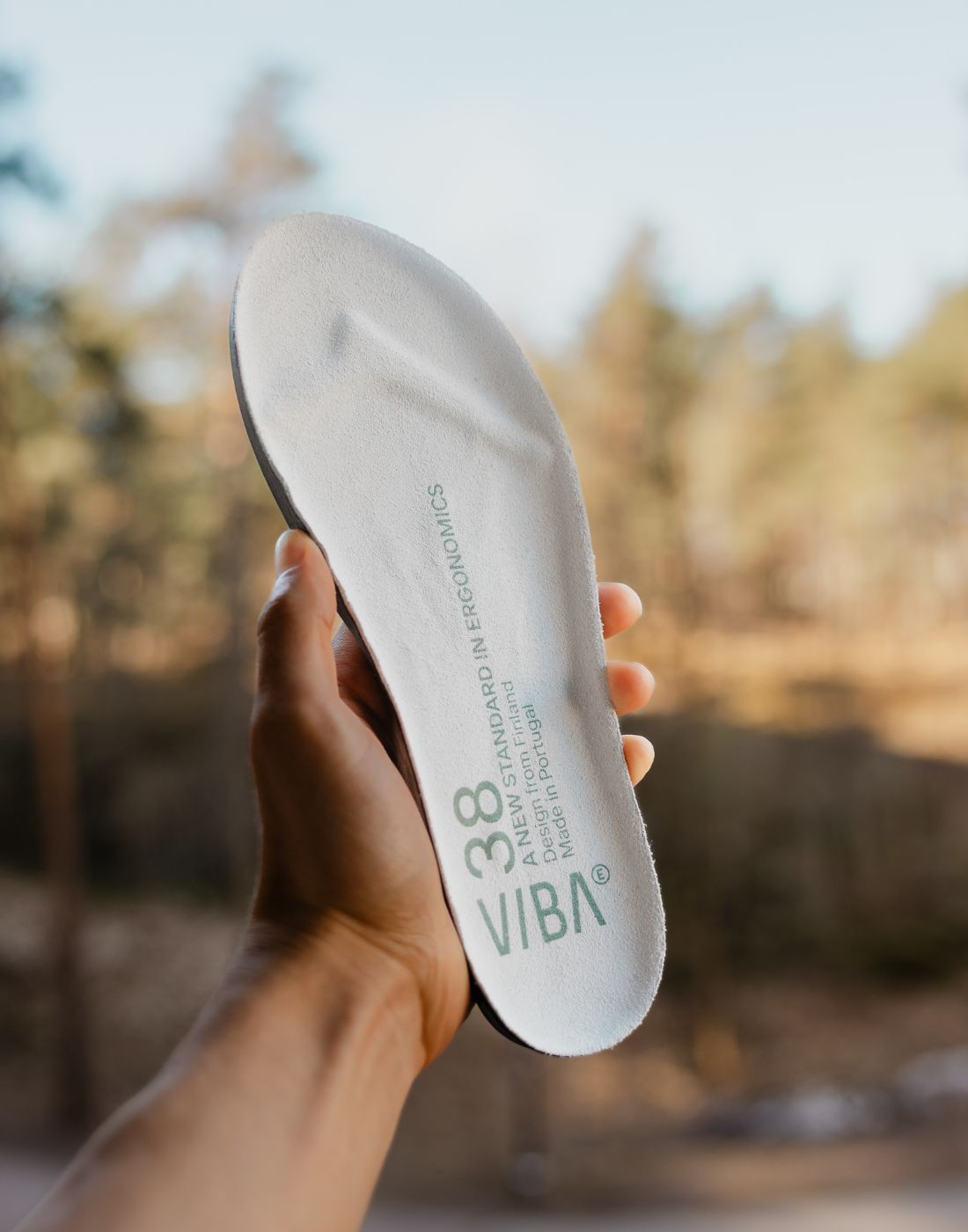
Beyond that, we build for repair over replacement. Our Carbon Step™ footbeds are removable and replaceable, so when the footbed wears out before the upper does you replace the footbed rather than the boot. A cobbler can often revive uppers and soles long after they look finished, and boots that are still good but no longer yours can go through the VIBAe Pre-Loved resale programme instead of a bin. We're not perfect on any of this, but each of those is a specific practice rather than a claim.
All boots shows the range side by side, including lined options for wetter weather, which is worth a look before you commit to one silhouette.
Boots built for real weather, and real feet. Explore Boots
Desert boot questions, answered
Are desert boots and chukka boots the same thing?
No. Chukka names the category, meaning any ankle-height boot laced through two or three eyelet pairs, while desert boot names one member of it: the version built on suede with a soft crepe sole. In practice the sole settles the label. Put the same suede upper on a leather sole or a heavy lug and most people would simply call it a chukka.
Can you wear desert boots in winter or in the rain?
In light rain and cool weather, yes, provided the suede has been treated with a protector spray. In sustained downpours, slush, or deep winter cold, no: unlined suede absorbs water and crepe grips poorly on wet smooth surfaces. Winter road salt also leaves pale tidemarks on suede that brushing alone won't lift. A lined boot with a treated leather upper is the sensible choice for those weeks.
Should you size up or down in desert boots?
Neither, as a rule. Measure your longer foot, check it against the size chart, and take the size that lets your foot fill the boot without a gap ahead of your longest toe. The leather is soft and will gently stretch where needed as it moulds, so a perfect fit from the start is the right start. A roomy toe box in your measured size beats sizing up in a narrow last, because a boot that is too long slides at the heel and creases hard across the vamp.
How long do crepe soles last, and can they be replaced?
It depends on your walking surfaces, your weight distribution, and how often you rotate pairs, so any single figure would be invented. Crepe wears gradually and softens as it goes rather than failing suddenly, and a good cobbler can usually resole it. Removable footbeds such as our Carbon Step™ can be swapped separately, well before the sole itself is finished.
The short version
What are desert boots, then? An ankle-height suede lace-up on a soft, flexible sole, with two or three eyelet pairs and almost no ornament: a construction, not a colour, which is why the desert boots meaning traces back to Cairo workshops rather than a design studio. What separates it from its cousins is specificity within the chukka family, and the absence of laces on a Chelsea boot. Before you buy, check that the toe box is wide enough for your toes to splay, that the sole suits the surfaces you actually walk on, and that you're willing to brush suede now and then.