


Ethical shoe brands UK: how to judge them (including us)
Created: 2026.08.16 | Modified: 2026.08.16
What makes a shoe brand ethical? Wages, materials, transparency — a checklist you can actually use.
An ethical shoe brand can show who made its shoes, what those people were paid, which materials went in, and what happens when the shoes wear out. Judging ethical shoe brands in the UK means asking for that evidence rather than accepting adjectives.
No brand scores full marks on every criterion. We don't, and we'll show you exactly where our own answers are incomplete further down. So this isn't a ranking of other companies. It's a checklist you can apply to any brand you're considering, including us, and it's written for the kind of reader who has already waded through a lot of vague eco copy and wants criteria instead. If you're comparing ethical footwear brands and the language has started to blur into one long green smudge, the five questions below will separate the ones with receipts from the ones with a mood board.
What makes a shoe brand ethical?
A shoe brand is ethical to the extent that it can evidence its choices about people, materials, longevity and disposal — and states plainly what it hasn't solved. Ethics is a set of verifiable practices, not a tone of voice. The test is simple: can you check the claim, or are you being asked to trust a feeling?
Two words get used interchangeably and shouldn't be. "Sustainable" points at environmental impact: materials, chemistry, emissions, waste. "Ethical" covers that ground and adds the people — who cut, stitched and glued the shoe, and under what conditions. Plenty of sustainable shoe brands talk fluently about recycled inputs while saying nothing at all about the hands that assembled them. A brand that names its factory and its tanning method is answering both halves of the question.
There's a reason a checklist beats a league table. Rankings age badly, they rarely explain their weighting, and they can't tell you whether a brand suits your feet or your life. Criteria travel. Once you know the five things worth checking, you can assess a brand nobody has written about yet, in about the time it takes to drink a coffee. That is the practical answer to how to tell if a shoe brand is ethical: you look for four kinds of specificity and one kind of honesty.
One more thing worth saying out loud. Greenwashing in fashion usually isn't an outright lie. It's a true-but-empty sentence doing the work of a fact: "responsibly sourced", "conscious materials", "made with the planet in mind". None of those tells you a tannery, a wage, a supplier or a repair route. Missing information is information.
The five criteria that separate ethics from marketing
Five things are worth checking, and they're not equally weighted. Labour and transparency carry the most weight, because everything else is unverifiable without them. Materials, repairability and end of life follow. Each criterion below starts with what it means for you as a buyer, then explains the mechanism underneath.
Labour: who made the shoe, and what were they paid?
What it means for you: a named factory is the single strongest signal you'll find, because a brand that names its makers has accepted that you can go and look. Anonymity is a choice, and it's usually a convenient one.
Shoemaking is skilled, hands-on work. A brand with a direct, long-term relationship with one factory knows the people on the bench, and the factory can plan its year around steady orders. Season-by-season sourcing through agents works the other way: pressure travels down the chain as price pressure, and price pressure lands on wages and hours. Ask whether a brand can name the factory, the country and the length of the relationship, and whether it says anything concrete about pay. Fair wages in a footwear factory are a supply-chain fact, and facts have specifics attached.
Materials: what the shoe is actually made of
What it means for you: material claims are where the most confident vagueness lives, and where a single specific word tells you more than a paragraph of atmosphere. "Vegetable-tanned" is a specific, checkable claim about how a hide was processed. "Eco leather" is not a claim at all.
Tanning is the part of leather production with the heaviest chemical footprint, which is why the method matters more than the finish. Vegetable tanning uses plant tannins rather than chrome salts, takes longer, and produces a hide that ages and patinates instead of cracking. It also has real inputs and real waste, which is why we describe it as a better choice rather than a clean one.
The vegan question deserves care. When people compare vegan vs leather shoes, environmental impact is usually the argument, and it rarely resolves as neatly as either side would like: many synthetic uppers are plastic-based, and durability is part of the impact maths. Vegan and ecological are not synonyms, and neither word describes a specific material. Ask what the material is, how it was processed, and how long it will last.
Transparency: how much can you verify without asking?
What it means for you: if you have to email a brand to find out where its shoes are made, that's already your answer. Real supply chain transparency means the information is published, findable and specific before you buy.
Look for a factory page rather than a factory mention, a materials page that names methods, and — the underrated one — a written admission of what the brand hasn't fixed yet. Admissions are hard to fake, and they're a reliable sign that someone in the building is measuring rather than decorating. Our own published criteria for making and sourcing decisions exist so you can hold us to something written down.
Durability and repairability: the quietest ethics test
What it means for you: the shoe that stays out of a bin for years does more good than the shoe recycled once, and it costs you less over its life. This is the criterion marketing departments talk about least and the one your wardrobe feels most.
Durability is a construction question, so look for construction answers: which parts are replaceable, whether repairable shoes you can resole are part of the design, whether the brand publishes care guidance, whether components are separable at all. Leather needs care to last, and a brand that gives you care and repair guidance is telling you it expects the shoes to outlive a single season. Slow fashion footwear is a design decision before it's a value: a classic silhouette earns its keep twice, because it goes with what you already own and it still looks right years later.
End of life: resale, repair, take-back
What it means for you: circularity only counts if there's a door you can actually walk through. A named programme with its own page and clear terms is evidence. "We're exploring circular solutions" is a sentence.
The three routes that exist in practice are repair, resale and take-back. Each needs an address, a process and someone administering it. A pre-loved shoe resale programme, for instance, has to handle returns, condition-grading and pricing, which is why it either exists properly or doesn't exist at all.
The scorecard for comparing ethical shoe brands in the UK
Score each brand out of five on the criteria above, weight labour and transparency double, and — this is the part most people get wrong — treat missing information as a fail rather than a neutral. Brands publish what helps them. Silence on a criterion is a finding, not a gap in your research.
Used that way, the scorecard sorts ethical footwear brands quickly, and it keeps working on brands nobody has reviewed. Here's what a strong, weak and red-flag answer looks like on each row.
| Criterion | Strong answer | Weak answer | Red flag |
|---|---|---|---|
| Labour and factory | Names the factory, the country and how long the relationship has run; describes the workforce and working conditions in concrete terms. | "We partner with trusted family-run workshops in Europe," with no factory, town or country named. | No country of manufacture anywhere on the site, or supplier details withheld as commercially sensitive. |
| Materials | Names the material, the tanning or processing method and the sourcing region; explains trade-offs rather than hiding them. | "Premium eco materials" or "conscious fabrics" with no composition given. | "Vegan" presented as the whole environmental case, with no material named and no durability claim. |
| Transparency | Factory, materials and end-of-life information published, findable and specific; gaps and unsolved problems stated in writing. | A sustainability page of adjectives, values and stock imagery with no checkable detail. | Certification logos with no issuing body named, or claims that disappear when you search the site for them. |
| Durability and repairability | Replaceable components, a resoling or repair route, published care instructions, construction described in detail. | "Built to last" with nothing replaceable and no repair information. | Fast release cadence at price points that assume the shoe gets replaced rather than repaired. |
| End of life | A repair, resale or take-back programme with its own page, clear terms and a way to participate today. | Circularity described as an ambition, a pilot or something under consideration. | Nothing at all, or "fully recyclable" with no collection route and no facility named. |
A brand can score honestly and still not be right for you, which is worth remembering while you tally. Fit, use case and how a shoe actually feels on your foot sit outside this framework, and they matter just as much.
Vegetable-tanned leather, no nasty shortcuts. See what goes into every pair. Explore Our Materials
How can you check a brand's claims in ten minutes?
Ten minutes on a brand's own website is usually enough to fill in the scorecard, because the evidence you need is either published or it isn't. Work through these five steps in order and stop scoring generously when a page gives you mood instead of method.
- Search the site for the factory. Look for a factory page, a country, a town and the length of the relationship. If the strongest statement is "made in Europe", note it as weak rather than strong and move on.
- Read the materials page for method words. Vegetable-tanned, chrome-free, the fibre content of a lining, where a hide came from. Method words are checkable; mood words such as "responsible" and "premium" are not.
- Test whether repair and resale are real. A genuine programme has its own page, its own terms and a route in. If you can't work out how to use it in two minutes, treat it as a promise rather than a practice.
- Find what the brand admits it hasn't solved. Search for the awkward parts: shipping, animal materials, packaging, offcuts. A brand willing to write down its unsolved problems is generally measuring them.
- Verify certifications at the source. If a brand names a standard, look it up on the certifying body's own site or register rather than trusting the logo. Footwear certifications vary a great deal in what they actually cover, and some apply to a single material or process rather than the whole shoe.
Some claims only mean something with third-party verification behind them: chemical management, tannery standards, organic fibre content, animal welfare. Those involve testing and auditing that no brand can do for itself. Other claims can be judged on published detail alone — construction method, replaceable parts, factory relationships, resale terms — because the detail either exists in public or it doesn't. Knowing which kind of claim you're reading saves you from asking for paperwork that was never the point, and from accepting a logo where paperwork matters.
We hold ourselves to the same procedure. Our radical transparency journey sets out what we've published, what we're still working on, and why we'd rather write down an unfinished answer than a flattering one.

Judging VIBAe by our own checklist
Applying our five criteria to ourselves produces strong marks on labour, materials and repairability, an honest partial on transparency, and a real trade-off list we'd rather you read than discover later. VIBAe is a Helsinki-born brand, our shoes are worn in more than 150 countries, and here's how we score.
Labour. Our shoes are handmade in Portugal at a family-run factory outside Porto, where Ismael has been making shoes since he was seventeen and now works alongside his son Denis and around a hundred other artisans. That's a named place, a named relationship and a long one — the same benches, the same people, season after season, rather than a rotating supplier list. Shoes made in Portugal aren't automatically ethically made shoes, which is exactly why we publish the specifics rather than leaning on the country name. You can meet the makers on Our factory page.
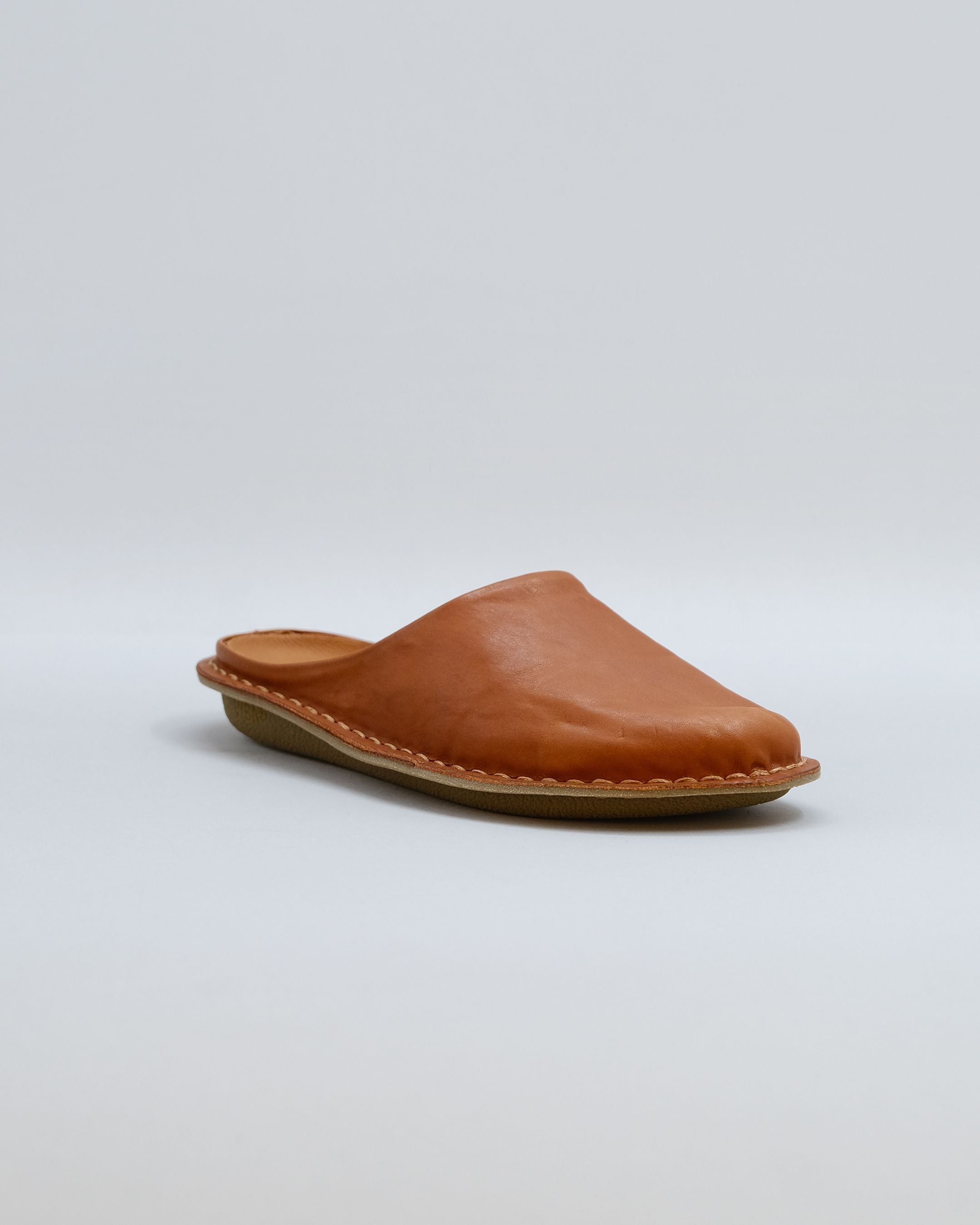
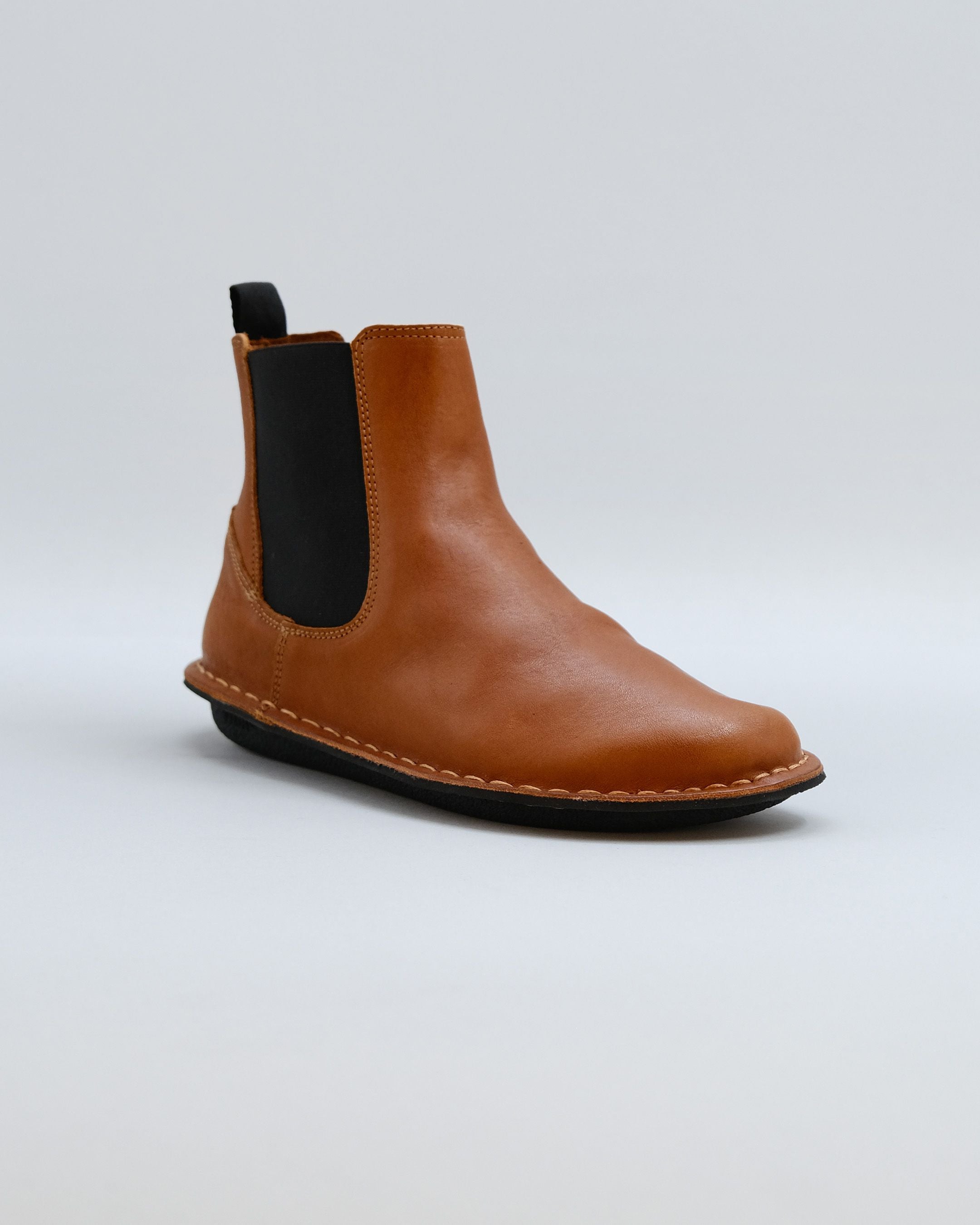
Materials. We use vegetable-tanned leather, tanned with plant tannins rather than chrome salts. It ages into a patina instead of cracking, and it takes longer and costs more to produce. Leather is an animal material with real impacts, and vegetable tanning reduces some of them rather than erasing them. We'd rather say that than call it eco leather and hope you don't ask.
Transparency. Our factory, materials and sourcing criteria are published. Our supply chain is not yet mapped in public to the last component, and we're not going to pretend otherwise while we work on it.
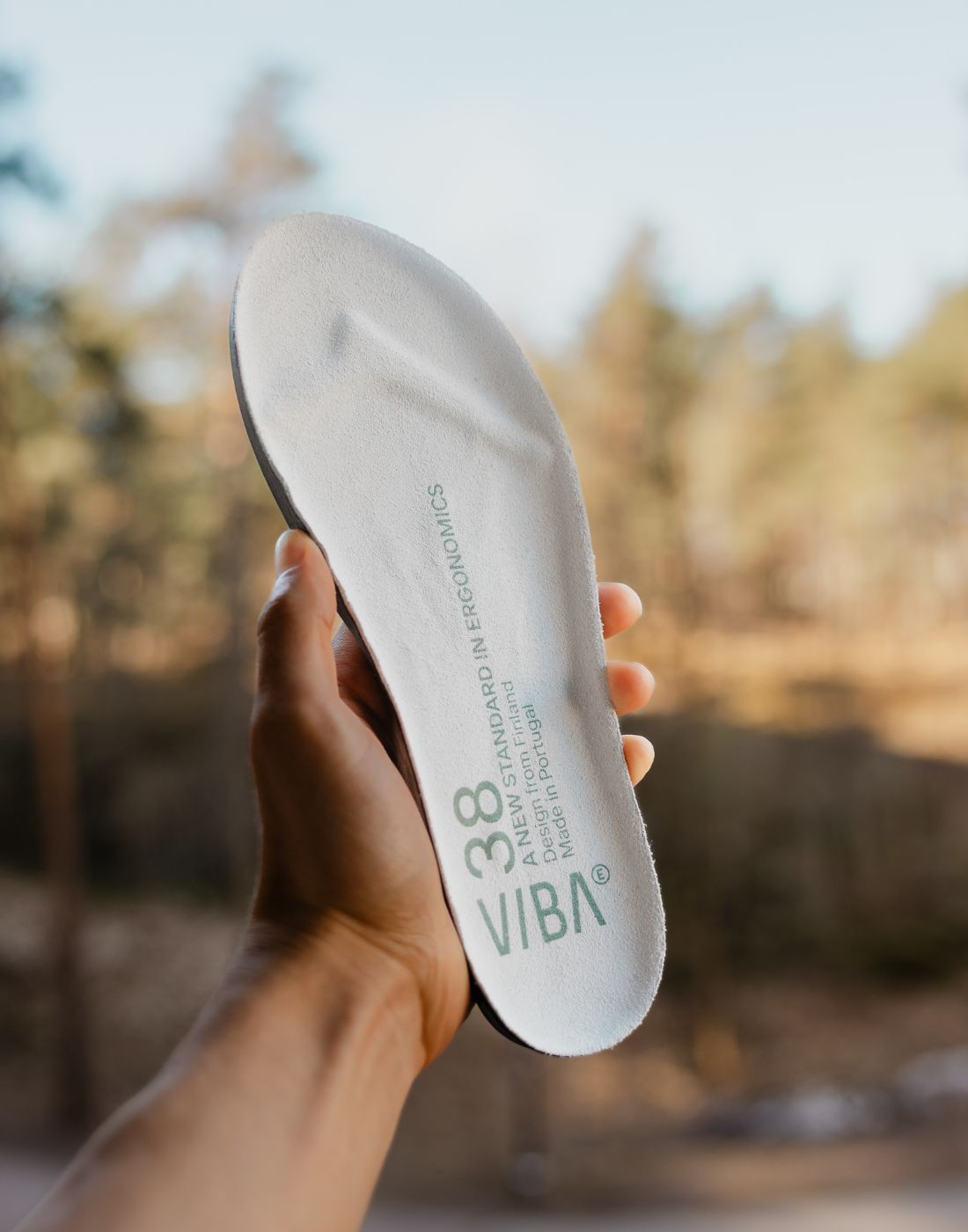
Durability and repairability. The Carbon Step™ footbed is removable and replaceable. When the footbed wears out before the shoe does, you replace the footbed — that's the entire point of making it removable. Combined with a classic unisex silhouette in sizes 35 to 48, that's a shoe designed to still make sense in your wardrobe years from now.
End of life. Pre-Loved is our resale programme, so a pair that no longer suits one person can walk with someone else instead of being thrown away.
Now the trade-offs, stated plainly. Leather is an animal material. Barefoot-style, low-drop, flexible soles take an adjustment period, because your feet do work that stiffer shoes were doing for them — ease in gradually, and if you have persistent foot pain, see a health professional rather than relying on a shoe to fix it. Shipping to over 150 countries carries a footprint we can reduce but not wish away. And we're a small brand, so some of the deeper verification work is a queue rather than a completed project. We're not perfect, but we're honest about where we are.
For anything live — sizing advice, stock and current prices — the store is the source of truth, since those change and this page is written to last.
Good shoes deserve a second walk. Shop Pre-Loved VIBAe. Explore Pre-Loved
Common misconceptions about ethical shoes in the UK
Four assumptions come up again and again, and each one quietly replaces a check with a shortcut.
"Vegan always means lower impact." It means no animal material. Many vegan uppers are plastic-based, and a shoe that lasts two years instead of ten carries the replacement in its footprint. Judge the material and the lifespan, not the label.
"A high price guarantees fair wages." Price reflects margin, marketing and positioning as much as production. Some expensive shoes are made cheaply. What tells you about pay is a named factory and a published relationship.
"A certification logo settles it." Certifications cover defined scopes — one material, one process, one site. Read what the standard actually certifies, on the certifier's own site, before you let a badge close the question.
"Made in Europe means fair conditions." European manufacturing generally operates under stronger labour law, which helps, but a continent is not a factory. The named workshop is the claim; the continent is context.
Frequently asked questions
What makes a shoe brand ethical rather than just sustainable?
Sustainability covers environmental impact: materials, chemistry and waste. Ethics includes that and adds people — who made the shoes, in which factory, and under what pay and conditions. A brand can use recycled inputs while saying nothing about its workforce. Naming the factory alongside the materials is what turns a sustainability claim into an ethical one.
Are leather shoes ever ethical?
Leather is an animal material with genuine impacts, so it depends on what you're weighing. The relevant questions are the tanning method, the sourcing and the lifespan. Vegetable-tanned leather avoids chrome salts and ages well, and a shoe worn for years spreads its footprint thin. Reasonable people still reach different conclusions here.
Which certifications actually mean something for footwear?
The useful ones are third-party audited and clear about scope: chemical management, tannery practice, fibre content, animal welfare. What matters is whether the certificate covers the whole shoe or a single material or process. Always verify a named standard on the certifying body's own site or public register rather than trusting a logo.
How can I tell if a brand's factory claims are genuine?
Look for specificity you could act on: the factory named, its location, how long the relationship has lasted, and photographs or descriptions of the actual workshop. Vague geography such as "made in Europe" is not a factory claim. Genuine claims invite scrutiny, so brands that publish them usually publish more when asked.
Is buying second-hand more ethical than buying new?
Usually, yes, because the shoe already exists and its production impact is spent. Buying second-hand or through a brand's own resale programme extends a pair's working life and keeps it out of waste. The strongest combination is buying well-made shoes less often, caring for them properly, and passing them on afterwards.
The short version: how to judge ethical shoe brands in the UK
Five questions, in order of weight: who made it and what were they paid, what is it made of and how was that material processed, how much can you verify without emailing anyone, what parts can be replaced or repaired, and where does the shoe go at the end. Score each one, weight labour and transparency highest, and count silence as a fail.
That framework holds whether you're comparing ethical shoes in the UK across five brands or assessing one you've never heard of, and it works just as well when you buy ethical shoes online in the UK, where the published pages are all you have to go on. Apply it to us as freely as to anyone else: read what our shoes are made of , meet the family factory behind them on Our factory , and see how a pair gets its second life through Pre-Loved resale . Where our answer is incomplete, we've said so — that's the whole point of publishing the checklist we're graded by.