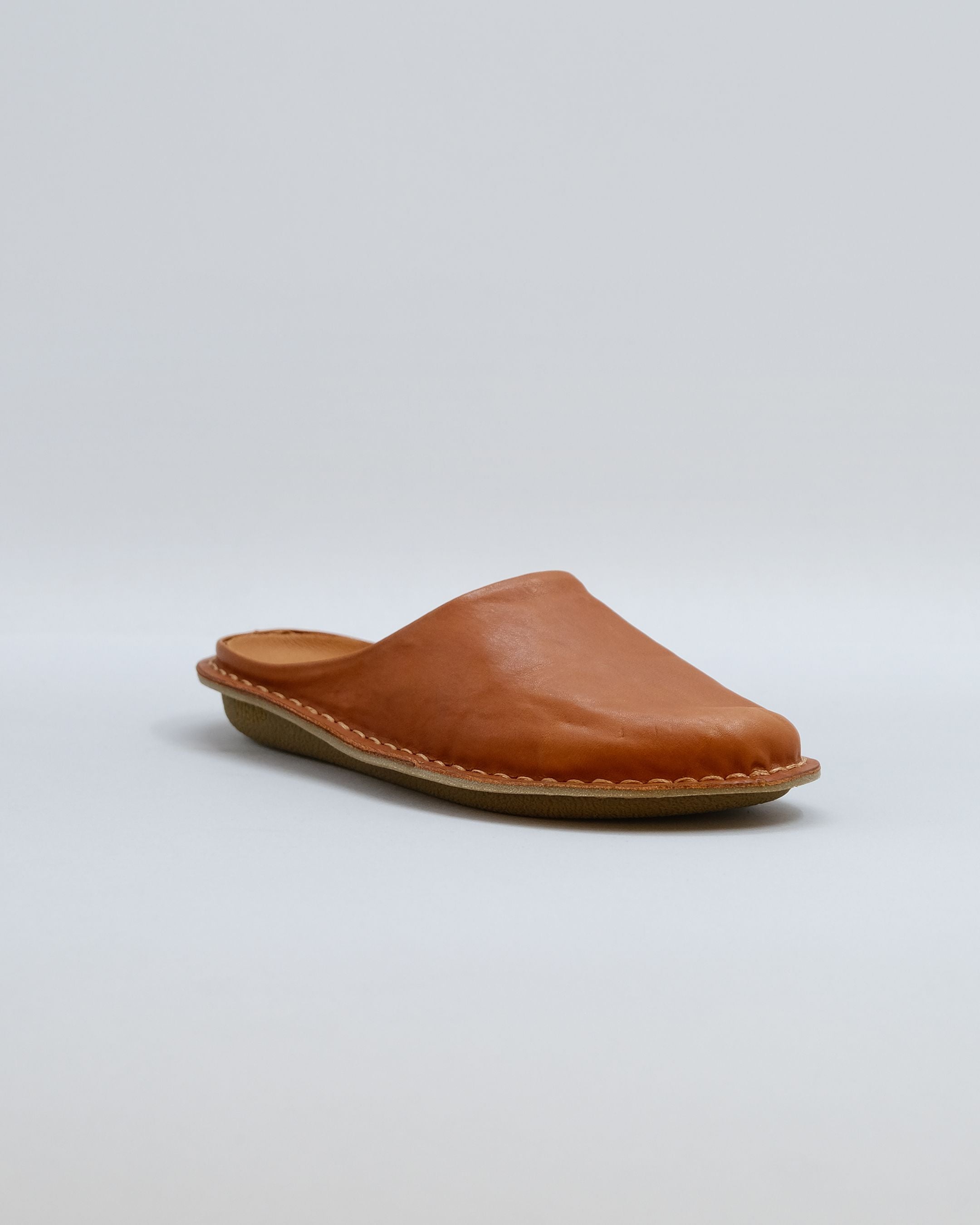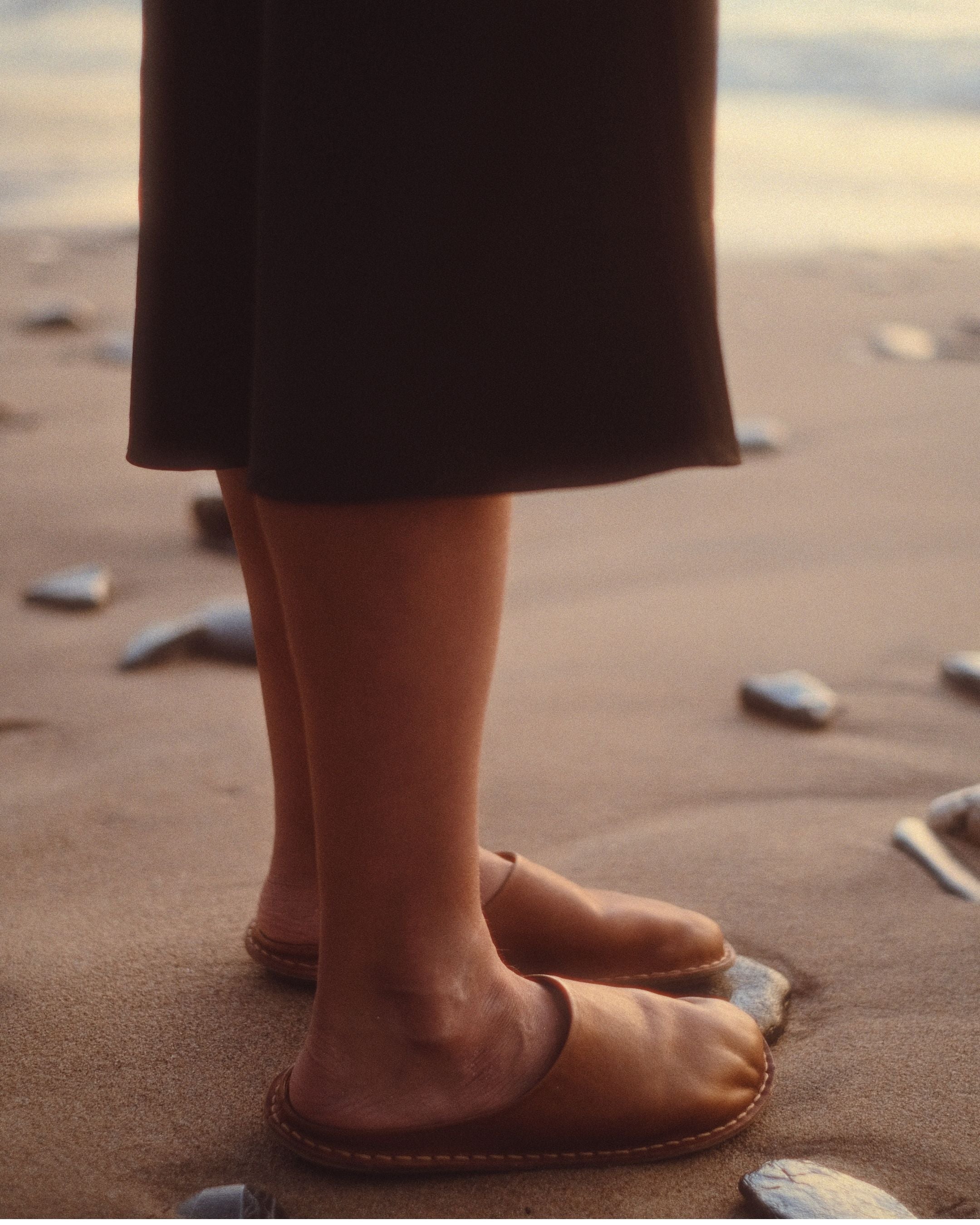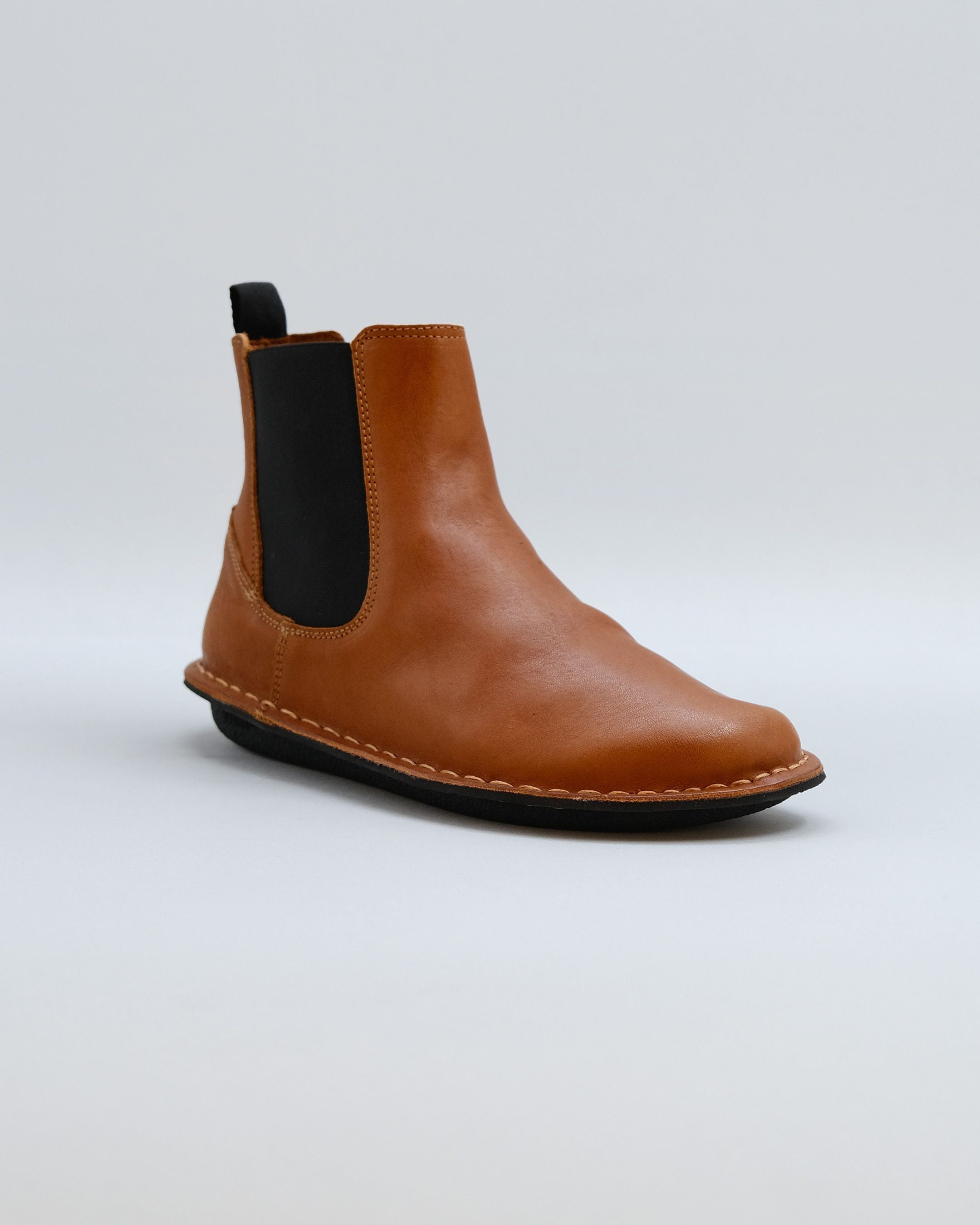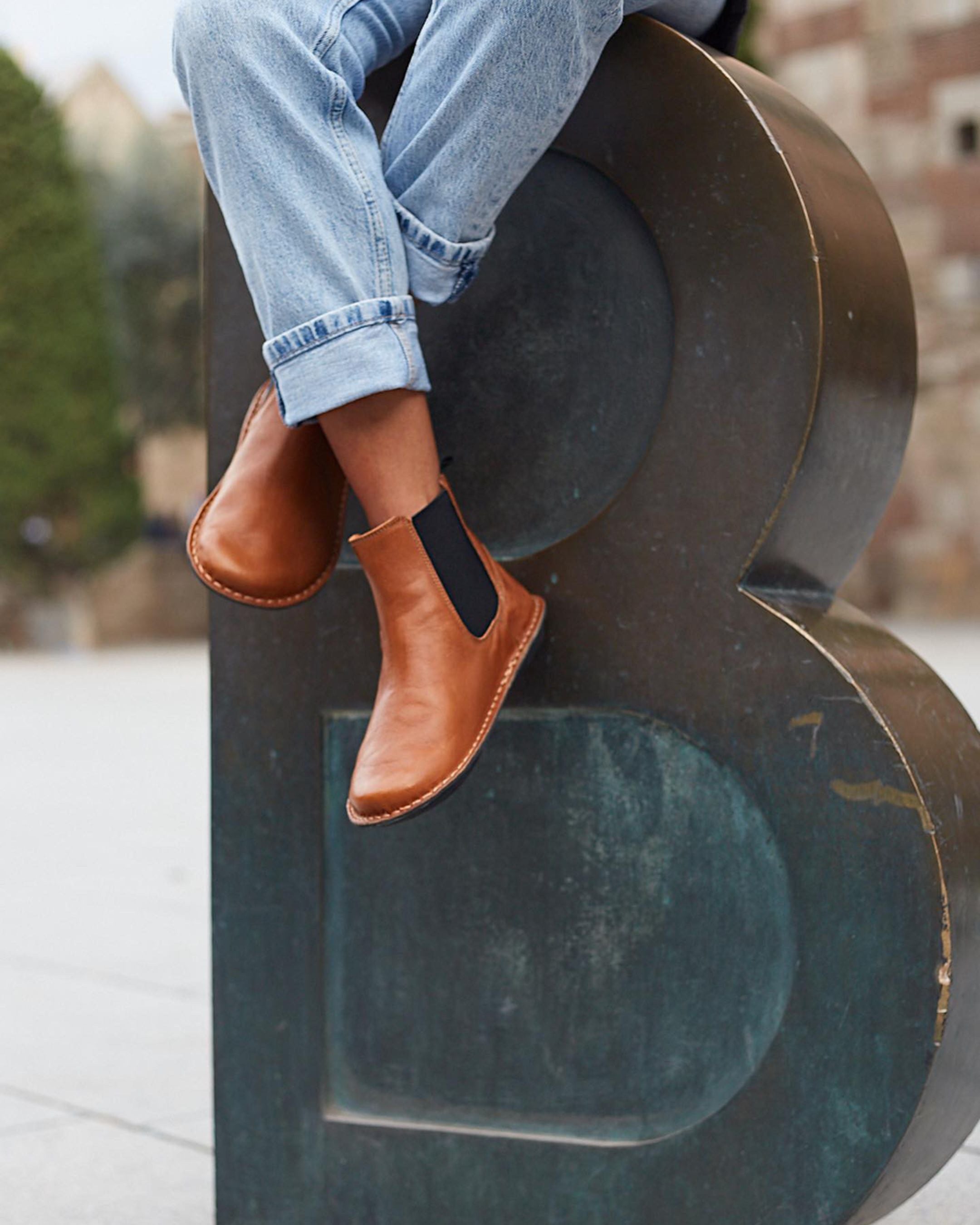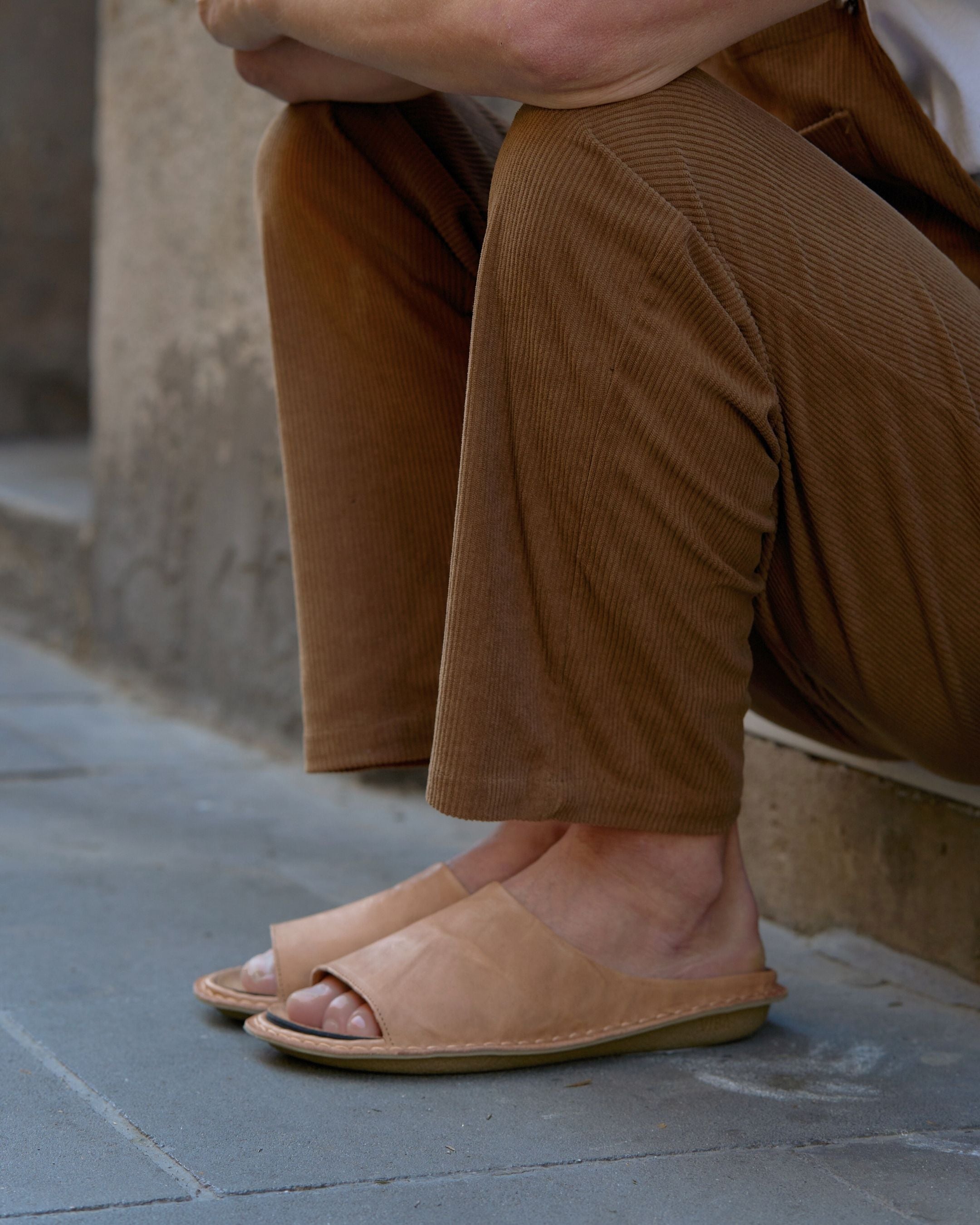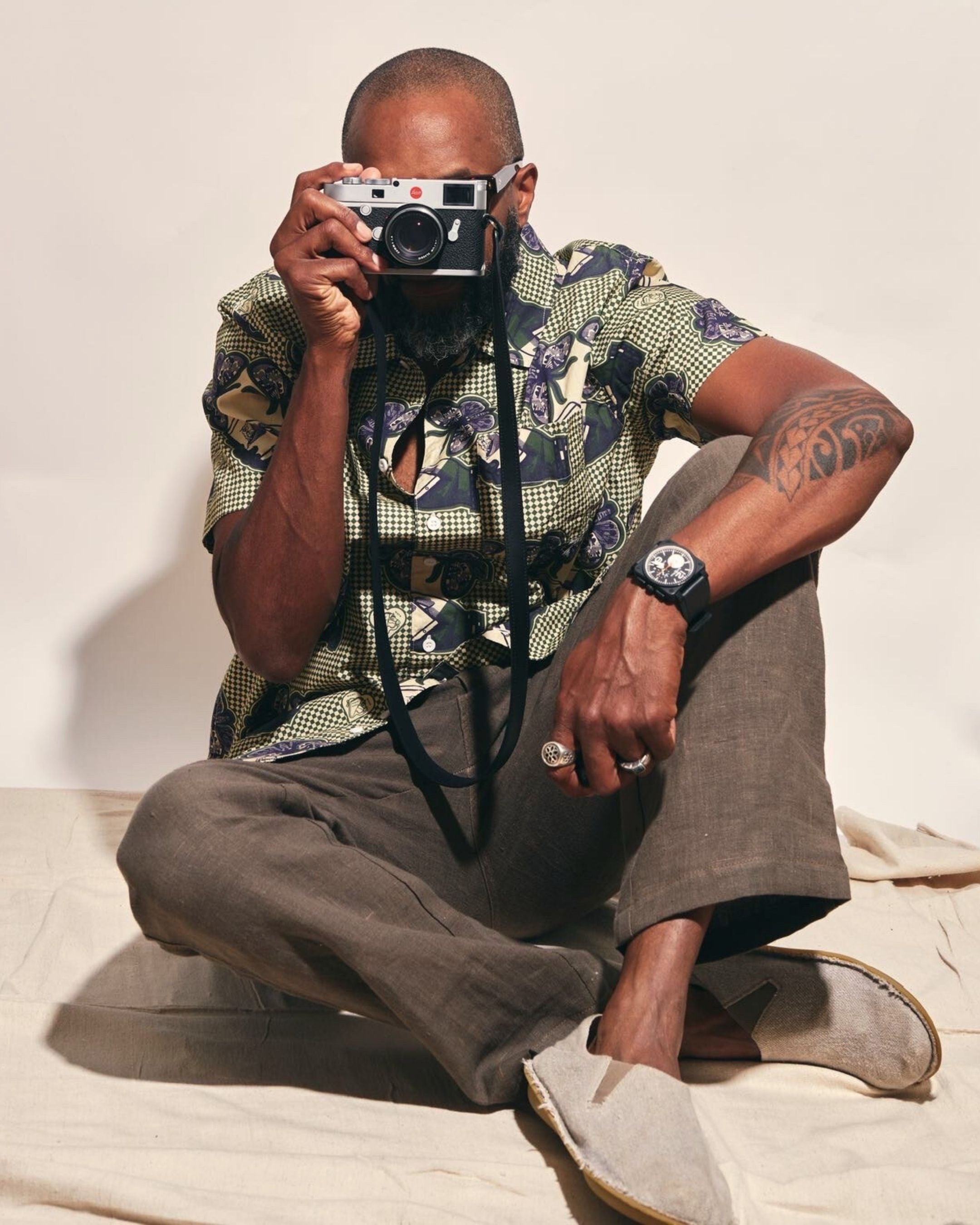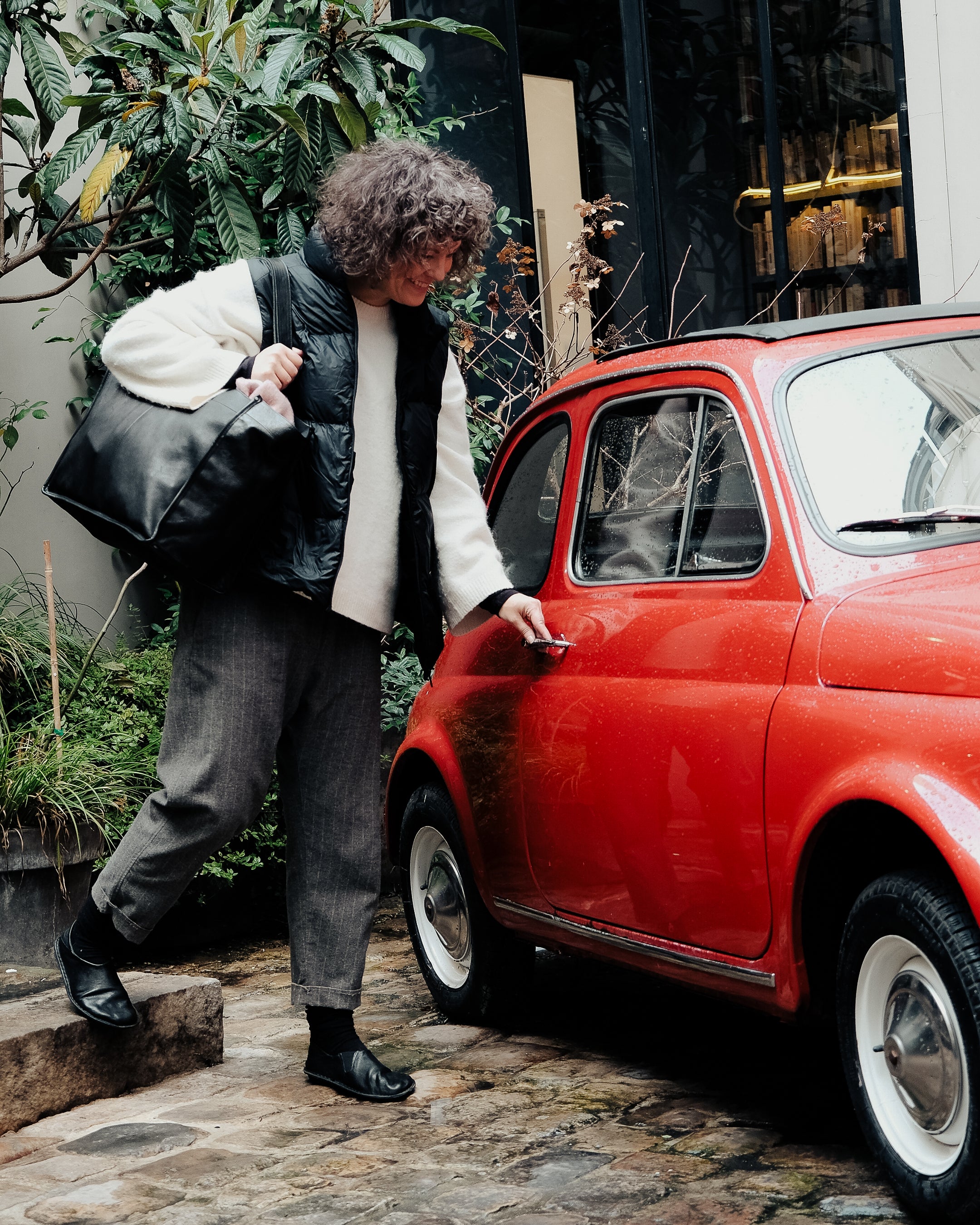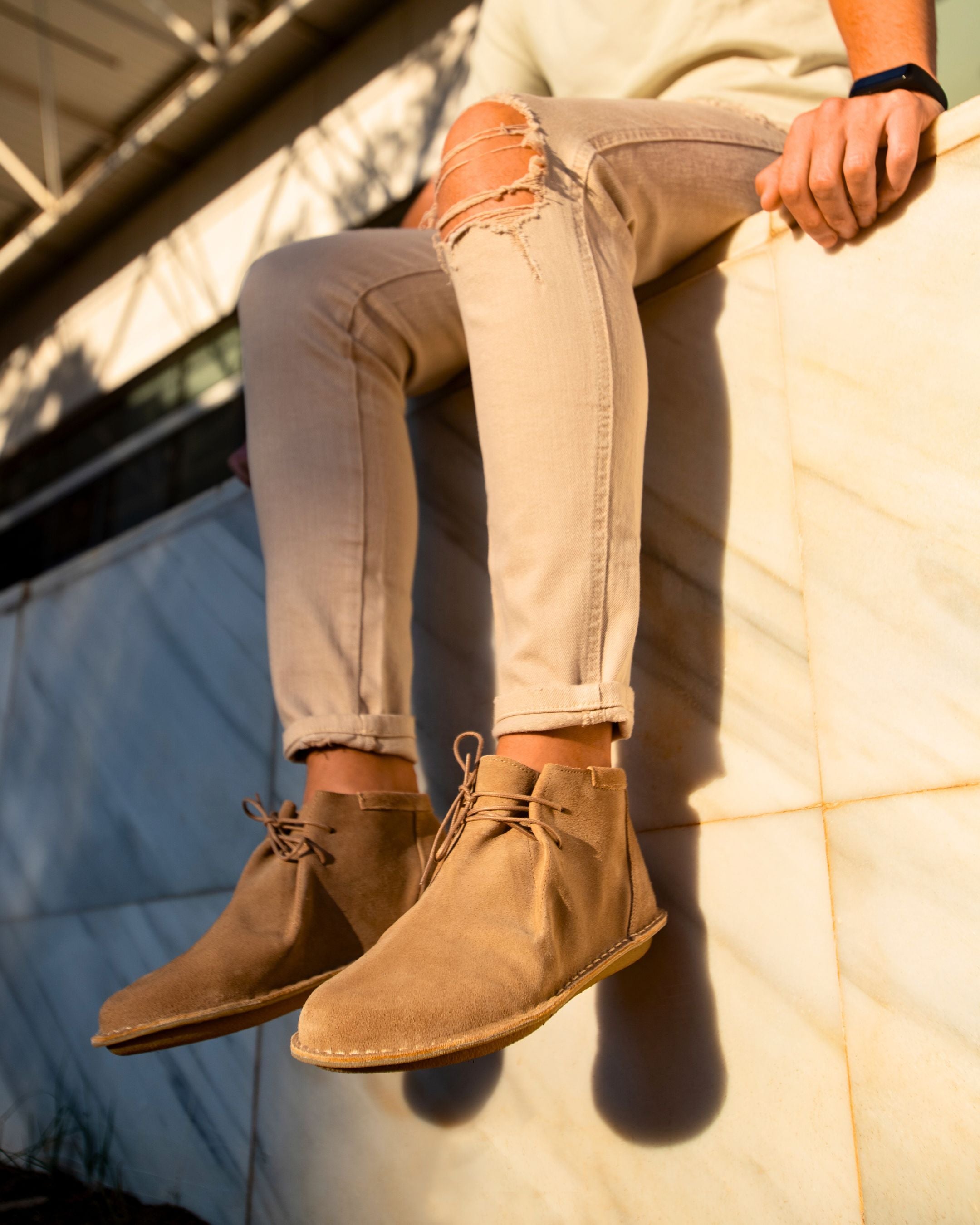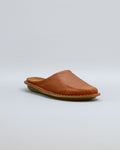
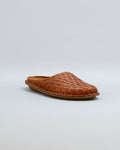
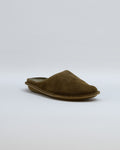

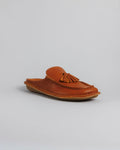
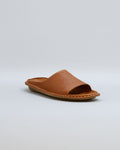

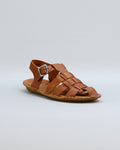
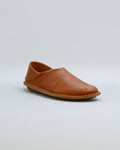
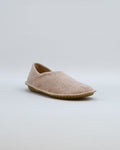
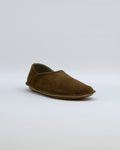
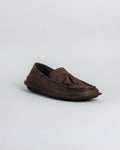
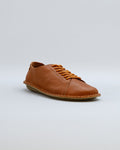
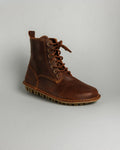
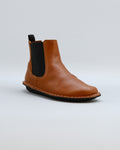
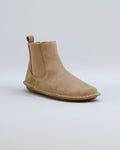
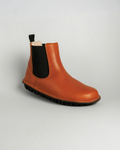
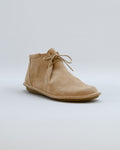
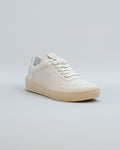
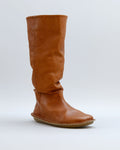
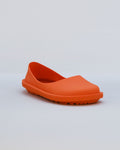
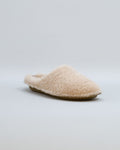
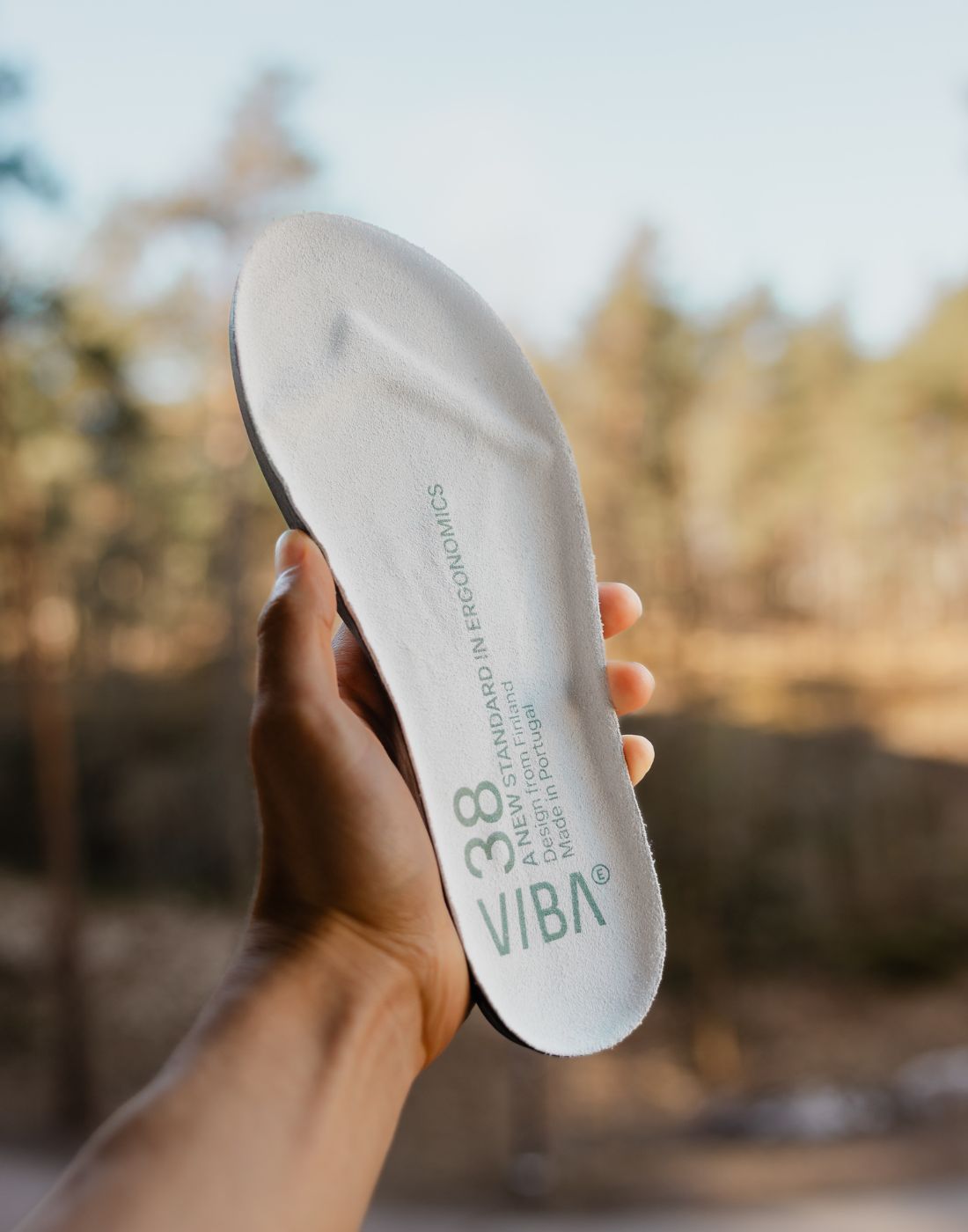

Barefoot shoes vs normal shoes comes down to how much the shoe does for the foot. Barefoot-style shoes use a flexible, thin, low-drop sole and a wide toe box so the foot moves and splays. Normal shoes add cushioning, heel lift and structure, which feels easier at first but asks less of the foot.
Barefoot shoes vs normal shoes: the short answer
Barefoot shoes vs normal shoes comes down to who does the work: barefoot-style shoes have a thin flexible sole, a low heel-to-toe drop and a wide toe box, so the foot moves and spreads; normal shoes use thick cushioning, a raised heel and a tapered toe instead.
Neither category is automatically the right one. Four structural differences decide it for most people: sole flexibility, sole thickness, heel-to-toe drop and toe box width. Everything else is detail.
Barefoot-style suits you if your toes feel crowded by mid-afternoon, if you want one level, flexible pair that covers work and weekend, and if you're willing to build up slowly. Conventional cushioned shoes suit you if you cover high mileage on concrete, need protective or safety footwear, or simply want comfort out of the box with no learning curve. Be honest with yourself about that last point: swapping a raised, cushioned heel for a level sole takes an adjustment period, because your calves and forefoot pick up the work a thick midsole used to handle.

Quick comparison at a glance
These are the eight features people actually weigh up when they're choosing between barefoot vs regular shoes. The table carries the detail, so skim it and come back.
| Feature | Barefoot-style shoes | Normal (cushioned) shoes |
|---|---|---|
| Sole thickness | Thin, keeping you close to the ground | Thick midsole with more material underfoot |
| Sole flexibility | Bends and twists with the foot | Stiffer sole unit, often with a shank |
| Heel-to-toe drop | Minimal or zero: heel and forefoot near level | Raised heel, weight tipped forward |
| Toe box shape | Foot-shaped last with a wide toe box for toe splay | Usually tapers towards the front |
| Cushioning level | Low; VIBAe adds the Carbon Step™ footbed, removable on most styles (11 mm heel, 14 mm arch, 7 mm forefoot) | High, moulded into the midsole and not removable |
| Weight | Light, packs flat | Heavier, more built-in structure |
| Transition period required | Usually: build up wear gradually | None: familiar from the first step |
| Best suited to | Everyday wear, work-to-weekend, travel, crowded toes | High-mileage running, rough or sharp terrain, protective footwear |
Read down the columns and a pattern appears. One design hands responsibility to the foot; the other absorbs, guides and protects on the foot's behalf. That's a structural difference, not a verdict. The verdict depends on your week, your floors and your patience, which is what the rest of this comparison sorts out.
What barefoot-style shoes actually are
A barefoot-style shoe lets your toes spread through a nine-hour day and lets you feel the ground you're standing on. It gets there with four things: a thin flexible sole, minimal or zero heel-to-toe drop, a foot-shaped last with a wide toe box, and low weight. Strict zero drop shoes keep heel and forefoot at exactly the same height; most barefoot-style designs sit at or very near that.
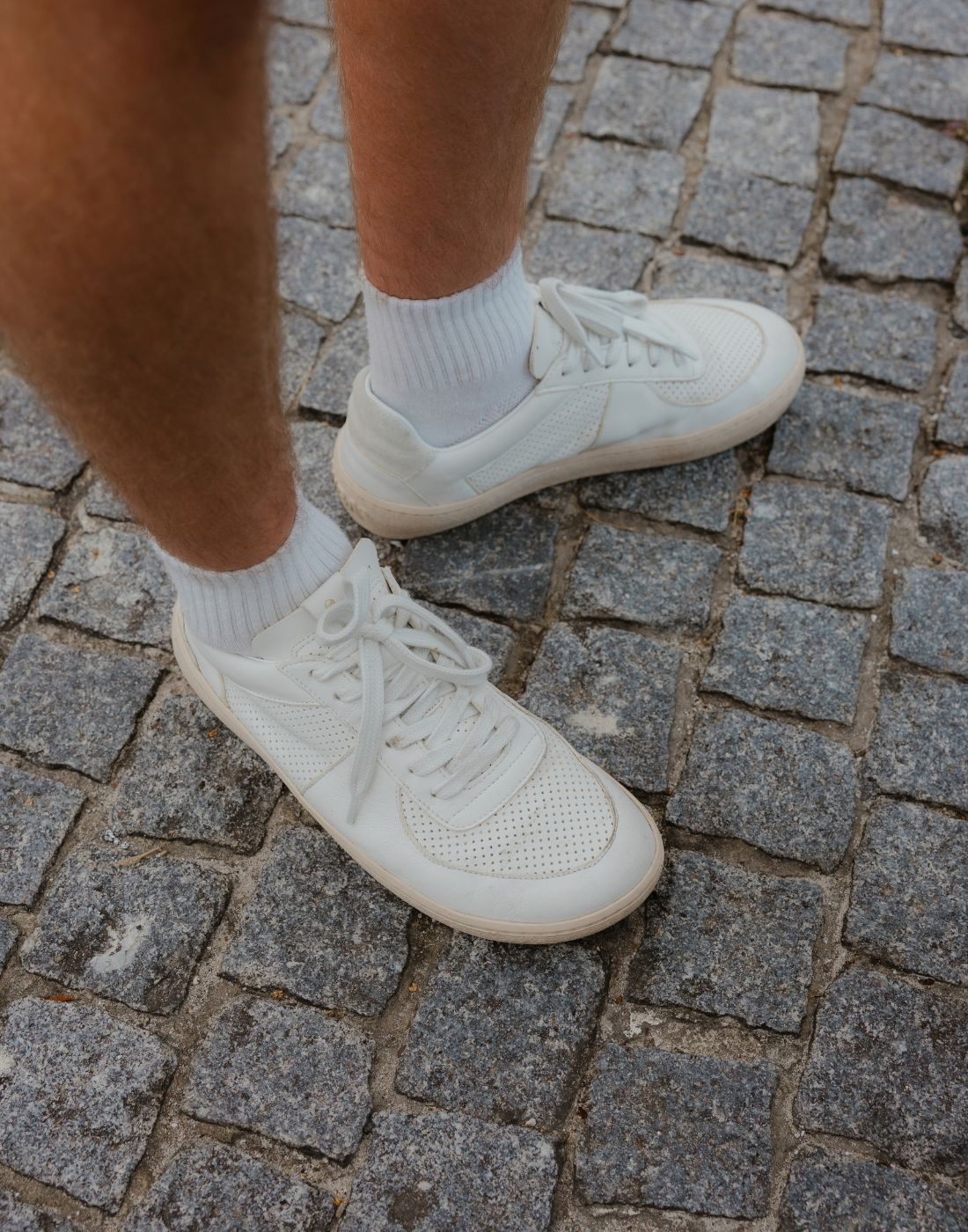
The strengths follow from the shape. Toes splay instead of stacking. The sole moves with the foot rather than against it, so your foot's own muscles stay involved. Light shoes are easier to wear all day and easier to pack. And because the silhouette can stay simple and low, a roomy shoe doesn't have to look orthopaedic — which matters if you came for the Nordic-minimalist line as much as the comfort.
The trade-offs are real. Less material underfoot means less buffer on hard city pavement. Thin soles wear faster under heavy mileage than thick ones. On sharp or uneven terrain you feel more of what you're walking on, which is the point and also the drawback. And the barefoot shoe transition period is not a marketing formality: calves, arches and the small muscles of the foot get worked in ways they haven't been for years.
VIBAe sits deliberately on the barefoot-style side rather than the dogmatically minimal one. Every pair comes with the Carbon Step™ footbed, removable on most styles, and its 11/14/7 Formula: 11 mm of cushioning at the heel, 14 mm of support at the arch and 7 mm at the front. So there is cushioning and arch support in the mix, just not a moulded slab you can't remove. It also means VIBAe isn't a strict zero-drop shoe: the footbed places the toes 4 mm lower than the heel, a low drop rather than none. For a lighter take on why people don't go back to their old shoes, see We warned you about your feet.
What normal shoes actually are
Conventional shoes give you comfort straight out of the box and protection from hard, cold, wet ground with no learning curve at all. The mechanism: a thick cushioned midsole, a raised heel that creates the heel-to-toe drop, a stiffer sole unit often reinforced with a shank, a toe shape that narrows towards the front, and a more structured upper.
Their strengths are easy to underrate when you've gone barefoot-style. Cushioned trainers absorb impact on concrete. Stiff soles and thick outsoles shrug off gravel and building sites. Nothing needs adapting, because your feet have worn this geometry for most of your life.
The trade-offs sit in the same features. A tapered toe box is where crowding happens, especially late in the day when feet have swollen slightly. A raised heel tips weight forward and changes how you stand. A stiff sole means the foot's own muscles do less, day after day. And a glued, moulded sole unit is hard to repair or replace, which is a different proposition from a shoe built around a footbed you can lift out and swap.
None of that makes cushioned shoes a mistake. For long shifts on unforgiving floors, or for high-mileage running, that cushioning helps some people, and keeping a cushioned pair in rotation is a sensible choice rather than a failure of conviction.

Feature by feature: minimalist vs cushioned shoes
Toe box width and toe splay
Barefoot-style shoes are built on a foot-shaped last, so the widest part of the shoe sits where the widest part of your foot is. Conventional lasts generally narrow towards the front, which is elegant on a shelf and less kind after eight hours. On this criterion the wide toe box wins for anyone whose toes feel pressed together by evening — our journal post Viva la wiggling toes makes the holiday version of the case.
Sole flexibility and ground feel
A thin sole that bends and twists lets your foot roll through a step and tells you what surface you're on. A thick, stiff unit smooths that information out and carries you over it. Our outsoles are natural rubber, thin enough to twist in the hand, and the Carbon Step™ footbed adds 7 mm of cushioning at the forefoot without locking that flex flat. Which one wins depends entirely on the surface: flexibility on floors, pavements and trains; protection on scree, ladders and sharp ground. Choose for the surfaces you actually spend time on, not the ones you imagine.
Heel-to-toe drop and posture
Low or zero drop keeps heel and forefoot close to level, so you stand roughly as you would barefoot. A raised heel tilts weight forward. For everyday standing and walking, a level stance is the more natural arrangement, with the honest caveat that calves and Achilles tendons used to years of raised heels typically need time to adapt.
Cushioning and long days on hard ground
This is where conventional shoes hold a real advantage: more foam, more buffer, no adjustment. VIBAe sits between the camps. The Carbon Step™ footbed works as an arch support footbed that, on most styles, you can lift out, replace or swap for another version, so there's support and cushioning without a moulded midsole. We describe it as roomy, flexible and supportive, and leave it there; persistent pain is a conversation for a health professional, and we've written more about everyday foot comfort in our journal piece on foot pain.
Weight, packability and everyday wear
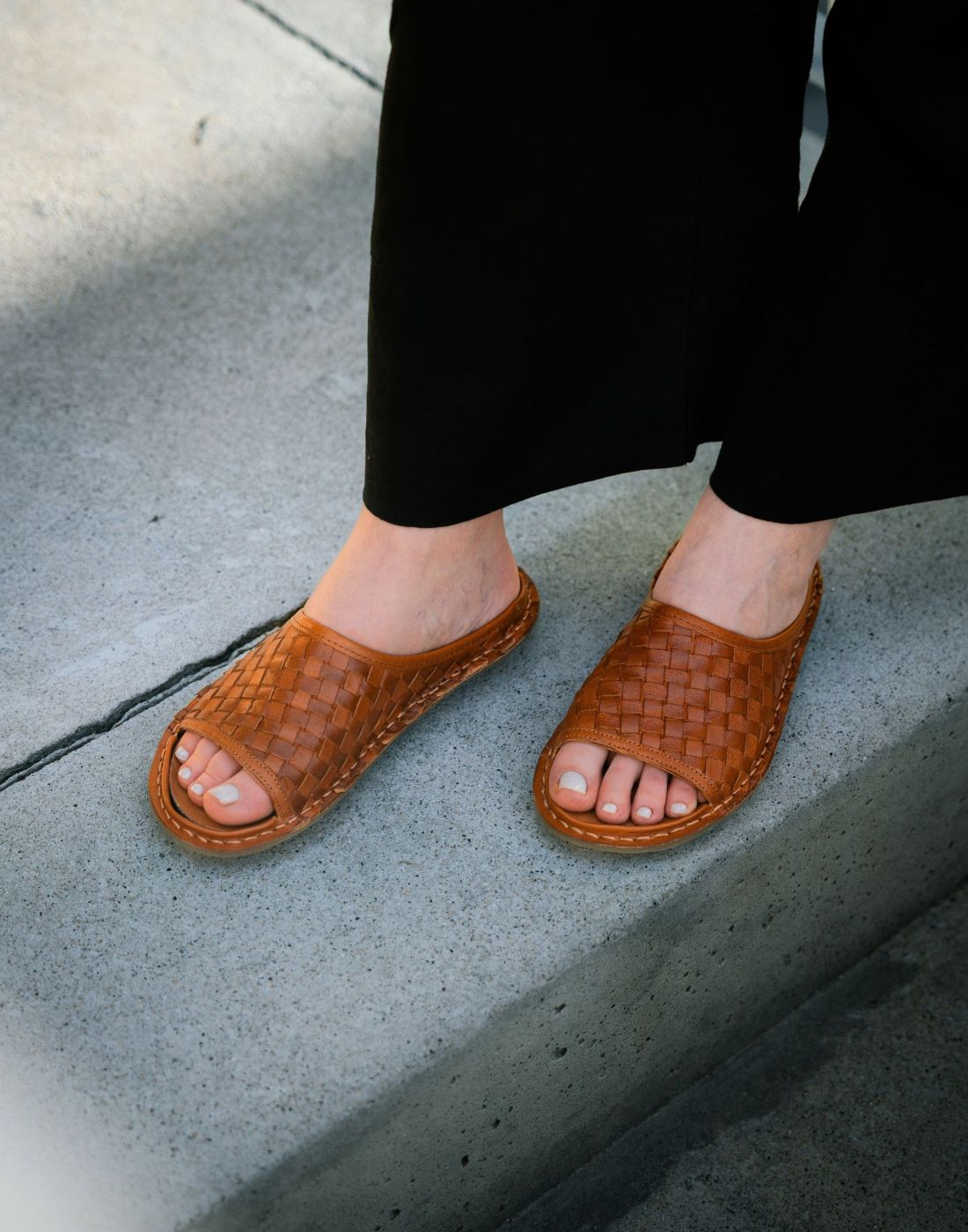
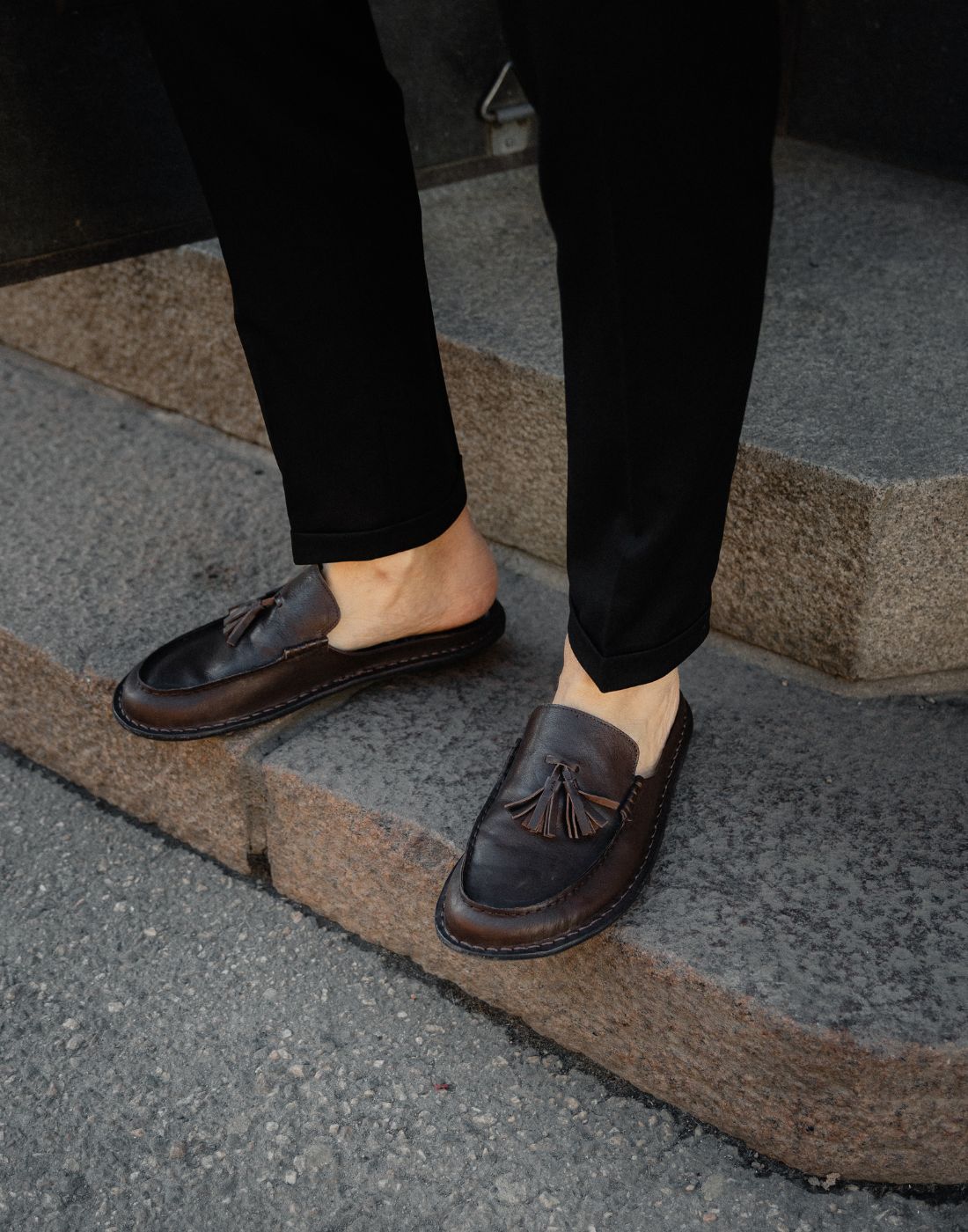
Light, flexible shoes pack flat in hand luggage and go on in a second, which is why our loafers and mules get worn to the shops and to dinner on the same day. Lift the Carbon Step™ footbed out and a pair flattens further still. Structured shoes with thick soles take up space and take longer to get into. For daily and travel wear, barefoot-style wins on this one: one unisex pair, EU 35–48, that covers the office, the train and the restaurant without a second bag.
Durability, repair and replacement
When the footbed wears out before the shoe does, you replace the footbed. That's the point of making Carbon Step™ removable: it lifts straight out and a fresh one drops in, and replacements are sold on their own from £45 on the store, though prices can change. The natural rubber outsole is tapped from trees without cutting them down.
The vegetable-tanned leather uppers, from LWG-audited tanneries, are made by hand in a family-run factory outside Porto, Portugal, where the shoemaking family works alongside around 100 other skilled artisans.
Leather needs care, though. Creams, drying away from radiators, and the odd honest scuff you learn to live with. When a pair has done its time with you, Pre-Loved, our resale and recycling concept with partner Ninyes, passes it on to a second owner. We're not perfect on any of this, but we'd rather tell you where we are than round it up.
Vegetable-tanned leather, no nasty shortcuts. See what goes into every pair. Explore Our Materials
Who should choose which: barefoot shoes vs normal shoes
There's no single answer, so here are the conditions. Weigh minimalist vs cushioned shoes against your own week rather than against a principle.
Choose barefoot-style if: your toes feel crowded by the end of the day; you want one level, flexible pair that handles the office and the weekend; you care about light weight and a simple silhouette; you want roomy everyday leather shoes that don't read as orthopaedic; or you're planning to rotate them in slowly alongside what you already own. If work dress code is the sticking point, our guide to barefoot shoes that pass an office dress code goes deeper.
Stay with cushioned shoes, or keep a pair, if: you run high mileage on concrete; you work long shifts on hard floors and haven't started transitioning; you need protective or safety footwear for your job; or you're working through a foot issue with a health professional. In that last case the professional guides the decision, not a shoe.
The realistic middle is where most of us landed. Plenty of the VIBAe friends & family started with one pair out of curiosity, kept the old shoes in rotation for months, and only noticed the change when the old ones started to feel narrow. That's a perfectly good way to do it. If you're starting somewhere, ROMA — the gateway shoe is the pair most people begin with.
Don't take our word for it — friends & family said it first. Read Customer Reviews
How to switch to barefoot shoes without regretting it
Go gradually and the change is uneventful. Go straight to a twelve-hour day on concrete and your calves will have opinions by lunchtime.
- Start short. An hour or two indoors, or a walk to the shops, for the first several wears.
- Build up by the week. Add time rather than intensity, and alternate with your current shoes on the heaviest days.
- Expect your feet to feel worked. Muscles that have been resting are now doing their job. Tired is normal; sharp or persistent pain means stop and speak to a health professional.
- Let the shoe settle too. The footbed and sole break in, and vegetable-tanned leather will gently stretch where needed.
On sizing: VIBAe is unisex, EU 35–48 (22.0–30.7 cm), and we don't make half sizes. Go one size up if you're between sizes, prefer thicker socks, or just like a looser feel. The size chart has UK and US conversions alongside centimetres.
The practical safety net: we offer a free return within 30 days of delivery, minus a €10 restocking fee, and a free exchange within 30 days of delivery. Standard shipping is free on purchases over €100.
Frequently asked questions
What is the difference between barefoot shoes and normal shoes?
Barefoot-style shoes have a thin flexible sole, minimal or zero heel-to-toe drop and a foot-shaped last with a wide toe box, so the foot moves and spreads naturally. Normal shoes use a thicker cushioned midsole, a raised heel, a stiffer sole and a toe shape that narrows towards the front. One design lets the foot work; the other does more of that work for it.
Which shoes give toes the most room to spread?
Shoes built on a foot-shaped last give the widest toe box, because the shoe is shaped like a foot rather than tapering to a point. Nearly every VIBAe style is built that way (the PORTO slide is cut for narrower feet), in unisex EU sizes 35–48 (22.0–30.7 cm). Leather uppers also gently stretch where needed as you wear them.
How long does it take to get used to a flexible, low-drop sole?
It varies with how much time you've spent in raised, stiff-soled shoes and how much you're on your feet. Start with short wears, build up over several weeks, and keep your old pair in rotation while your calves and arches adapt. If discomfort persists rather than fades, speak to a health professional.
Are barefoot shoes good for walking all day on hard floors?
Many people wear them for full days once they've adapted, and the Carbon Step™ footbed adds 11 mm of cushioning at the heel, 14 mm of support at the arch and 7 mm at the front. Before you've adapted, a full day on concrete is too much too soon. Build up to it and keep a cushioned pair for the heaviest days.
What size should be ordered when there are no half sizes?
Go one size up if you're between sizes, prefer thicker socks, or like a looser feel. VIBAe sizes run EU 35–48 (22.0–30.7 cm), unisex, with UK and US conversions on the size chart. The leather will gently stretch where needed as the shoe settles to your foot.
Get the right fit first time — check the size chart, and go one size up if you're between sizes. Check the Size Chart
The bottom line
Barefoot vs regular shoes is a question of four structural choices: sole thickness, sole flexibility, heel-to-toe drop and toe box width. Barefoot-style hands the work back to your foot; conventional cushioning takes it on.
Choose barefoot-style for room, flexibility and a level stance, provided you'll give your feet the transition time. Keep cushioned shoes for high-impact mileage, rough terrain and protective needs. If you're ready to buy barefoot-style shoes in the UK, remember that specifications, prices and availability can change, and the store is the source of truth for what's current.