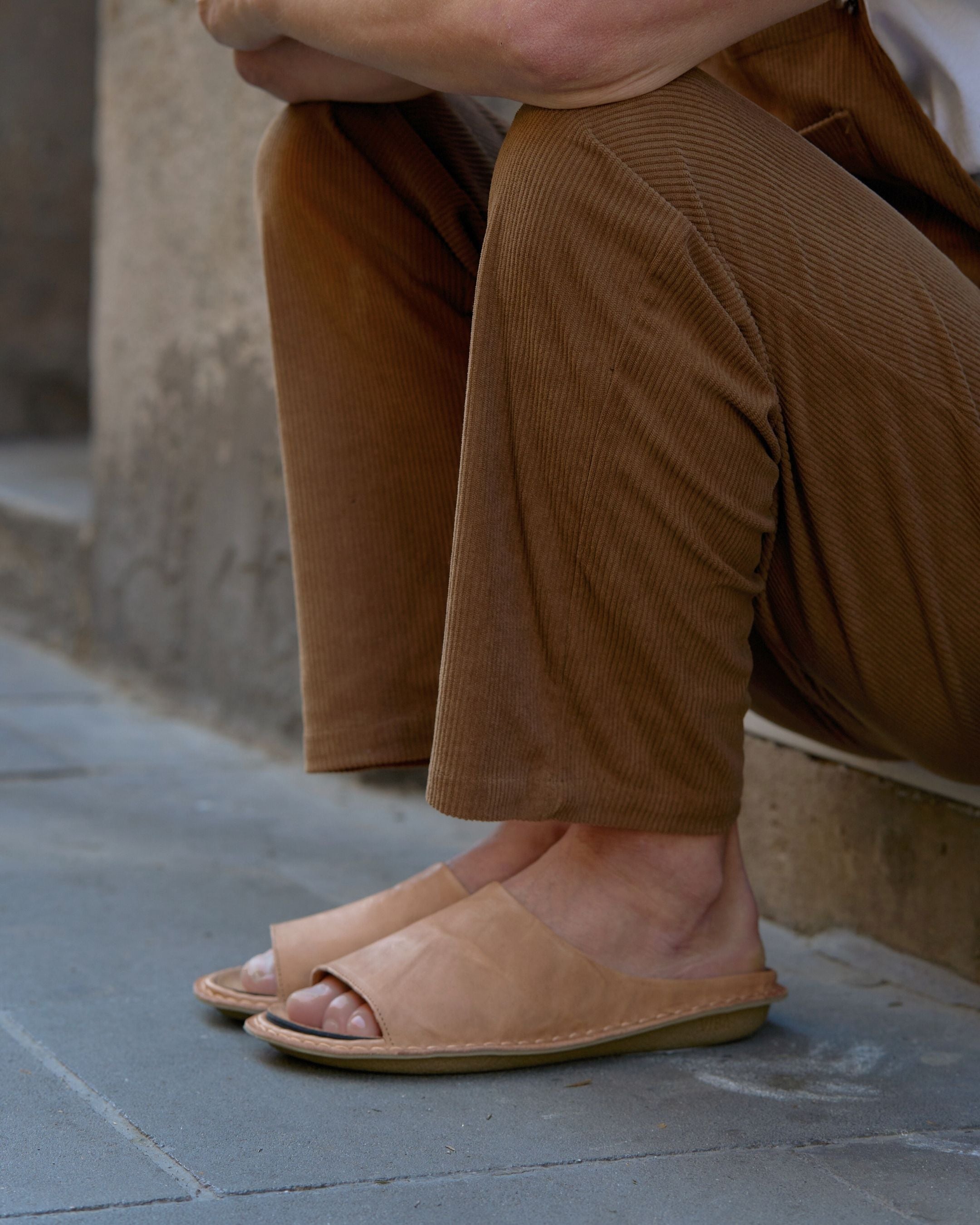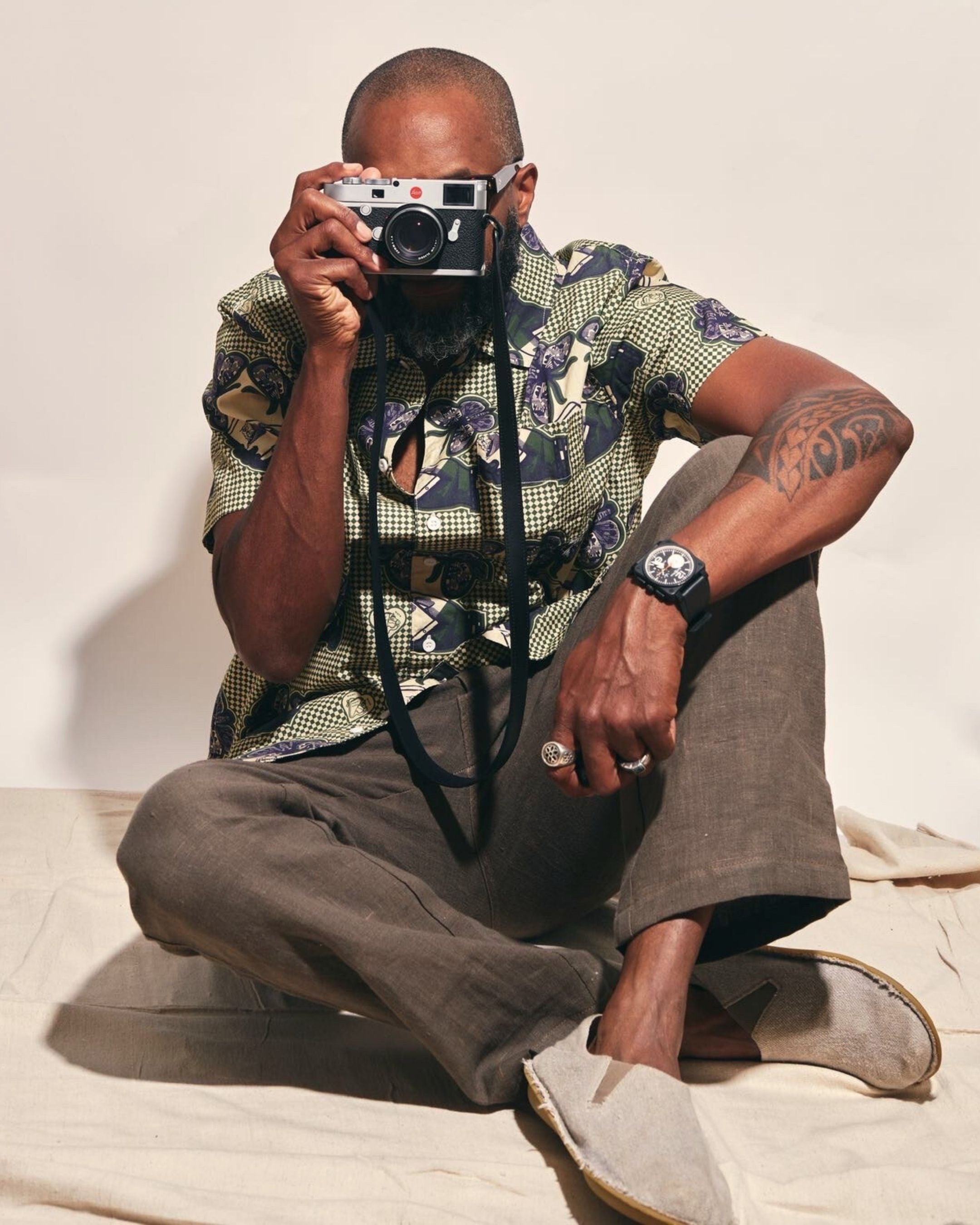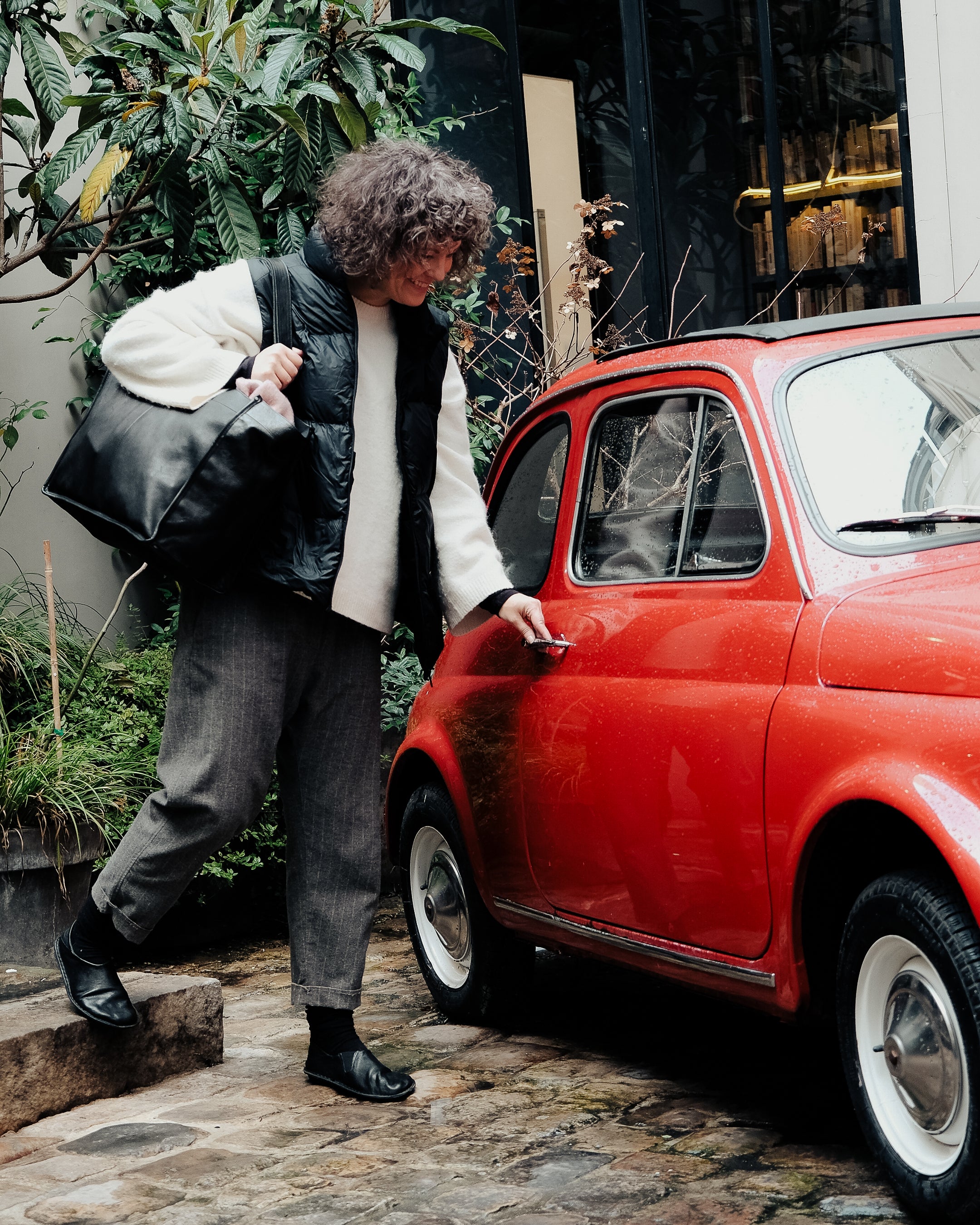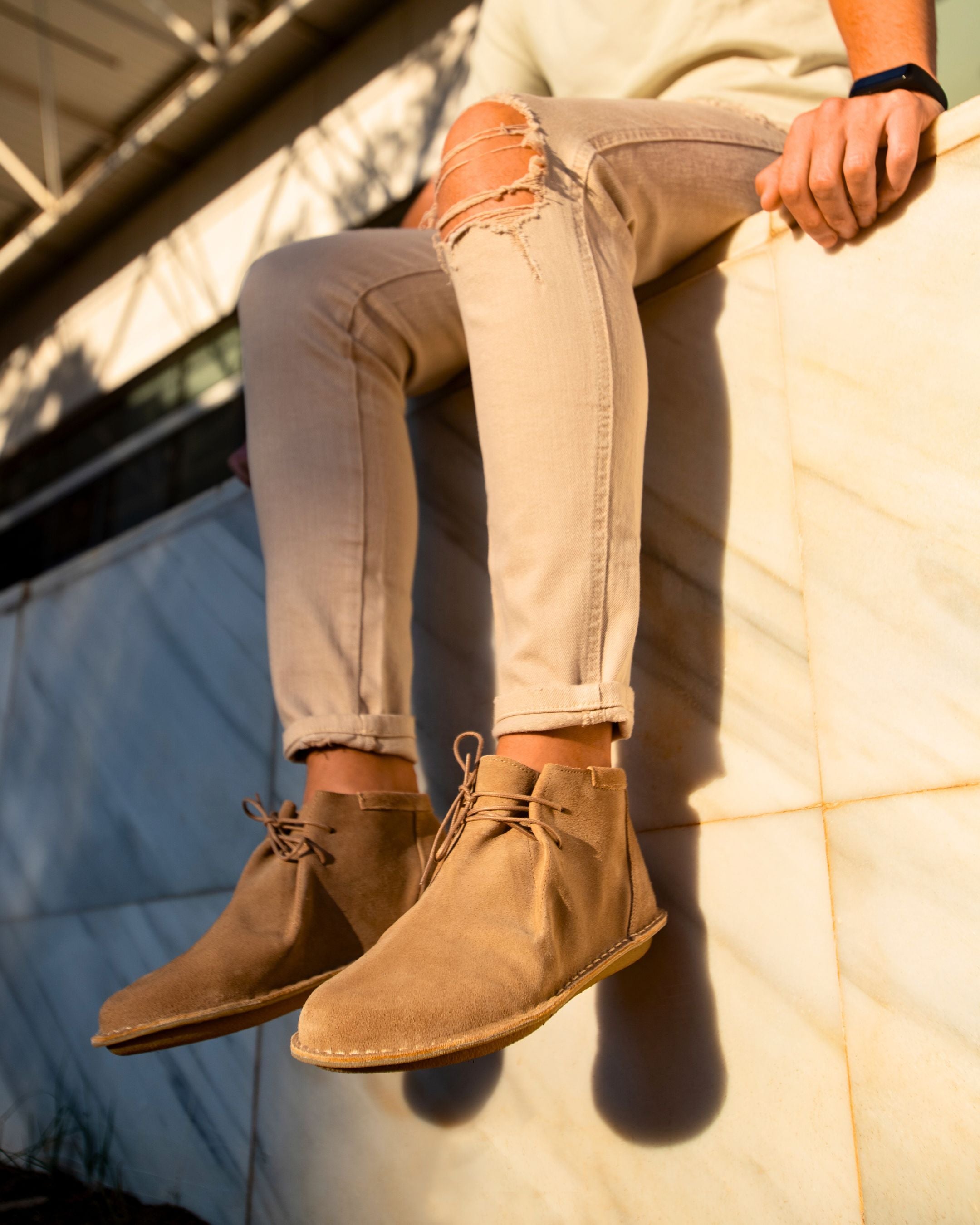


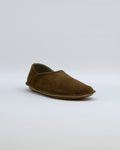
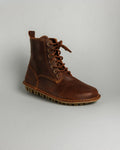
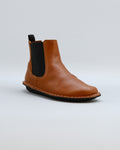
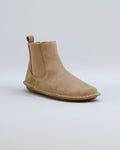
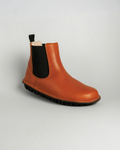
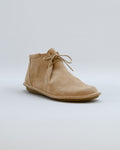

Chukka boots are ankle-height lace-up boots with two or three pairs of eyelets and a shaft that stops around the ankle bone. The upper is usually suede or smooth leather, stitched from only a few pieces, which gives the style its clean, unfussy outline.
What are chukka boots?
A chukka boot is an ankle-height lace-up boot with two or three pairs of eyelets, a shaft that stops around the ankle bone and an upper cut from only a few pieces. The name describes a shape, not a brand or a single model. It comes from polo, where a chukka is a period of play. What defines the boot is the silhouette: short shaft, minimal panels, open lacing, nothing decorative.
A note on where we stand. We don't sell anything under the chukka name. The closest style in our range is JTREE suede desert boots, and a desert boot is one variant of the chukka family. So this is a definition, written by people who make ankle boots for a living.
The details that make a boot a chukka
Three things identify a chukka on sight: the eyelet count, where the shaft stops, and how few seams the upper carries. Each one changes how the boot behaves on your foot. Here are the hallmarks side by side before we take them one at a time.
| Feature | What you'll see | What it means on the foot |
|---|---|---|
| Lacing | Open lacing, two or three pairs of eyelets | Quick on and off, limited adjustment across the instep |
| Shaft height | Finishes around the ankle bone | Ankle clears freely; the heel still feels held |
| Upper | Suede or smooth leather, few panels, few seams | Soft break-in, clean lines, fewer places to rub |
| Sole | Crepe, natural rubber or leather | Ranges from springy and casual to slim and tidy |
| Typical use | Everyday wear, smart casual, work-to-weekend | One pair covers most of a normal week |
Eyelets and lacing
Two or three pairs is the usual count, and two eyelet boots are the purest version of the shape. Fewer eyelets means less adjustment across the instep. If your foot is high or wide, that's worth knowing before you buy: a two-eyelet boot gives you one point of leverage over the fit, where a five-eyelet derby boot gives you several. Lacing on a chukka is open, with the quarters sitting over the vamp rather than stitched down under it, which is part of why the boot slips on easily.
Shaft height and the ankle line
The shaft stops low enough to clear the ankle joint and high enough to hold the heel in place. That's the balance the shape exists for. Compared with a taller lace-up boot, a chukka asks less of your ankle when you squat, climb stairs or sit cross-legged, and it looks lighter under a trouser leg. You do get less lateral support on rough ground, so a chukka is a city and everyday boot, not a hiking one.
Uppers, linings and soles
Suede and smooth leather are the two common uppers. Suede chukka boots look softer and more casual; smooth leather ankle boots look tidier and take polish. Soles run from crepe, through natural rubber, to stacked leather. Suede marks more easily in the wet and needs regular brushing with a suede brush plus a protective treatment before you wear it out in a British autumn. Crepe soles are springy and quiet but pick up grit. Leather soles look sharpest and last well with resoling, though they're the least forgiving on wet pavement.
Leather quality matters more than the panel count. Our leather uppers are vegetable-tanned rather than chrome-tanned.
Chukka or desert boot? Where the names overlap
Every desert boot is a chukka, but not every chukka is a desert boot. The desert boot is the particular version with a suede upper, two or three pairs of eyelets and, traditionally, a crepe sole. Change the sole to leather or the upper to polished calf and you still have a chukka, just not a desert boot. Our JTREE keeps the suede and the shape on a natural rubber sole.
If you want the longer version, including where the desert boot came from and how it sits against a Chelsea boot, we've written that up separately: what are desert boots.

How to wear chukka boots
One pair carries a week of outfits, which is why the shape has outlasted most boot trends. Learning how to wear chukka boots is mostly about hem length and material. Get those two right and the rest looks after itself.
Jeans, chinos and everyday wear
Slim or straight legs that break just at the ankle let the short shaft show, which is where the shape earns its keep. Chukka boots with jeans work best with a trouser that stops clean rather than stacking in folds over the laces; a tapered leg with a single turn-up does the same job. Suede in sand, tan or black is the easiest starting point, since all three sit under denim, olive and grey without a second thought. Wider or longer hems hide the boot entirely, and then you may as well be wearing anything.
Smarter settings
Smooth dark leather on a slim sole reads tidier than crepe-soled suede, so that's the combination for an office or a dinner. A chukka suits soft tailoring, an unstructured jacket, wool trousers, a knit, far better than it suits a formal suit. Where it doesn't work: black tie, a morning suit, or anywhere an Oxford shoe is genuinely expected. A chukka is one of the more useful smart casual boots, not a dress shoe pretending to be casual.
None of this is gendered. Chukka boots for men and for women follow the same hem-and-material rule, and our own range is one unisex collection in EU sizes 35 to 48.
A little care goes a long way: simple tips for leather, suede and shearling.
Read Care Instructions
Fit and comfort: what to check in any ankle boot
The payoff for getting fit right is a boot you forget about by mid-morning and still want on at nine in the evening. Four checks do most of the work: how the boot sits from heel to toe, how the laces hold your instep, where the collar meets your ankle bone, and how the sole flexes as you roll through a step.
Because a chukka has a short shaft and few eyelets, the lacing carries more of the job than it would on a taller boot. There's less structure above the ankle to stop your foot sliding forward, so the instep has to be held properly. If the laces are tight and your heel still lifts, the boot isn't right for your foot. Your foot should feel held all round. With our leather, the perfect fit can feel close at first, almost like a well-fitted glove; the leather will gently stretch where needed. At the collar, the leather should sit just above the ankle bone without pressing on it, and the sole should bend where your foot bends.
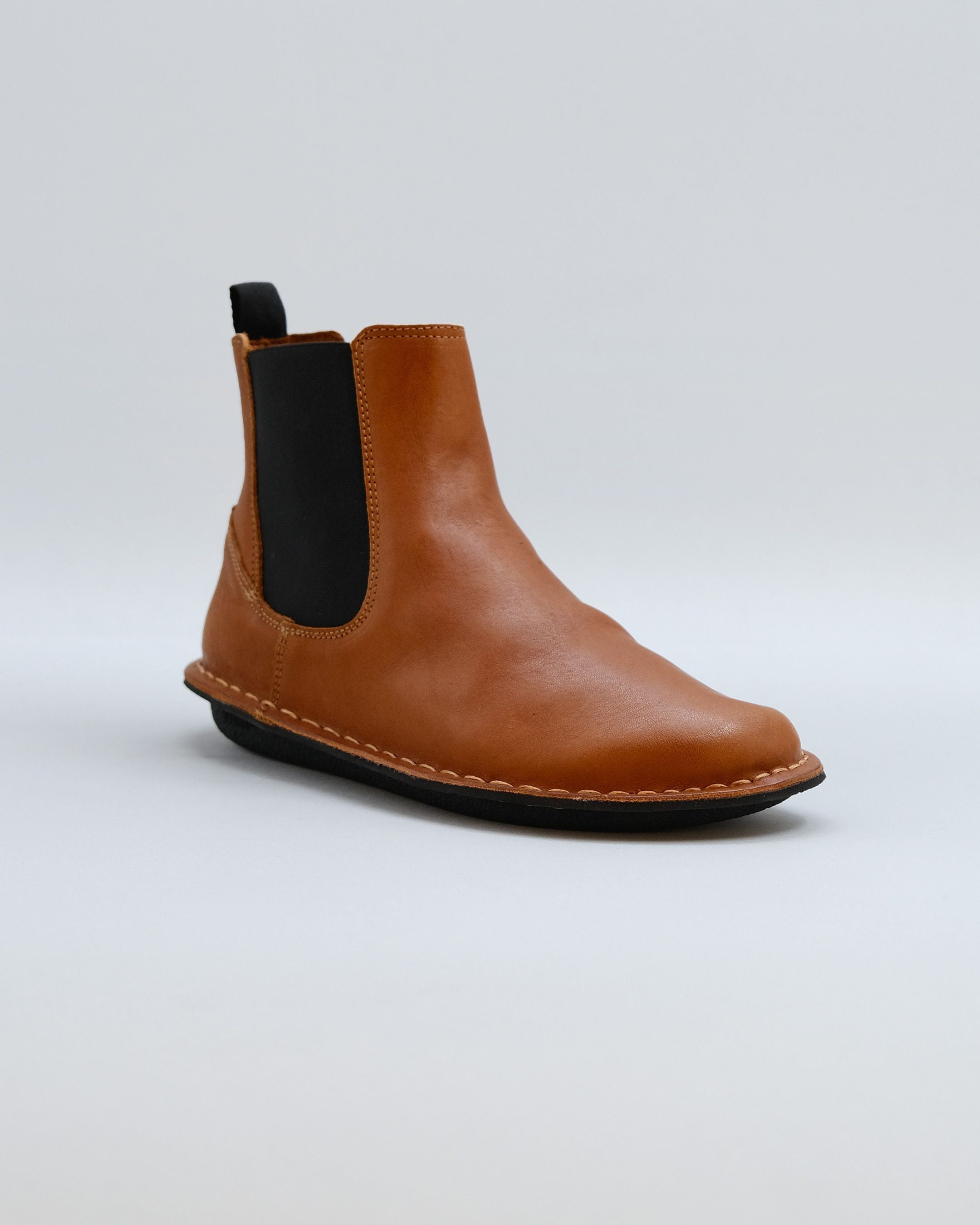
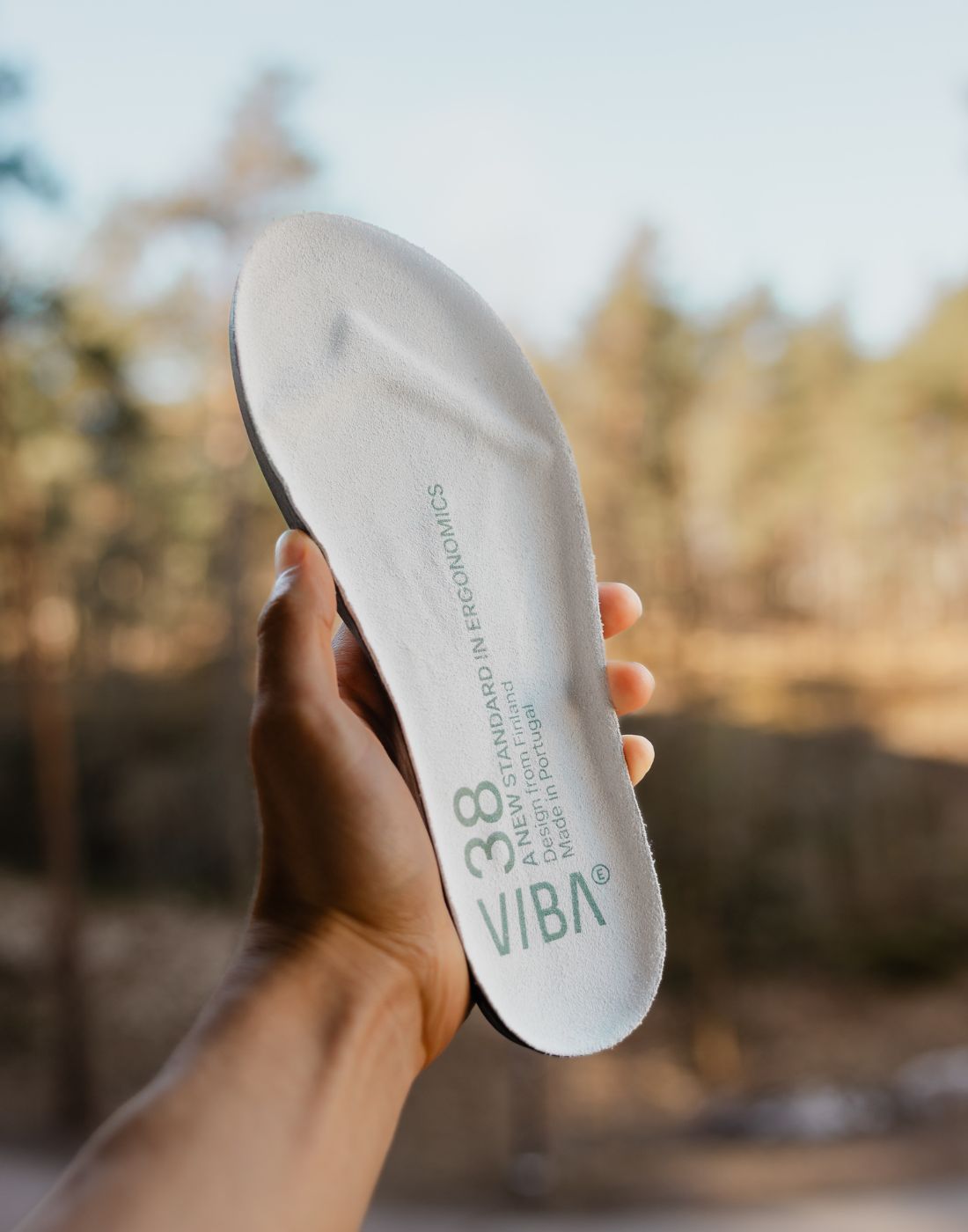
Our own ankle boots, such as JTREE and the HELSINKI Chelsea boot, sit on the Carbon Step™ footbed, which makes them low-drop, not zero-drop. On most styles the footbed lifts out, so a worn one can be replaced without replacing the boot.
If you're used to a raised heel, build up to full days in a low-drop boot gradually. If foot pain persists, see a health professional.
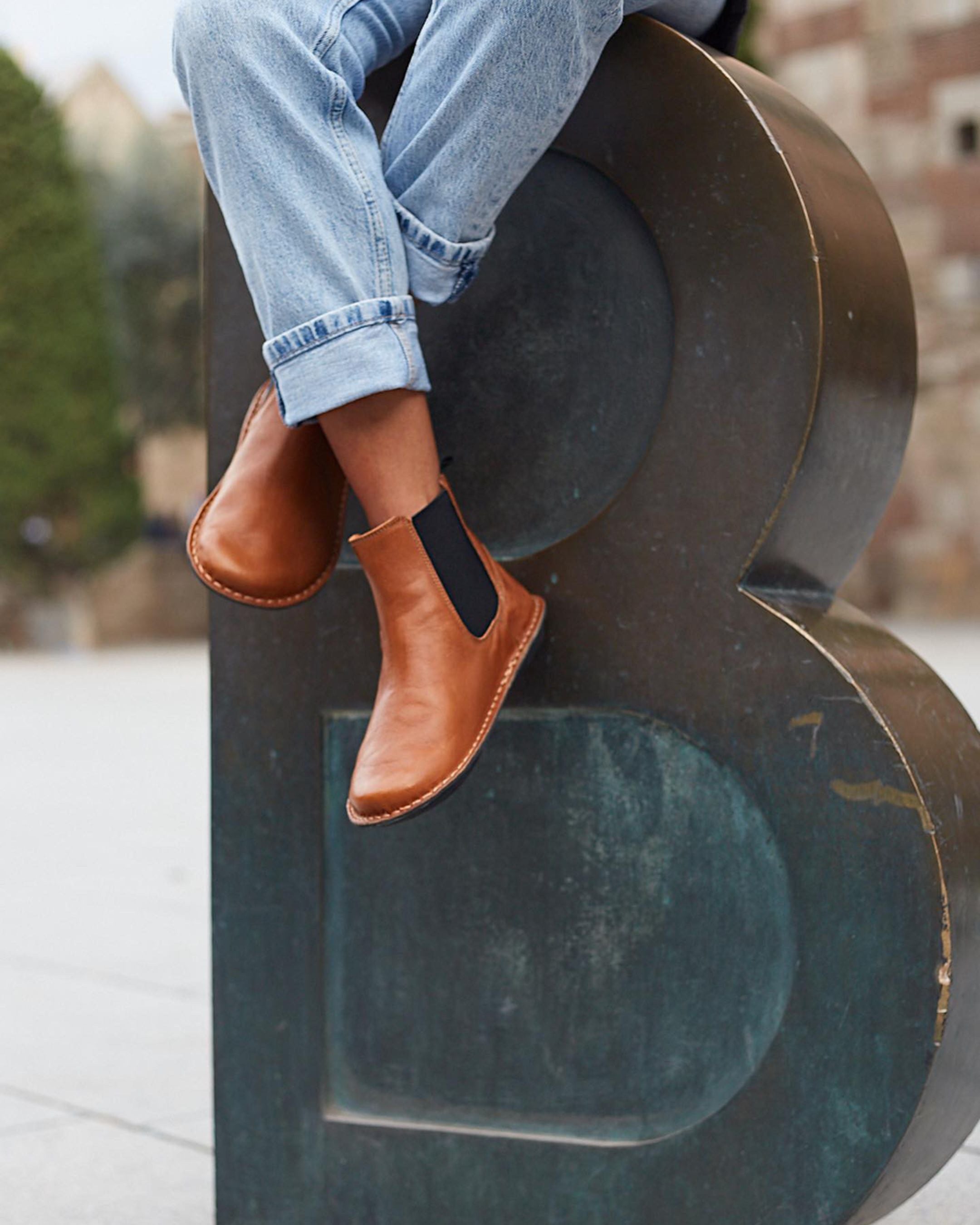
You'll find our ankle-height styles in the boots collection, including the HELSINKI Chelsea boot alongside JTREE.

Frequently asked questions
Are chukka boots smart enough for the office?
For most offices, yes. Smooth dark leather on a slim sole reads tidy and sits comfortably with soft tailoring, wool trousers and an unstructured jacket. Crepe-soled suede is the more casual end of the family. A chukka is not a substitute for a formal dress shoe, so for black tie or a formal suit, choose an Oxford instead.
Can you wear chukka boots with jeans?
Chukka boots with jeans is the combination the shape handles best. Slim or straight legs that break just at the ankle let the short shaft show, and a single turn-up on a tapered leg does the same. Avoid hems long enough to stack over the laces, because they hide the silhouette entirely.
How should chukka boots fit around the ankle?
The collar should sit just above your ankle bone without pressing on it, and your heel should stay put when the laces are done up. Because a chukka has only two or three pairs of eyelets, the lacing does more of the holding than it would on a taller boot. Through the rest of the foot you want the perfect fit: close and even, with the leather gently stretching where needed as you wear it.
How do you care for suede chukka boots?
Suede boot care comes down to habit rather than effort. Brush the nap dry with a suede brush after wear to lift dirt before it settles, treat the boots with a suede protector before wet weather, and let them dry at room temperature away from radiators if they do get soaked. Rotate pairs so each one dries fully between wears.
Get the right fit first time: check the size chart, and go one size up if you're between sizes.
Check the Size Chart
A chukka is a shape, so judge one by its eyelets and where the shaft stops, whatever the label calls it.