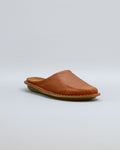
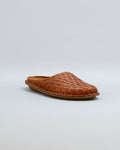

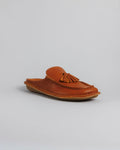

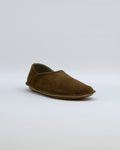
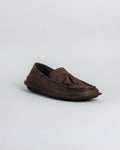
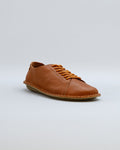
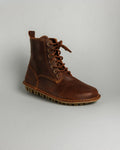
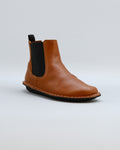
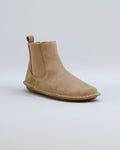
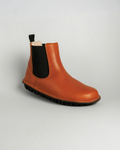
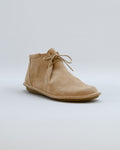
Tight slippers usually ease with wear. If your toes don't sit within the footbed's outline when you take it out and stand on it, swap the pair for the next size up while it's unworn. After that, thick wool socks worn indoors for a few hours let the upper gently stretch where needed and the lining settle. Heat, soaking and freezing risk damage.
How to stretch slippers: ease them in gently
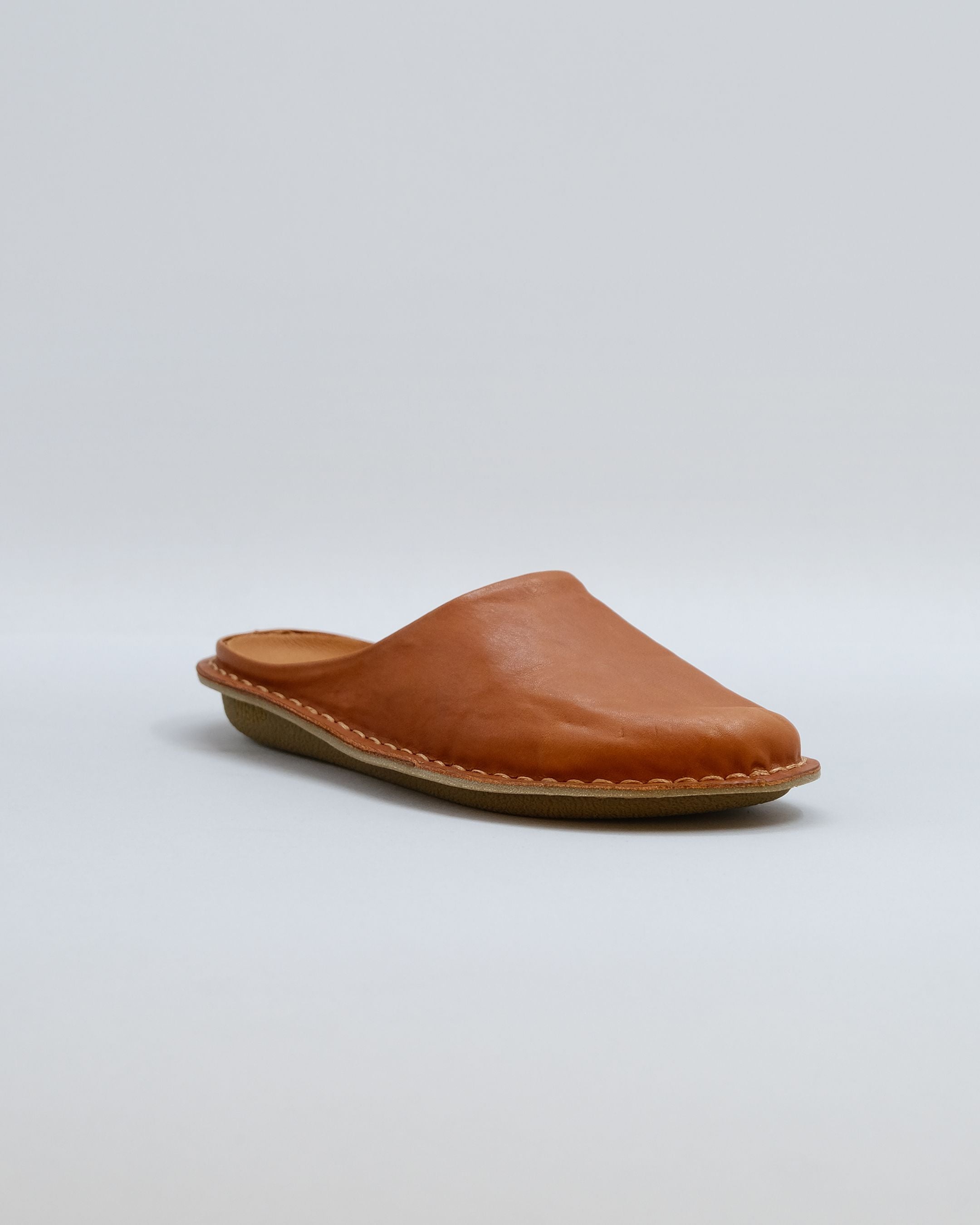
Leather and wool move with your feet. Vegetable-tanned leather softens with the warmth of your foot and the way you walk, and the leather will gently stretch where needed. Lambswool does something related but different: it compresses where your weight sits. Both make a pair feel calmer than it did on day one.
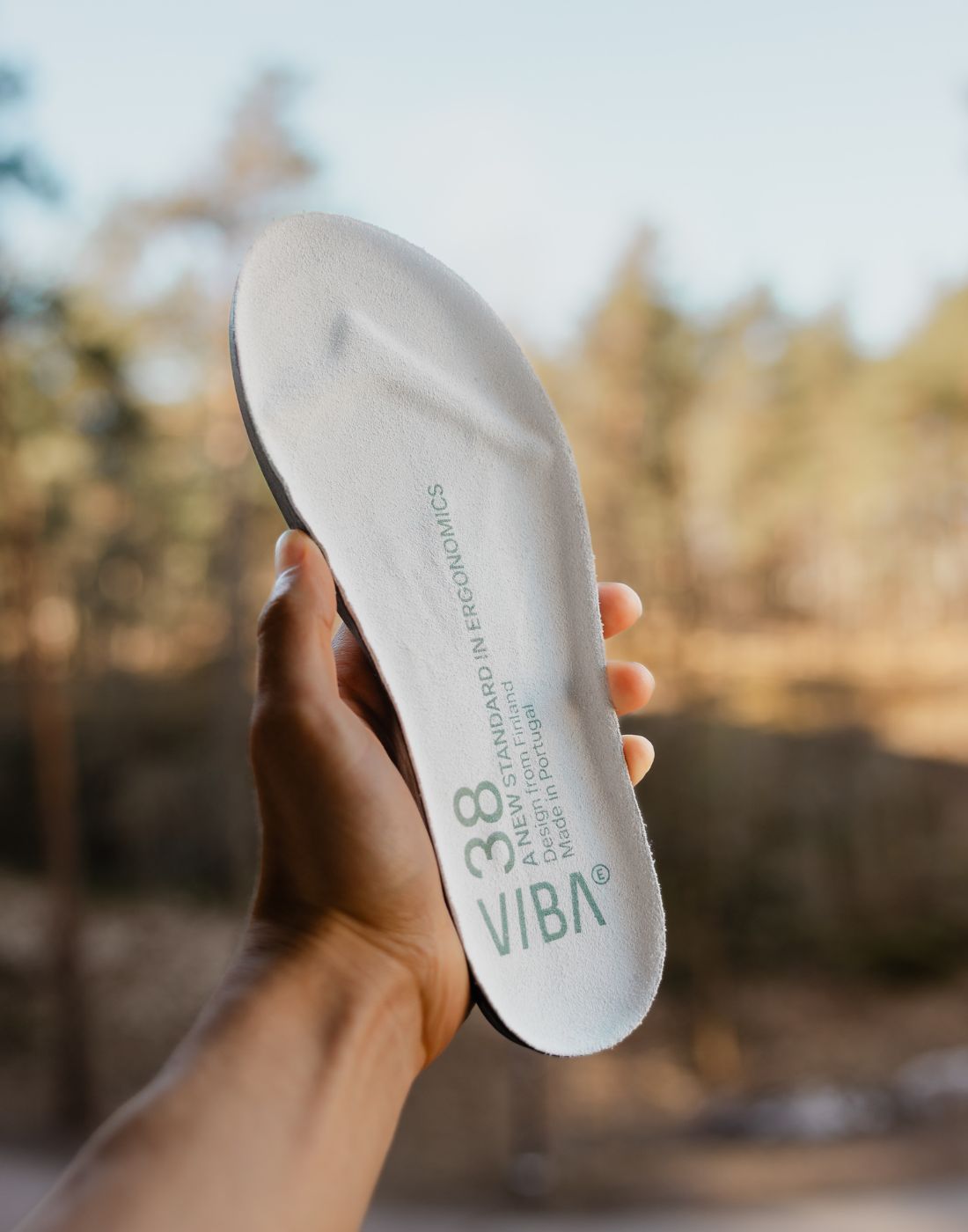
What neither will do is fix a pair that is simply too small. If your toes don't sit neatly within the outline of the footbed when you take it out and stand on it, that is a sizing answer, not a stretching one, and it's better to know that early. Settle the size while the pair is still unworn: try them on indoors, on a clean floor, and only then start wearing them in, because we can only exchange or refund pairs that haven't been worn.

The thick wool socks method, step by step
This costs nothing, needs no tools, and happens while you make coffee. It's what our Help Centre suggests when a pair feels tight over the top of the foot: wear them with thick wool socks for a few hours.
- Pull on a pair of thick wool socks. The sock does the gentle work by filling the space your foot will later occupy, so nothing is forced and nothing is pulled out of shape. A thick pair of SAANA wool socks is ideal, though any dense wool sock you already own will do the job.
- Wear them around the house for a few hours. Normal walking, normal evening, kitchen to sofa and back. Short sessions repeated over several days work better than one long uncomfortable stretch. If your toes start to feel pressed or numb, take the slippers off and come back to them tomorrow.
- Check how they feel without the socks afterwards. You are looking for the perfect fit: toes resting naturally without being pressed together and no pressure across the widest part of the foot.
If each session feels a little easier than the last, the method is working. If nothing changes after a few sessions, the size was wrong from the start; the footbed test is the check to do before you wear a new pair in.
Shearling slippers for cold floors and colder mornings.
Shop Shearling
How to stretch sheepskin slippers
Sheepskin slippers follow the same routine, with one difference worth understanding: in a wool-lined shoe, most of the change you feel comes from the lining settling, not the shoe growing. Thick socks, a few hours, repeated. No shortcuts help here.
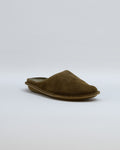
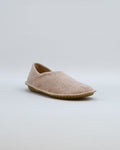
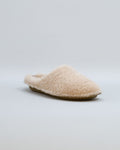
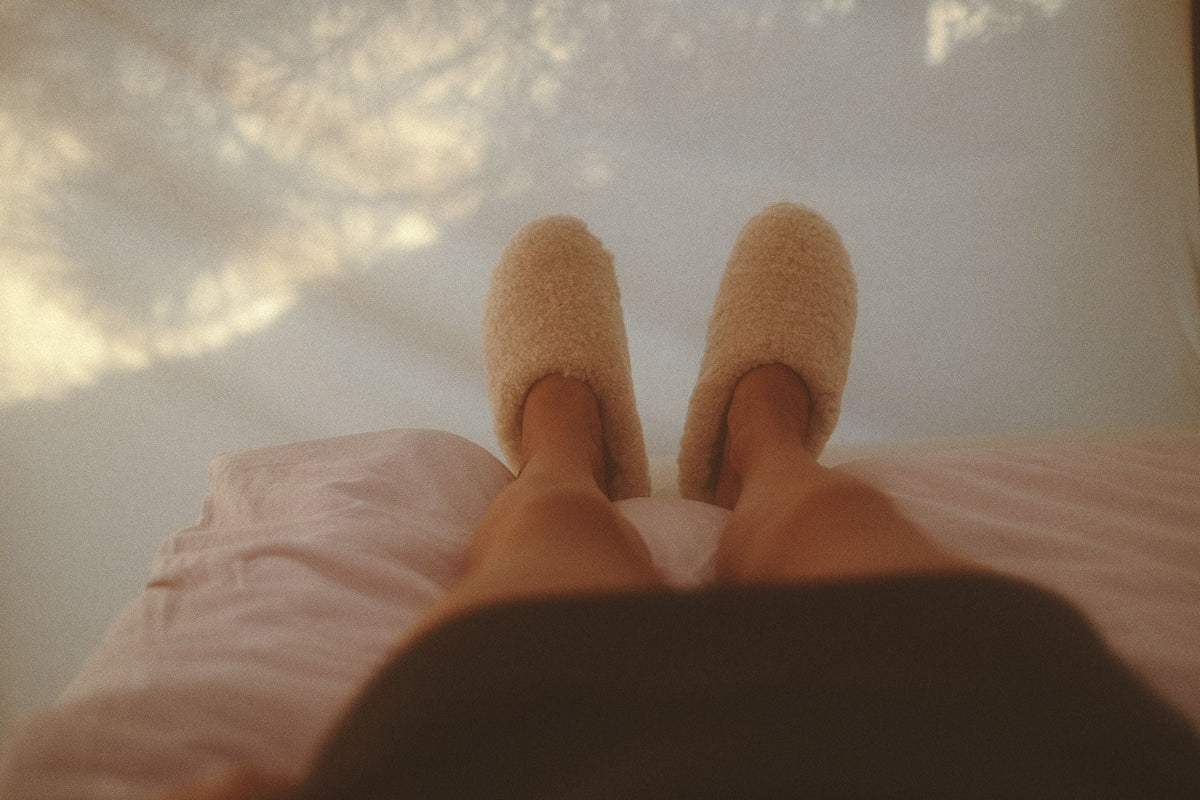
Construction varies, and that changes what moves. ROMA Shearling Natural White has a lambswool upper, which is soft, dense wool from the outset. That matters for how a shearling slipper fits when new, because leather eases where your foot asks it to, while wool mostly compresses.
Dense wool packs down under the foot as it is worn. That is general footwear behaviour, not a promise from us, and we won't put a timeframe on it, because feet, floors and how often you wear a pair all differ. Basic care helps too: air them between wears, brush the wool back up when it looks flat, and keep them away from radiators.
A new pair can feel close, almost like a well-fitted glove, at first, and that's how it should be. Because the lining settles and the shoe itself doesn't grow, though, a pair that fails the footbed test is not the size to buy.

Methods to avoid: heat, soaking and freezing
Skipping these protects the shape, the colour and the years of wear you paid for. The methods to avoid are the dramatic ones that promise a quick result.
Hairdryers and radiators dry out leather until it stiffens and cracks, and they can shrink a wool lining rather than relax it. Soaking leaves water marks on the upper and distorts the footbed, including the Carbon Step™ Shearling footbed sitting inside. The freezer trick, a bag of water left to expand overnight, pushes outward at exactly the points a shoe is least able to take pressure.
We don't recommend any of these, and the damage doesn't reverse. The only tool you need is the warmth of your own foot inside a thick sock. Our slippers are handmade in Portugal, and they repay patience better than force.
When stretching slippers isn't the answer: go up a size
Between two shoe sizes, take the larger one. We don't make half sizes, our shoes run in EU sizes 35 to 48, and going up suits thicker socks or a looser feel. Sizing up is the fix that stretching cannot provide.
Our size chart lists foot length in centimetres alongside UK and US equivalents, so measure your longer foot and compare before ordering. If a pair arrives and simply does not fit, you can exchange it free within 30 days of delivery, as long as it hasn't been worn, or return it within 30 days with a restocking fee deducted; our refund policy has the details.
Browsing our shearling slippers is a sensible second step, and if you are weighing up how much of your day these will cover, our guide to indoor house shoes and why feet want support at home goes further into it.
Frequently asked questions
Do shearling slippers get roomier with wear?
They generally feel roomier, though what changes is mostly the lining rather than the size. Dense wool compresses where your weight sits, which is how lined footwear behaves in general. If your toes don't fit inside the footbed's outline, that's a sizing issue.
What should you do if you're between two sizes?
Take the larger of the two. We don't make half sizes, the range runs EU 35 to 48, and the larger size suits thicker socks or a looser feel. Measure your longer foot and compare it against the size chart before ordering. A free exchange is available for unworn pairs within 30 days of delivery.
Can slippers be washed or warmed up to make them stretch faster?
No. Water marks vegetable-tanned leather and distorts the footbed, while heat from a radiator or hairdryer dries the leather and can stiffen a wool lining. Neither kind of damage reverses. Wearing the pair indoors with thick wool socks is slower, and it is the method that keeps the slippers intact.
Get the right fit first time: check the size chart, and go one size up if you're between sizes.
Check the Size Chart
Settle the size while the pair is unworn; after that, thick wool socks and a few hours of wear are all the stretching a slipper needs.