


What are galoshes? The rain-proof comeback of a classic
Created: 2026.08.16 | Modified: 2026.08.16
What are galoshes, how do they work and why are they back? A practical guide to rain overshoes in 2026.
What are galoshes? They're waterproof overshoes, usually made of rubber, that pull on over ordinary shoes to keep them and your feet dry in rain, slush and puddles.
What are galoshes, and what problem do they solve?
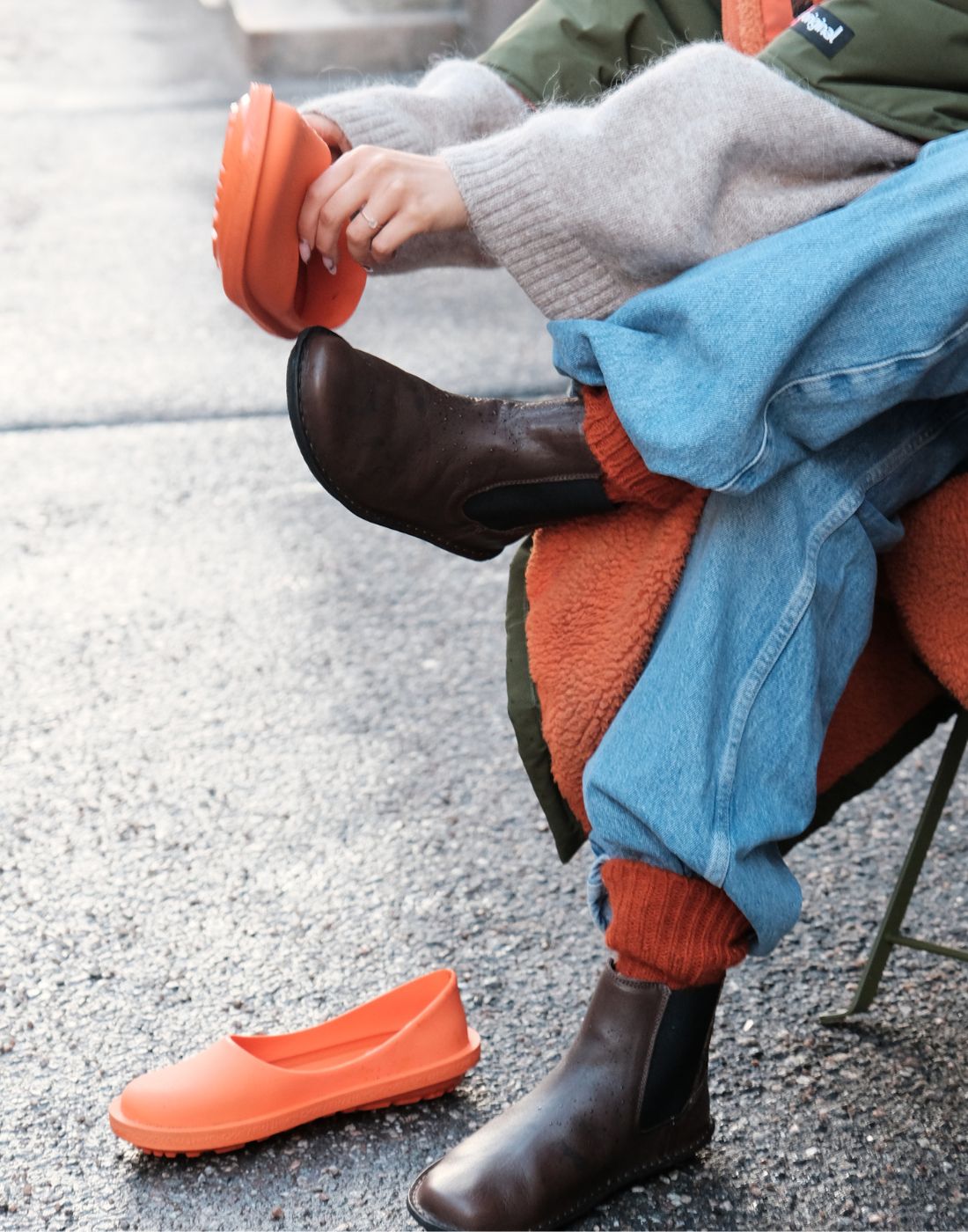
A galosh is a removable waterproof layer for footwear you already own. You pull it over your shoe at the door, walk through the weather, and peel it off when you arrive. The shoe underneath stays the shoe you chose that morning; the rubber takes the soaking instead.
That solves something no single pair of shoes solves neatly. Leather that gets soaked and then dries too fast goes stiff and pale across the toe box, and gritted winter pavements leave a chalky tidemark that never fully brushes out. A rain boot answers the weather well enough, but it also commits you to looking dressed for the weather all day, including in the meeting room and the café.
Most of us know the situation from the inside: leather shoes you actually like, a commute that involves standing on a wet platform, and no appetite for a second, uglier pair bought purely for drizzle. One waterproof layer can protect several pairs across several winters, and it keeps the number of pairs in the hallway down.
Galoshes meaning: where the word comes from
The galoshes meaning that dictionaries settle on is simple: a waterproof overshoe worn on top of another shoe. The word arrived in English through Old French galoche, and the trail beyond that runs into Latin and Greek terms for a wooden-soled shoe or a shoemaker's last. Accounts of the exact route differ, which is worth saying plainly rather than tidying up.
The history of galoshes as an object is older than the rubber most of us picture. Before rubber, the protective overshoe was often a wooden or thick-leather sole strapped beneath a finer shoe to lift it clear of the mud. The principle hasn't changed: a sacrificial outer layer takes the damage so the good shoe doesn't.
What changed the object was vulcanisation. Rubber overshoes were already being sold before it, but they went sticky in summer heat and stiff in the cold, and buyers lost patience with them. Treating natural rubber so that it holds its properties across a normal range of temperatures made the waterproof overshoe practical rather than merely possible, and by the later nineteenth century it was an ordinary part of getting dressed for bad weather. Galoshes lived by the front door the way umbrellas do now.
They faded because life reorganised itself around them. Rubber boots became cheap enough to own outright, cars shortened the walk between dry places, and more of the day came to happen indoors. What brings the overshoe back isn't fashion so much as arithmetic: if you own shoes worth keeping, a layer that protects them costs less, in money and materials, than replacing them.

How galoshes work: materials, seams and grip
Dry feet, unmarked leather, no salt bloom along the welt. A galosh delivers that by doing three jobs at once: forming a continuous waterproof shell with no stitched seams for water to creep through, stretching around the shoe's topline tightly enough to seal it, and putting a grippy outsole between you and a wet pavement.
The seam point matters more than people expect. Stitching makes holes, and holes need taping, sealing or a membrane behind them, all of which can fail at the flex points. A moulded rubber shell has no holes to begin with. That's why waterproof overshoes are usually one piece of rubber rather than a cut-and-sewn construction.
Natural rubber and what it does well
Natural rubber footwear earns its place on flexibility first. It stays supple when the temperature drops, so the shell bends with your step instead of cracking. It stretches and then recovers, which is what lets a rim grip a topline again and again rather than gaping after a fortnight. And because it can be moulded as a single skin, it is waterproof by shape rather than by coating.
Now the trade-offs, because rubber isn't magic. It ages. Sunlight, heat and ozone age it fastest, so a galosh left on a sunny windowsill or slung over a radiator will harden long before one kept somewhere cool, dark and dry. Grit and road salt are abrasive, and oils and solvents do it no favours. Treated sensibly it lasts for years, but it is a material with a lifespan.
Sole, tread and how a galosh sits on the shoe
If you're used to barefoot-style shoes, the outsole of the overshoe decides whether the whole thing feels right. A thick, stiff sole flattens the ground feel and the natural flex you chose those shoes for; a low, flexible sole with a real tread pattern gives you wet-pavement grip while letting the foot roll through its stride. Tread pattern and rubber compound do the anti-slip work, so look at those rather than the thickness.
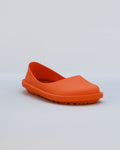
Shape matters just as much. A galosh should follow the shoe underneath rather than fight it, so the toe area has to be cut wide enough that a roomy toe box stays roomy. Squeezing a wide-toe-box shoe into a narrow overshoe undoes the reason you bought the shoe. The OSLO galoshes are shaped around VIBAe's own last for that reason, so the splay you have indoors is the splay you keep out in the rain.
Rainy day? Keep your favourite pair dry with natural rubber galoshes. Shop OSLO Galosh
Types of rain overshoes and when each one suits you
Rain overshoes come in four broad shapes, and they differ mainly in how much of the shoe they cover, how much room they take in a bag, and how much water they can handle. Match the coverage to the puddles you actually walk through, not to the worst weather you can imagine.
- Full-cover pull-on overshoes. The rubber encloses the whole shoe up to the topline, protecting the vamp, the sides and the sole edge, which is where salt and grit do their damage. Bulkiest to carry, and the one that copes with sustained rain and slush.
- Low-cut toe-and-vamp covers. They shield the front half of the shoe and leave the heel and collar open. Light, discreet and quick to fit, but water arriving from behind or above will find its way in. Good for light rain and short walks.
- Ankle-height galoshes. A raised collar closes the gap at the topline and keeps splash off the sock line. The compromise is bulk against the ankle, which some people notice under a slim trouser.
- Packable shoe covers for rain. Thin, foldable and designed to live in a bag until an unexpected shower. They handle a dash to the station rather than a day of wet-weather footwear duty, and thin material has a shorter working life. Treat them as insurance, not a main layer.
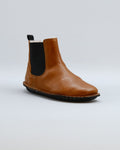
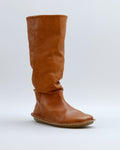
Then there are the alternatives that aren't overshoes at all. A wellington boot handles deep water and a full day outdoors better than any galosh, because it's a sealed boot with height on its side. A conditioned leather boot with a weather-ready sole suits cold, dry-to-damp days and looks right indoors; our leather boots sit in that category. Waterproof trainers keep light rain out but tend to hold warmth and moisture in.
| Option | Coverage | Worn over your own shoes | Bulk in a bag | Best for | Trade-off |
|---|---|---|---|---|---|
| Full-cover pull-on galoshes (rubber overshoes) | Whole shoe, up to the topline | ✓ | Moderate — folds into a tote | Rain, slush, and puddles on a city commute in the shoes you already like | Needs a firm heel-first pull; the rim wears if you force it |
| Ankle-height galoshes | Shoe plus a little above the ankle | ✓ | Moderate | Heavier rain and standing water at kerbs | More material to dry and store |
| Low-cut toe-and-vamp covers | Toe and instep only | ✓ | Low — pocket-sized | Light showers and short walks between doors | Heel and topline stay exposed |
| Packable emergency shoe covers for rain | Whole shoe, thin shell | ✓ | Very low | An unexpected downpour when you had no plan | Thin material, limited grip, short life |
| Wellington boots | Shoe replaced entirely, calf height | ✗ | High — not bag-friendly | Deep water or a full day outdoors | You carry indoor shoes separately; stiff sole underfoot |
| Treated leather boots | Shoe replaced entirely, ankle height | ✗ | — | Damp pavements and drizzle, indoors to outdoors in one pair | Water-resistant, not waterproof; needs regular conditioning |
| Waterproof trainers | Shoe replaced entirely | ✗ | — | Wet-weather walking in a casual outfit | Membranes lose effectiveness over time; one style only |
Galoshes vs rain boots: choosing between them
Take the boot for deep water and long days outdoors; take the galosh when you want your own shoes on your feet at both ends of the journey. The galoshes vs rain boots decision turns on how far you walk and through what depth of water, whether you need to look the same indoors as out, and how many pairs you want one waterproof layer to cover. An overshoe is not a boot and shouldn't be sold to you as one.
That last criterion is the strongest argument for an overshoe as a wellington-boot alternative: one layer sized to your most-worn shoes will serve several pairs. The OSLO galosh in black natural rubber is our version of the idea, one piece of moulded rubber moulded to VIBAe’s own last, so it is designed to go over VIBAe shoes rather than any pair in the hallway.

Getting the fit right, and caring for what's underneath
Galoshes sizing and fit is about the shoe inside, not only the foot inside the shoe. Measure by the pair you'll wear most, allow for the width of a roomy toe box, and check that the rim grips the topline without straining. Too loose and water runs in at the collar; too tight and the rubber stretches past its recovery point.
Do the walk test indoors before the first wet day. Put the galoshes on over the shoes you intend to pair them with, cross a hard floor, go up and down a few stairs, and see whether the rim stays put and the sole flexes with you. Barefoot-style shoes in wet weather should still feel like barefoot-style shoes; if the overshoe stiffens the whole assembly into a plank, it's the wrong shape for that pair. Sizing, stock and price live on the product page rather than in an article, so check the store for current details wherever you buy galoshes in the UK.
How to wear galoshes over shoes without a wrestling match
- Hold the galosh with both hands, thumbs just inside the rim, and ease the opening wide before the shoe goes anywhere near it.
- Guide the toe of the shoe in first, pushing straight forward until it seats fully in the front of the shell.
- Roll the rim up and over the heel in one movement, pulling upwards rather than sideways so the stretch is spread across the whole opening.
- Run a finger around the topline to check the rubber is sitting flat against the shoe, with no fold trapped underneath.
- Take a few steps before you head out, and adjust if the heel is lifting.
In cold weather, rubber turns stiffer and less forgiving. Let the galoshes warm up indoors for a few minutes before fitting them rather than forcing a cold rim, which is how rims tear. Yanking at one point of the opening concentrates the stress there, and that's the spot that fails first.
After the rain: drying, storing and how to care for rubber overshoes
The routine is short. Rinse grit and road salt off with cool water, wipe the shell down, and leave the galoshes to dry at room temperature, away from radiators and out of direct sun. Store them flat or lightly stuffed rather than folded, because a permanent crease is a permanent weak point. That's how to care for rubber overshoes in full, and it takes about as long as hanging up a coat.
The shoe underneath still needs its own attention. Protecting leather shoes in rain reduces the soaking, it doesn't remove the maintenance: vegetable-tanned leather loses natural oils as it dries, so wipe it down, let it dry slowly away from heat, then condition it before it stiffens. A galosh protects leather; it doesn't replace caring for it.
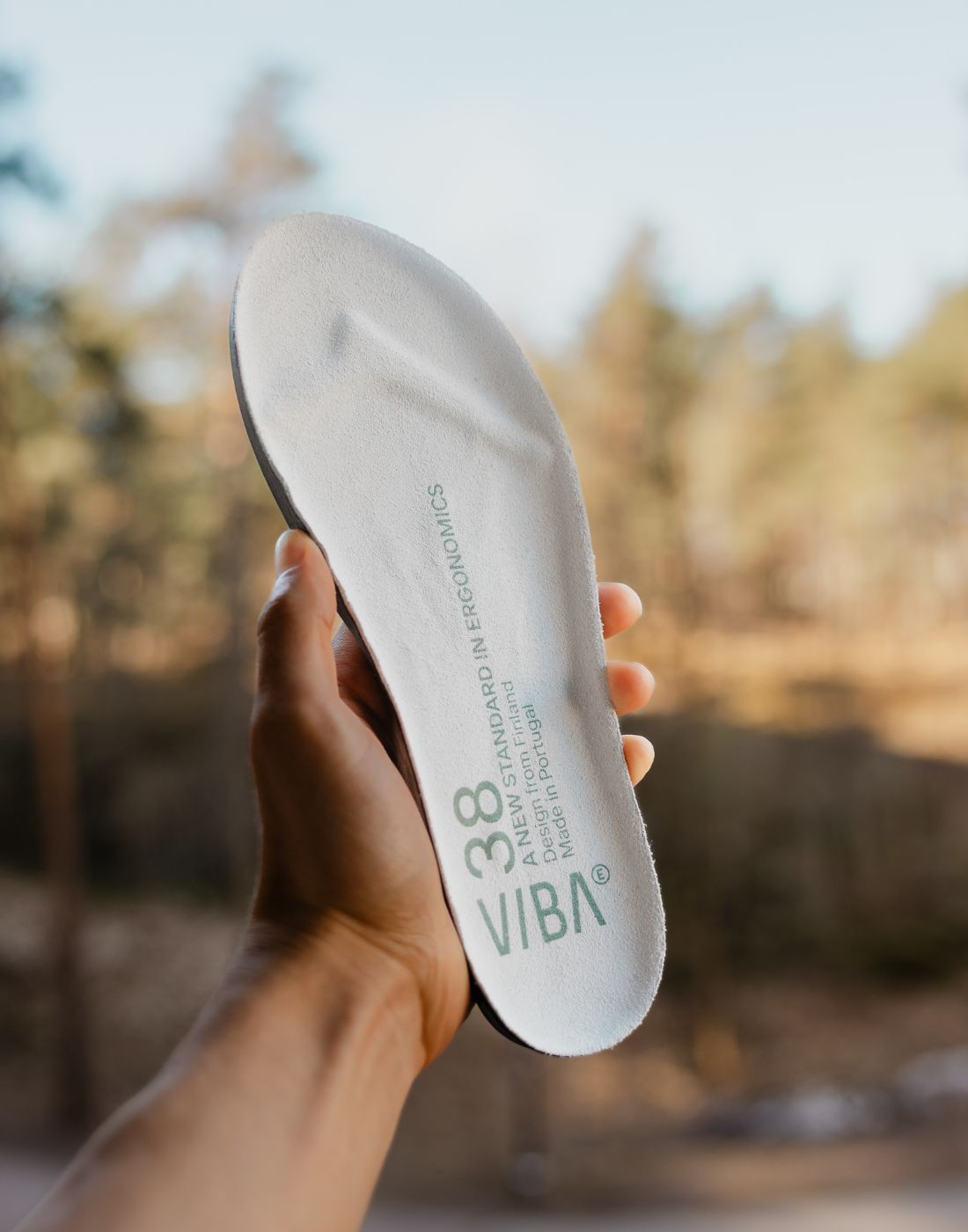
Every VIBAe pair is handmade in Portugal at a family-run factory, and the Carbon Step™ footbeds are replaceable, so a shoe kept dry has more than one route to a long life. Comfort varies from foot to foot, and persistent foot pain is a conversation for a health professional rather than a shoe. Our Shoe care guide walks through the whole routine, including what to do when a shoe gets properly wet.
Make them last for years — leather care made simple. Shop Care Products
Frequently asked questions about galoshes
Are galoshes and overshoes the same thing?
Essentially, yes. "Overshoe" is the broader term for anything worn on top of a shoe, and "galosh" usually means the waterproof rubber kind. In everyday use the two words are interchangeable.
Can you wear galoshes over any shoe?
Not quite any. A galosh needs to match the shoe's length, width and topline height, so a wide-toe-box shoe needs an overshoe cut wide at the front. Chunky soles and high collars are the usual reasons a pair won't fit.
Do galoshes make your feet sweat?
They can, because rubber doesn't breathe. The shoe inside is doing the breathing work, so a leather shoe with a natural lining handles it better than a synthetic one. Taking the galoshes off indoors keeps the problem small.
How long do rubber galoshes last?
It depends on wear and storage rather than on any fixed span. Heat, sunlight and folding shorten a galosh's life; rinsing off salt and drying it flat in a cool, dark place extends it. Rubber ages eventually, however well you treat it.
Are galoshes worth it if I already own rain boots?
They serve a different purpose. Boots win in deep water and on long days outdoors; galoshes let you wear your own shoes through the wet and arrive looking the same as you left. Many people use both, for different weather.