


Created: 2026.08.16 | Modified: 2026.08.16
Minimalist work shoes: lighter, more flexible, still professional. How to pick a pair that lasts.
Minimalist shoes for work are office-appropriate shoes built with a wide toe box, a thin flexible sole, and a low heel-to-toe drop, so your foot moves closer to the way it would barefoot in a silhouette that still reads as smart.
That is the short version. What most people want to know before committing is whether a shoe like this holds up to a dress code, how it should feel on the first morning, what changes when you swap a rigid shank for a sole you can roll up in your hand, and what happens when part of it wears out.
What are minimalist shoes for work?
Minimalist shoes for work keep the clean lines of a loafer, mule, or plain derby while removing the bulk that conventional office footwear carries: the tapered toe, the thick cushioning stack, the raised heel, and the rigid internal shank. What is left is a shoe shaped like a foot rather than a shoe shaped like an idea of a foot.
For you, that shows up in a few practical ways. Your toes have room to spread rather than being funnelled towards a point, which matters most in the last hours of a long day. There is less weight to carry from desk to meeting to dinner, and less material between your foot and the floor, so the foot bends where it is designed to bend. The silhouette is plain enough to go with what is already in your wardrobe.
Three features define the category: an anatomical toe box that is widest across the toes, a thin flexible sole that lets the foot articulate and feel the ground, and a low heel-to-toe drop that keeps heel and forefoot much closer in height than a conventional dress shoe does.
Minimalist does not mean flimsy, and it does not mean casual. A leather upper, a proper last, and careful stitching are what hold the shoe's shape for years. Thin is not the same as thrown together.
What makes a work shoe minimalist rather than just slim?
A slim shoe is narrow on the outside. A minimalist shoe is roomy on the inside, flexible underfoot, and level from heel to toe. Plenty of sleek office shoes look pared back while still tapering hard at the toes and stacking height under the heel, which is what minimalist construction avoids.
Toe box shape and foot splay
Toes that can spread take load more evenly, and a foot that is not being squeezed sideways feels calmer at the end of a shift. When you stand and bear weight, your toes splay outwards. A tapered last, the form a shoe is built around, narrows exactly where the foot wants to widen.
This is where the relationship between foot splay and toe box width matters more than the number on the box. Going up a size in a tapered shoe gives you a longer funnel, not a wider one: the heel slips, the foot slides forward on every step, and your toes end up in the narrow part anyway. Genuine wide toe box work shoes are cut wide at the front while still holding the heel, which is a shape decision rather than a sizing one.
Sole thickness, flexibility and drop
A thin sole lets your foot flex through the toes as you push off, and lets you feel the surface underneath, which is much of why people describe these shoes as easier on long days. Flexible sole office shoes bend with the foot instead of asking the foot to bend the shoe.
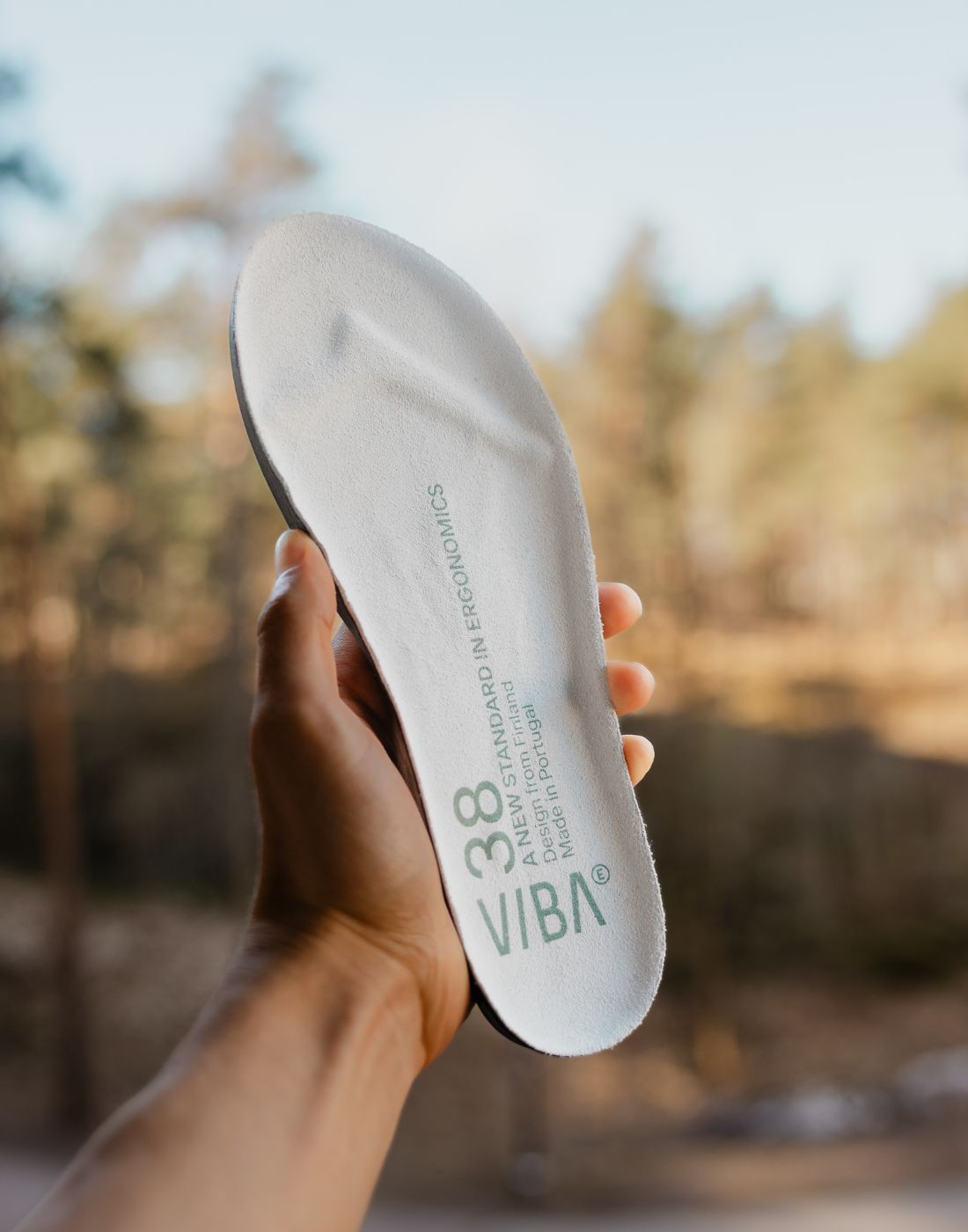
Drop is the height difference between heel and forefoot. A conventional dress shoe raises the heel well above the forefoot, which tips a little weight forward and shortens the calf and Achilles over years of wear. A low-drop shoe closes most of that gap: VIBAe's Carbon Step™ footbed measures 11 mm under the heel and 7 mm at the front, a 4 mm drop, with 14 mm of support through the arch. Posture and stride sit closer to barefoot without leaving the arch unsupported. Your calves and feet then take on work the old shoe was quietly doing for them, and you will notice it at first.
Thin soles also transmit more of the ground, which is pleasant on office carpet and city pavement and less pleasant on gravel, cobbles, or freezing surfaces. Cold comes through faster than through a thick sole. For long outdoor shifts in winter, a heavier boot is the better tool.
Weight, upper construction and lasting
Lightweight work shoes are not light because material has been skimped on. They are light because minimalist construction leaves out the components that add the most mass without adding much for the wearer: the thick midsole, the steel or plastic shank, and heavy internal padding. A leather upper on a well-shaped last does the structural work instead.
Unlined or lightly lined leather cuts weight and lets the shoe soften to the shape of your foot rather than resisting it. Removable insole shoes add another kind of usefulness, because the part that takes the most punishment is not glued to the part that lasts longest. VIBAe's replaceable Carbon Step™ footbed works on exactly that logic: when the footbed wears out before the shoe does, you replace the footbed.
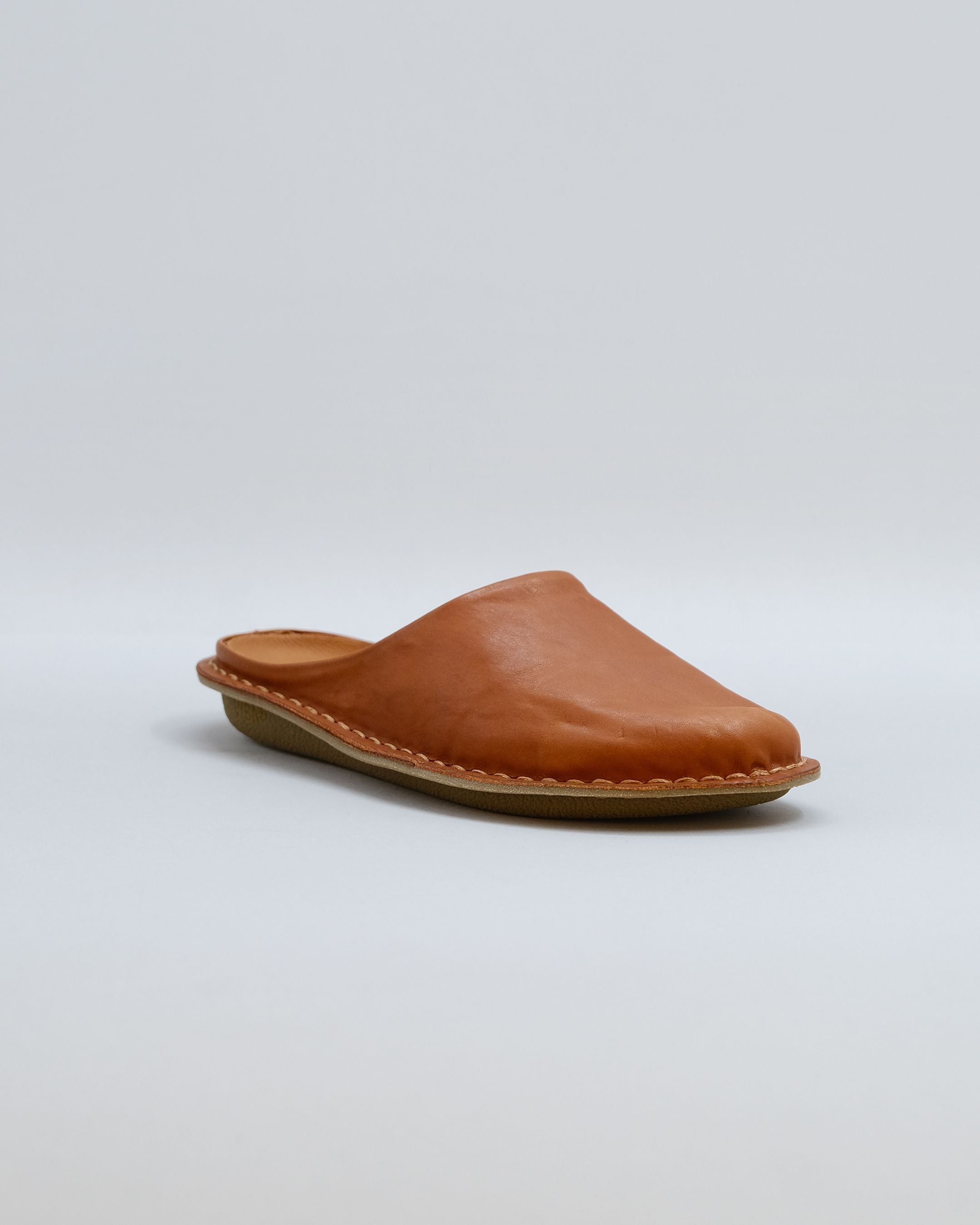
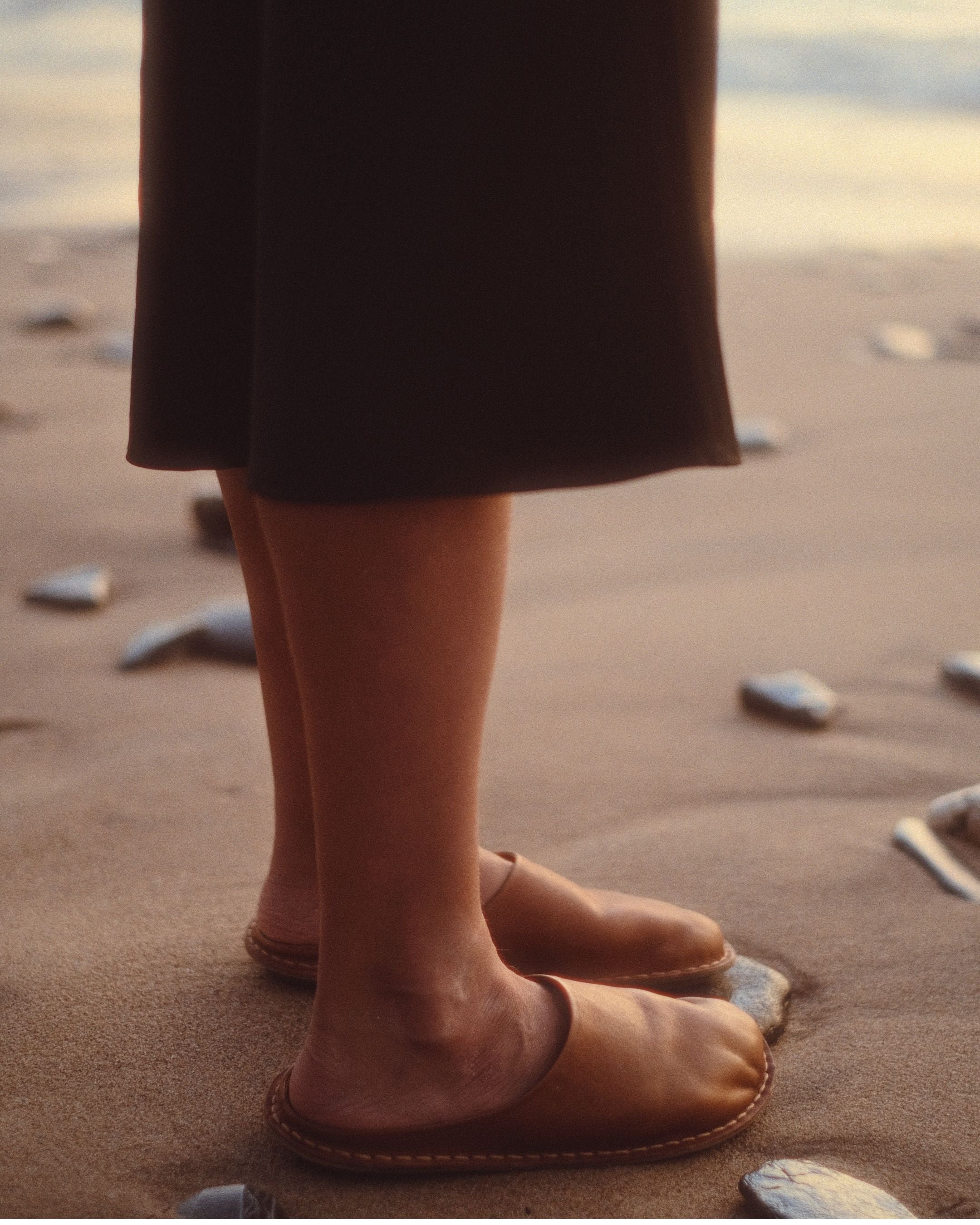
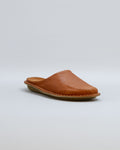
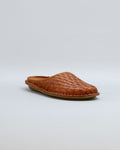
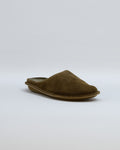
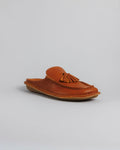
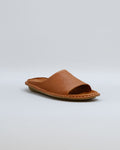
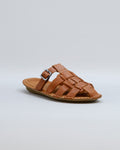
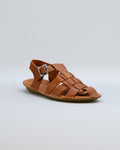
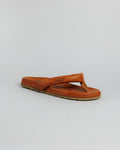
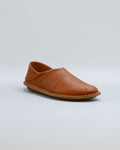
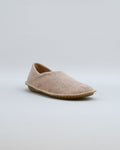
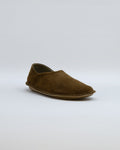
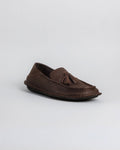
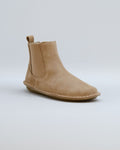
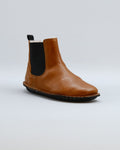
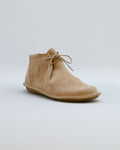
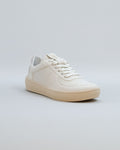
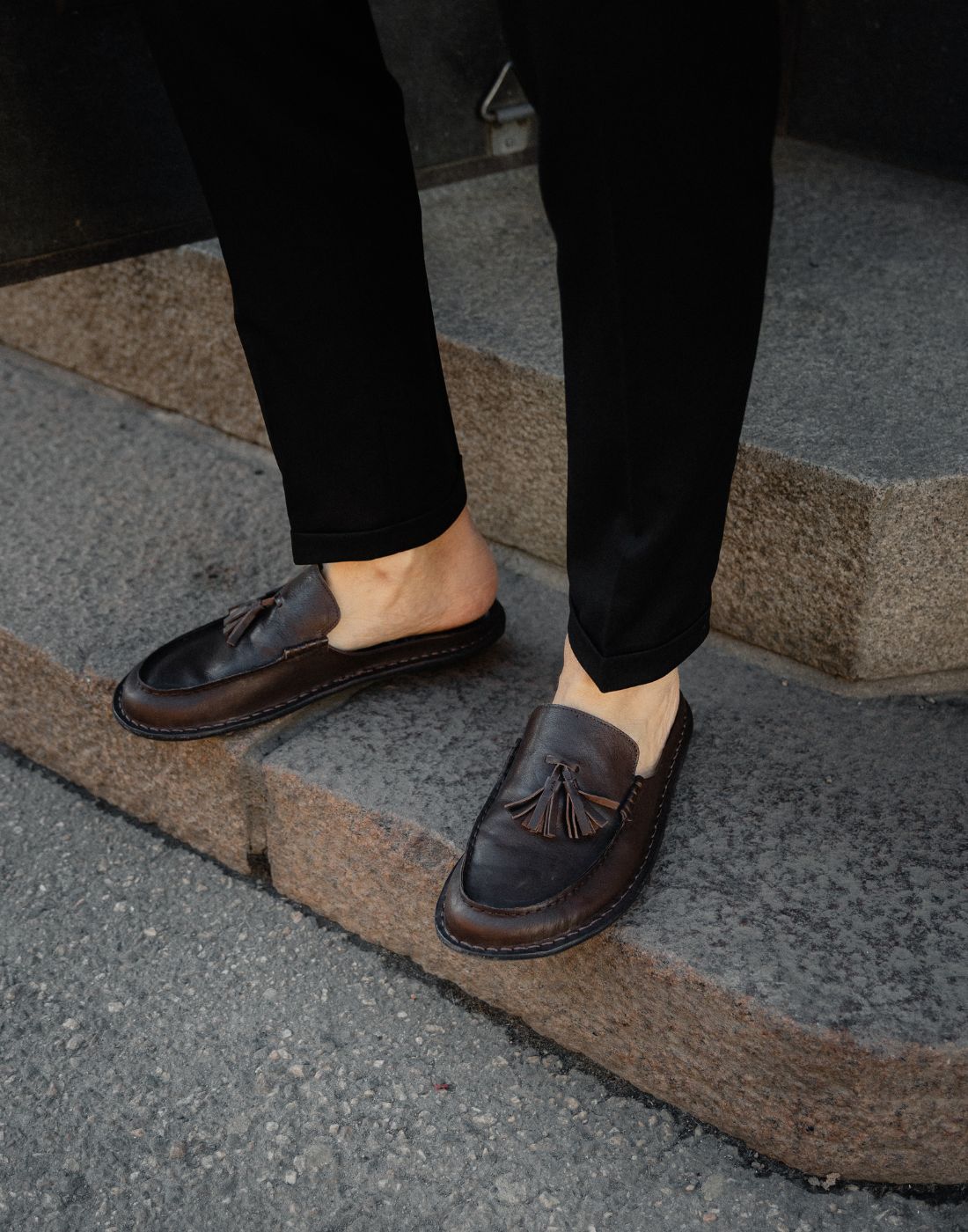
To see how these decisions look in a shoe that still passes as smart, the TRIBECA — minimalist leather loafer is the clearest example in the range. Minimalist leather loafers are the easiest entry point for office wear, because the loafer shape already carries the professional signal and the construction is where the change happens.
|
|
|
|
Minimalist shoes for work compared with conventional office footwear: toe box, sole, drop, and everyday use |
|
Feature |
Minimalist office shoes |
Conventional work shoes |
What it means at work |
|---|---|---|---|
|
Toe box shape |
Anatomical, wide toe box that follows foot shape |
Tapered last, narrowing toward the toes |
Toes can splay through a long day instead of being squeezed |
|
Sole thickness and flexibility |
Thin and flexible; bends with the foot |
Thick cushioning stack, often with a rigid shank |
The foot flexes and feels the ground; less bulk to carry |
|
Heel-to-toe drop |
Low — 4 mm (11 mm heel, 7 mm forefoot) on the Carbon Step™ footbed |
Noticeably raised heel |
Changes posture and stride; needs an adjustment period |
|
Weight |
Light — leather upper, unlined or lightly lined |
Heavier construction and added padding |
Desk to meeting to evening without foot fatigue building up |
|
Removable footbed |
✓ (VIBAe's replaceable Carbon Step™ footbed) |
Often glued in place |
Replace the footbed when it wears before the shoe does; room for your own insoles |
|
Smart-casual and business-casual dress codes |
✓ Loafers, mules, and plain derbies in black or deep neutrals |
✓ |
A timeless silhouette works with what you already own |
|
Safety-toe or heavy industrial settings |
✗ Not the right answer |
✓ Where certified safety footwear is required |
Check your workplace requirements before choosing |
|
Long outdoor shifts in cold weather |
✗ Thin soles offer little insulation |
✓ |
The honest trade-off of a thin, flexible sole |
|
Repair and circularity |
Resoleable construction, replaceable footbeds, Pre-Loved resale route |
Varies; often replaced rather than repaired |
Buy once, care for the pair, keep it in use longer |
|
Adjustment period |
Yes — build up wear gradually |
— |
Your feet take on work the old shoe was doing for them |
Minimalist office shoes and the dress-code question
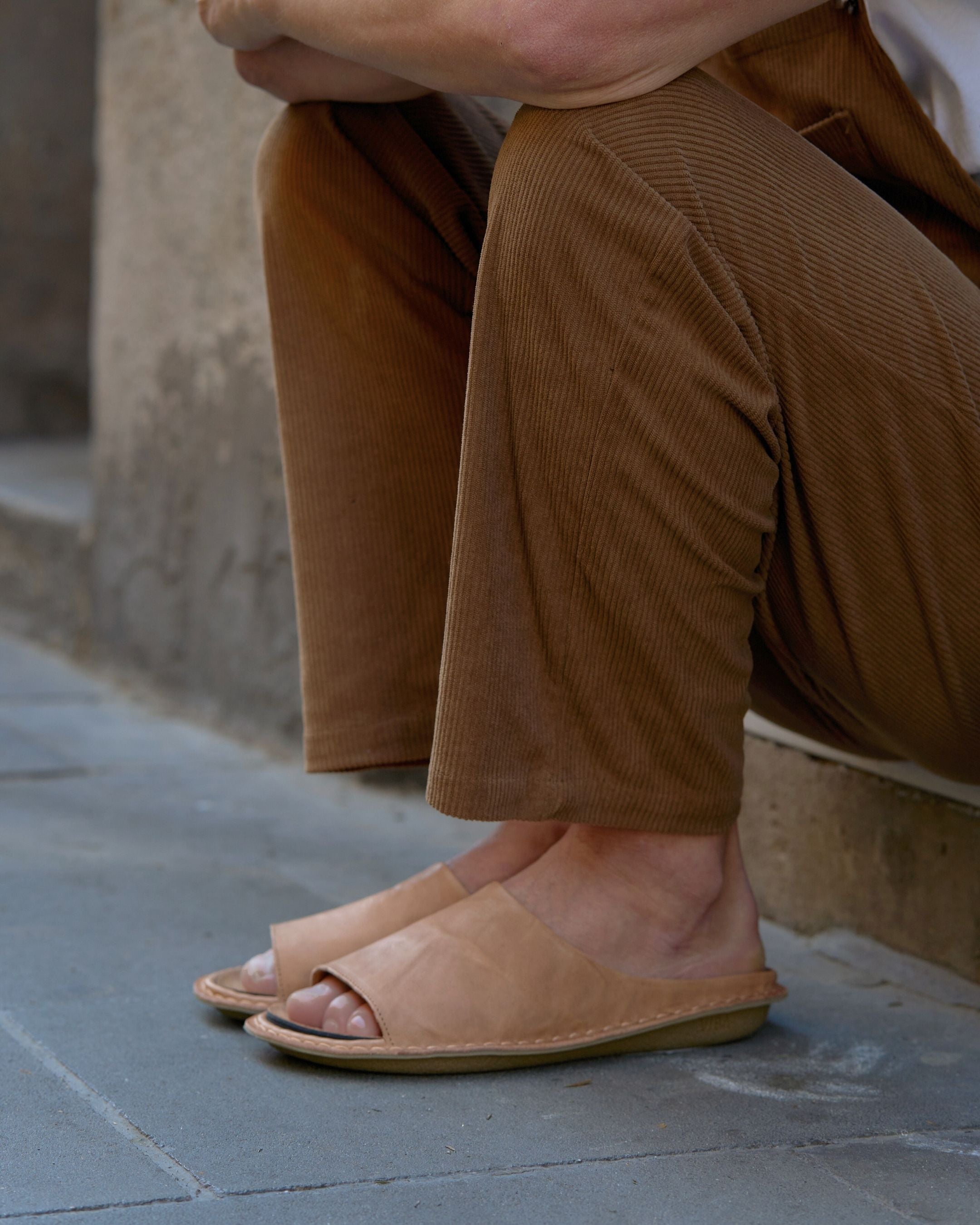
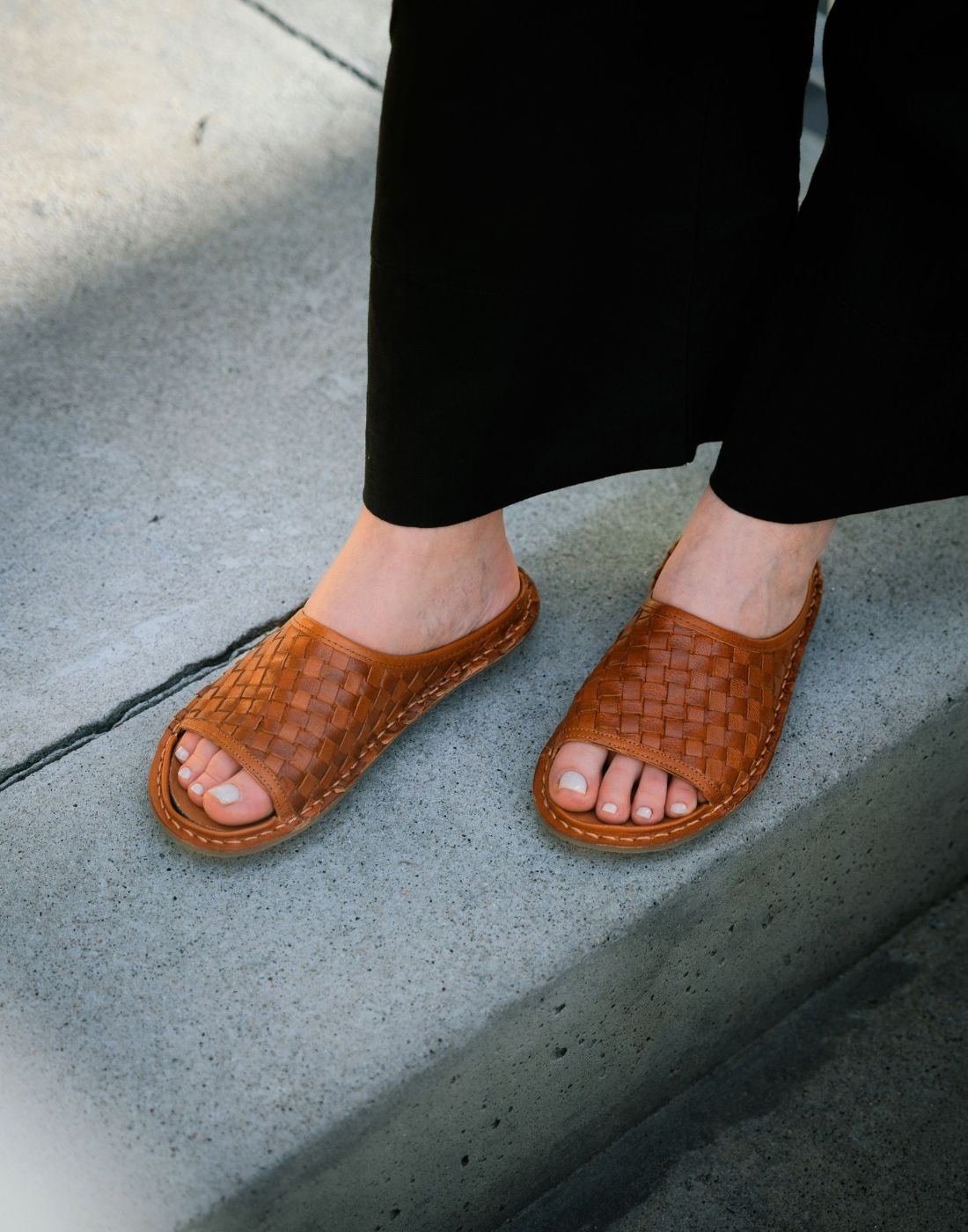
Most workplace dress codes are read as a silhouette and a colour, not as a sole thickness. A plain leather loafer, a closed mule, or a simple derby in a deep neutral reads as professional in nearly every smart-casual and business-casual setting, whatever is happening underneath. That is why minimalist office shoes slip past scrutiny a chunky trainer never would.
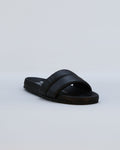
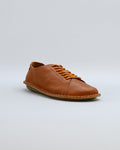
Work upwards from the code you actually have. Smart-casual shoes for work are where the category sits most easily, in every sense: almost any minimalist leather shape is safe. Business-casual environments reward the plainest options, meaning minimal hardware, no contrast stitching, a clean toe. Stricter formal workplaces are narrower ground, where a polished, plain-fronted shoe in black does the work, and black leather work shoes repay the small effort of keeping properly clean. The black shoes and LISBOA collection are both good places to look when the code is conservative.
Colour matters most. Black, deep brown, and grounded neutrals sit quietly next to tailoring and denim alike, which is what makes desk to dinner shoes possible at all. A classic silhouette earns its keep twice: it goes with what you already own, and it will still look right in several years' time, because it was not built to look like this particular season.
There are places where barefoot shoes for the office are the wrong answer. If your role requires a safety toe or certified protective footwear, a minimalist shoe cannot substitute for it. Heavy industrial floors, long outdoor shifts in cold or wet conditions, and any task with a genuine impact risk call for something built for that job. Choose the shoe for the day you actually have.
Loafers with actual room for your toes — work to weekend, no pinching.
Explore Loafers & Mules
[PICTURE]
Fit, sizing and the adjustment period
A pair that fits properly feels roomy from the first hour, not tight-then-stretched. Your longest toe should have clear space ahead of it, your toes should spread without touching the sides, the heel should stay put as you walk, and there should be no pressure across the joints at the widest part of the foot.
Measure before you guess. Stand on a sheet of paper in the evening, when feet are at their largest, and mark the length and the widest point of each foot. Feet are rarely a matching pair, so work from the larger one. Read those measurements against a chart rather than assuming your usual size carries across: the VIBAe size chart is the reference point, and it is a useful shoe size chart for wide feet because it asks about width as well as length. VIBAe runs one unisex collection across sizes 35 to 48, so the same shapes are available at either end of that range. The store is the place to check live sizing, stock, and price.
Sock thickness changes the fit more than people expect, so decide what you will actually wear to work, thin dress socks or something with a bit of cushion, and try the shoe with those. In the first hour, ask whether you can wiggle and spread your toes, whether your heel stays seated as you walk, and whether a hot spot is forming across the ball of the foot. Room at the front and a secure heel are what you are after. Length alone is not fit.
Easing into a flexible, low-drop sole
The adjustment period is real, and it is not a fault in the shoe. Your feet have muscles and connective tissue that a stiff, raised, heavily cushioned shoe has supported for years. Give them work and they respond, but on their own schedule.
The practical answer to how to transition to barefoot shoes is unglamorous, and it works:
-
Wear the new pair in short stretches at first, an hour or two at home or one leg of the commute, rather than straight through a full day.
-
Alternate with your existing shoes, so the stimulus arrives without fatigue piling up day after day.
-
Build up to full desk days, then desk-plus-commute days, then the long ones with evening plans attached.
-
Watch your calves and the underside of the foot early on. Mild tiredness after a change of load is ordinary; sharp or persistent pain is not something to walk through.
Comfort described here is typical experience rather than a promise, and feet vary enormously. Nothing in a shoe treats, cures, or prevents a foot condition, and if pain persists or you are managing an existing problem, that conversation belongs with a health professional rather than with a shoe box.
Care, longevity and what happens when parts wear out
Leather needs care, and that is what buys years of wear. A shoe that is cleaned, conditioned, dried properly, and rested between wears keeps its shape far longer than one worn daily and left by the radiator. This is the least glamorous part of buying well, and the part that decides how long the purchase lasts.
The routine is simple. Brush off dust and salt before it dries in. Condition the leather periodically so it stays supple instead of cracking at the flex points. Let a wet pair dry slowly at room temperature, away from direct heat, because heat stiffens and splits leather. Rotate between two pairs where you can, so each has time to dry out fully. Vegetable tanned leather shoes develop a patina with this kind of attention.
Parts wear out at different rates, which is the argument for making the fast-wearing parts replaceable. A footbed absorbs the most sweat and compression, so a replaceable Carbon Step™ footbed refreshes the inside of a shoe whose upper and outsole still have years left. Where a construction allows resoling, that extends the same logic further down.
VIBAe's shoes are handmade in Portugal, and shoes assembled by hand are the kind that can be repaired rather than only replaced. When a pair no longer suits your life, the Pre-Loved resale route keeps it in circulation instead of in landfill. None of this makes footwear impact-free; it makes specific practices nameable, which is a more honest position than an eco adjective.
Love your pair? Give it a fresh start with a replaceable Carbon Step™ footbed.
Frequently asked questions about minimalist work shoes
Are minimalist work shoes suitable for standing all day?
Yes for many people, and the reasons are structural: a wide toe box lets toes spread under load, and a light shoe leaves less to carry. Comfortable shoes for standing all day at work still depend on your feet, your flooring, and an adjustment period, so build up gradually.
Do minimalist office shoes look professional enough for formal workplaces?
In most cases, yes, provided you choose the silhouette carefully. A plain-fronted loafer or derby in black or a deep neutral, kept clean and conditioned, reads as professional. Very strict formal codes and certified protective footwear requirements are the exceptions.
How long does it take to get used to minimalist work shoes?
It varies between people and depends on what you wore before. Feet that have spent years in raised, rigid shoes generally need longer. Short wears first, alternating with your existing pairs, and a gradual build-up is the reliable approach rather than a fixed timeline.
Can I wear orthotics or insoles with minimalist shoes for work?
Often you can, because a removable footbed leaves space for an alternative. A thicker insole does reduce ground feel and internal room, which changes the fit. If your orthotics were prescribed, check with the professional who prescribed them before switching shoes.
How should minimalist shoes fit compared with conventional work shoes?
Roomier at the front and secure at the heel. Expect clear space ahead of your longest toe and toes that can spread without touching the sides, rather than a snug wrap. Measure length and width in the evening and read a size chart. Choose for your foot shape first and your dress code second, because a shoe that reads beautifully and pinches by lunchtime is a shoe you stop wearing.