


Best House Shoes 2026 - Why Your Feet Need Support Indoors Too
Created: 2026.08.16 | Modified: 2026.08.16
Hard floors, tired feet: how to choose house shoes that support you at home — types compared.
Why your feet need house shoes on hard floors
If your feet feel more tired at home than they did out in the world all day, look at the floor. Tile, laminate and engineered wood give nothing back. Every step lands on a surface with no compliance in it, and you take a surprising number of those steps between the kettle, the desk and the washing machine.
This is the gap most people never think to close. You'll spend real time choosing outdoor shoes, then walk barefoot or in flattened slippers across the hardest surfaces you meet all week. Shoes for hard floors at home are the missing piece: the difference between arriving at 9pm with feet that feel used and feet that feel finished.
Warmth is only part of the job. What your foot wants on a hard floor is a thin, resilient layer to work against, grip so you aren't micro-bracing on polished wood, and enough space that your toes aren't held in a wedge for nine hours. Softness alone delivers none of the three.
House shoes guide: what actually counts as a house shoe
A house shoe is a proper shoe built for indoor use: a closed or half-closed upper, a real outsole with grip, and a footbed you can stand on for hours. It differs from a slipper, which prioritises softness, and from an outdoor shoe worn inside, which walks the street through your hallway. That line is the basis of this house shoes guide.
Judge any candidate against four jobs. It has to keep your foot warm without cooking it, which is a question of material rather than thickness. It has to let your toes splay, because the foot spreads under load and a shoe that stops it works against you all day. It needs to give the sole of your foot something to press against, so your arch and calf aren't absorbing every impact against bare laminate. And it has to stay clean enough to stay indoors, which means a sole you're willing to wipe and a rule about the front door.
VIBAe comes at this from the barefoot side. Our shoes are made in Portugal at a family-run factory and follow barefoot-shoe design principles: a wide toe box, a flexible sole and a low heel-to-toe drop. Indoors that combination has an easy job, since there's no rough terrain to protect against and the flex is free to work.
Now the honest part. If you've spent years in cushioned, elevated shoes, a low-drop flexible sole asks your feet to do work your old shoes were doing for them. Start with an hour or two a day. Some people feel their arches and calves working through the first week. That settles, but it's real, and nobody should sell you the switch as effortless.
Slippers vs house shoes vs indoor shoes for home
The terminology in search results and shop windows is muddled, so pin it down before you compare. Indoor slippers usually means an unstructured, soft-soled item made for warmth and short distances. Barefoot slippers is the newer term for minimal, flexible-soled indoor footwear with a foot-shaped toe box, which is closer to what we make. Indoor shoes for home is the broadest phrase, covering everything from a moulded clog to a full leather shoe kept strictly inside. Compare structure with structure, not a felted mule against a stitched shoe.
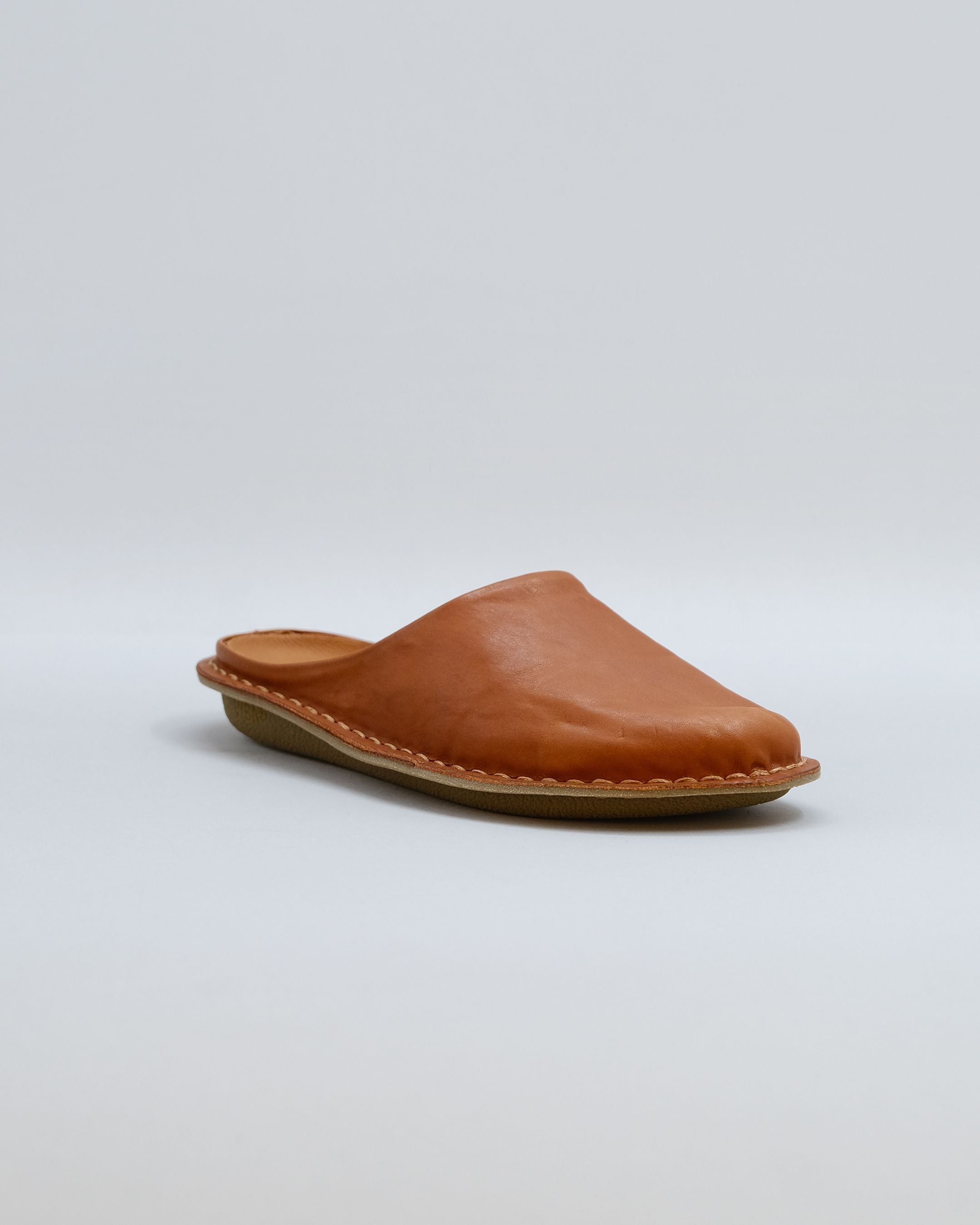
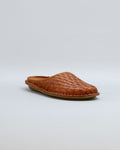
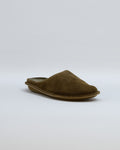
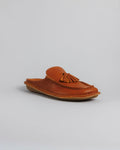
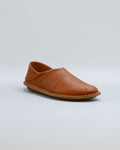
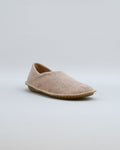
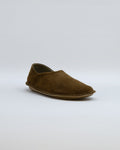
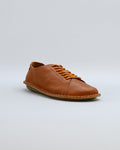
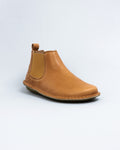
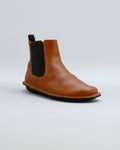
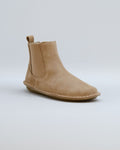
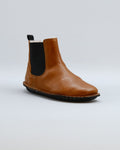
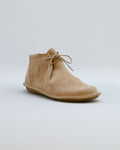
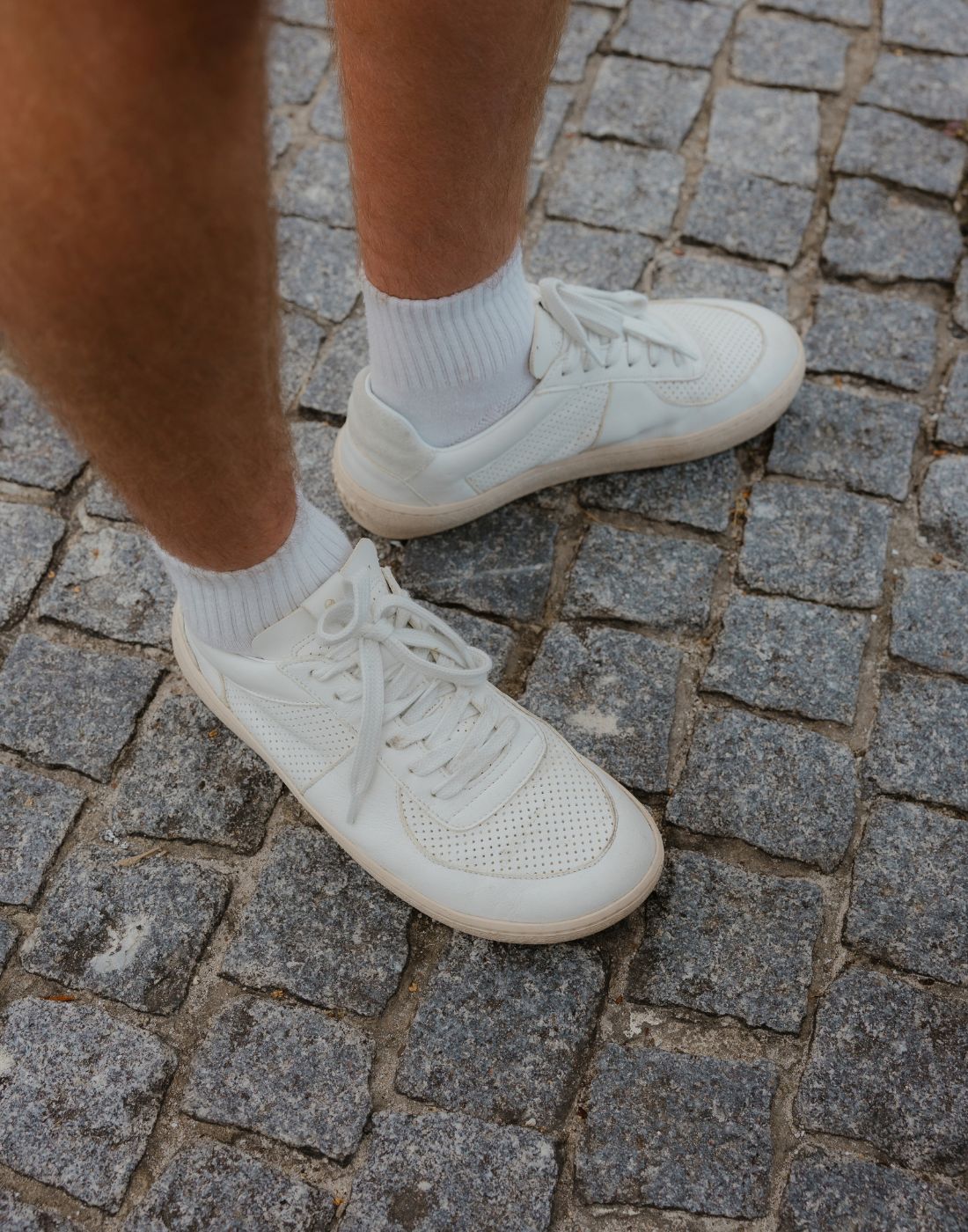
If you'd rather see the category than read about it, the ROMA Bio Suede and ROMA Leather collections are where the indoor-first models sit.
The best house shoes by type: slipper, clog and leather house shoe
There are three real types, and the right one depends on how you move around your home rather than which sounds most appealing. Slippers win on warmth and lose on structure. House clogs win on convenience and lose on heel security. Leather house shoes win on structure and longevity, and ask for a little care in return.
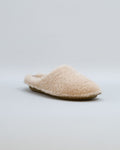
The slipper is the softest option and the most forgiving on cold mornings. A wool or sheepskin slipper is lovely for an hour on the sofa. On hard floors for a full working day it's the weakest of the three, because there's little between your heel and the laminate and the shape relaxes faster than it supports. The sheepskin vs wool slippers question comes up often: a dense sheepskin pile traps more heat and suits cold rooms, while felted or knitted wool house shoes handle a heated flat better, where you go from cool hallway to warm kitchen. Either can be excellent for warmth; neither does much structurally.
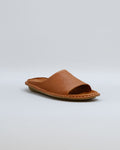
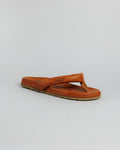
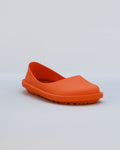
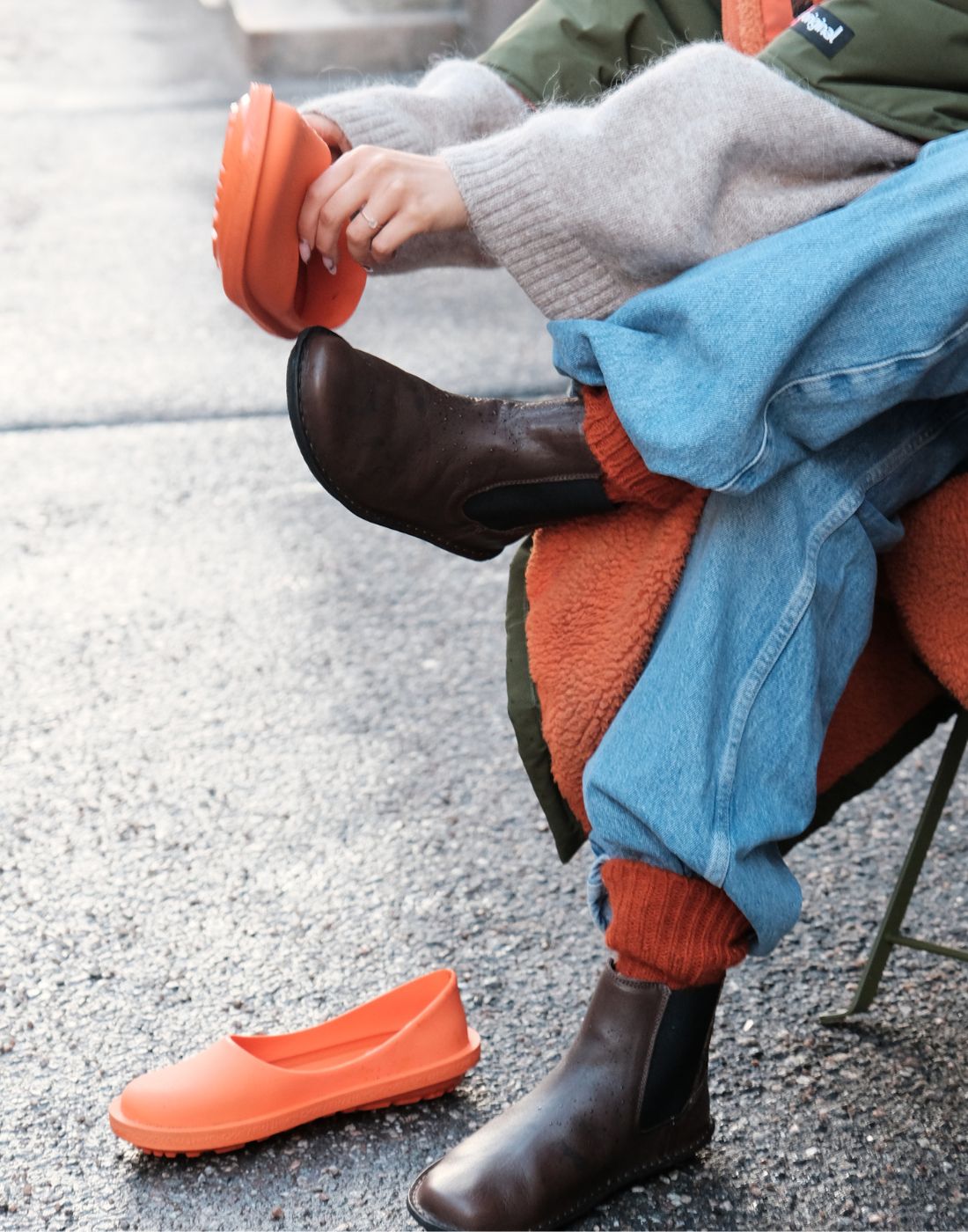
The clog is the practical choice. An open heel means you step in and out without bending down, which matters if your household takes shoes off at the door or you're up and down between floors. House clogs handle quick trips to the bin, the recycling and the post without ceremony. The trade-off is heel security: with nothing holding the back of the foot, your toes grip slightly to keep the shoe on, and that shows up as fatigue over a long day standing.
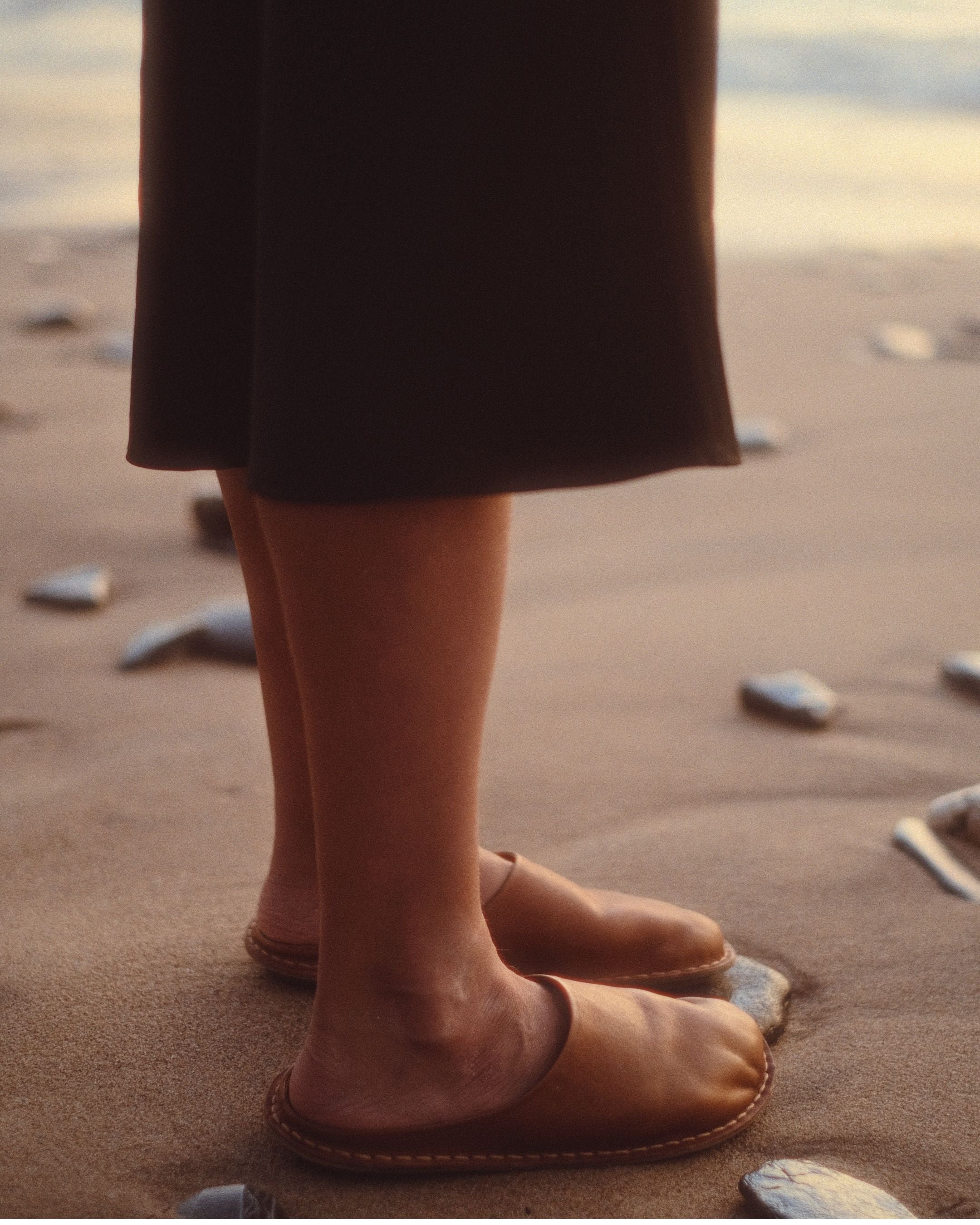
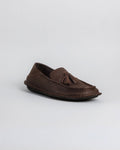
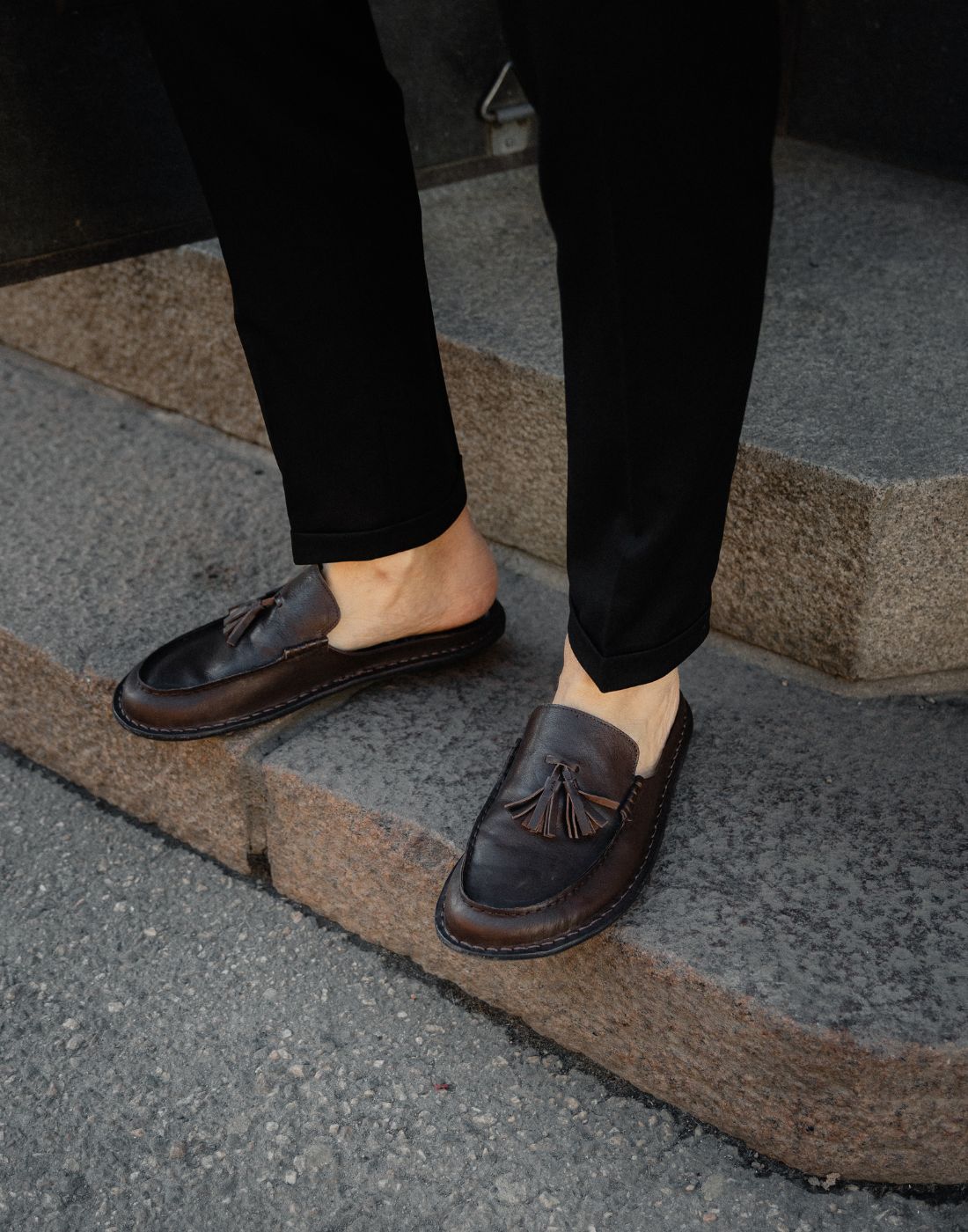
The leather house shoe is the closest thing to a proper shoe you'd wear indoors. A closed upper holds your heel, the sole gives a consistent surface to press against, and vegetable-tanned leather moulds to your foot over the first weeks and then stops moving. It suits someone standing in a kitchen, working from home on a hard floor, or wanting a Nordic-minimalist line that doesn't look orthopaedic when a friend calls round. It costs you a care routine of brushing, occasional conditioning and a dry place overnight, and it rewards you with a pair that still looks intentional in its third winter.
| Type | Structure | Sole on hard floors | Warmth | Breathability | Suits | Weak point | How it ages over a winter |
|---|---|---|---|---|---|---|---|
| Slipper | Low — unstructured, relaxes with wear | Soft, low feedback | High | Mid (wool) to low (dense sheepskin) | Evenings, cold rooms, short distances | Little support for long standing | Compresses and loosens |
| House clog | Mid — closed toe, open heel | Firm and flexible, grip depends on outsole | Mid | High | In and out all day, multi-floor homes, quick trips outside the door | Open heel means toes work to hold it on | Holds shape, shows little change |
| Leather house shoe | High — closed upper, secure heel | Flexible with consistent underfoot feedback | Mid to high, depending on lining | High | Working from home, standing in the kitchen, all-day indoor wear | Needs brushing and conditioning | Moulds to the foot, then stays put |
Discover the Comfort — slip into the most comfortable shoes in the world, 18,576 reviews and counting.
What to look for in the best house shoes: sole, footbed, materials and fit
How to choose house shoes comes down to four checks, in this order: how the sole behaves, what the footbed does and whether you can replace it, which upper material suits your rooms, and whether there's room for your toes to spread. Get those right and the aesthetics follow.
Sole construction and grip
Indoors you want a sole thin enough to feel the floor and flexible enough to bend where your foot bends, roughly at the ball rather than in the middle of the arch. Take any pair in both hands and try to twist and flex it. If it resists like a plank, your foot will be doing what it does in stiff outdoor shoes, which is not why you're buying indoor footwear.
Grip deserves more attention than it gets. Non-slip indoor shoes matter more at home than outside, because polished wood, sealed concrete and wet bathroom tile are all slicker than pavement, and stair edges turn a slippery sole into a hazard. A textured rubber outsole with real tread is worth more indoors than any amount of padding.
Footbed and arch support
Search for arch support slippers and you'll mostly find moulded contours built to hold the arch in one fixed position. Barefoot-style thinking takes another route: room for the foot to sit in its natural shape, a stable and level base, and no ramp under the heel, so the muscles that manage your arch stay involved rather than propped up. Neither approach treats a condition. If you have persistent foot pain, see a podiatrist or your GP rather than shopping for a solution.
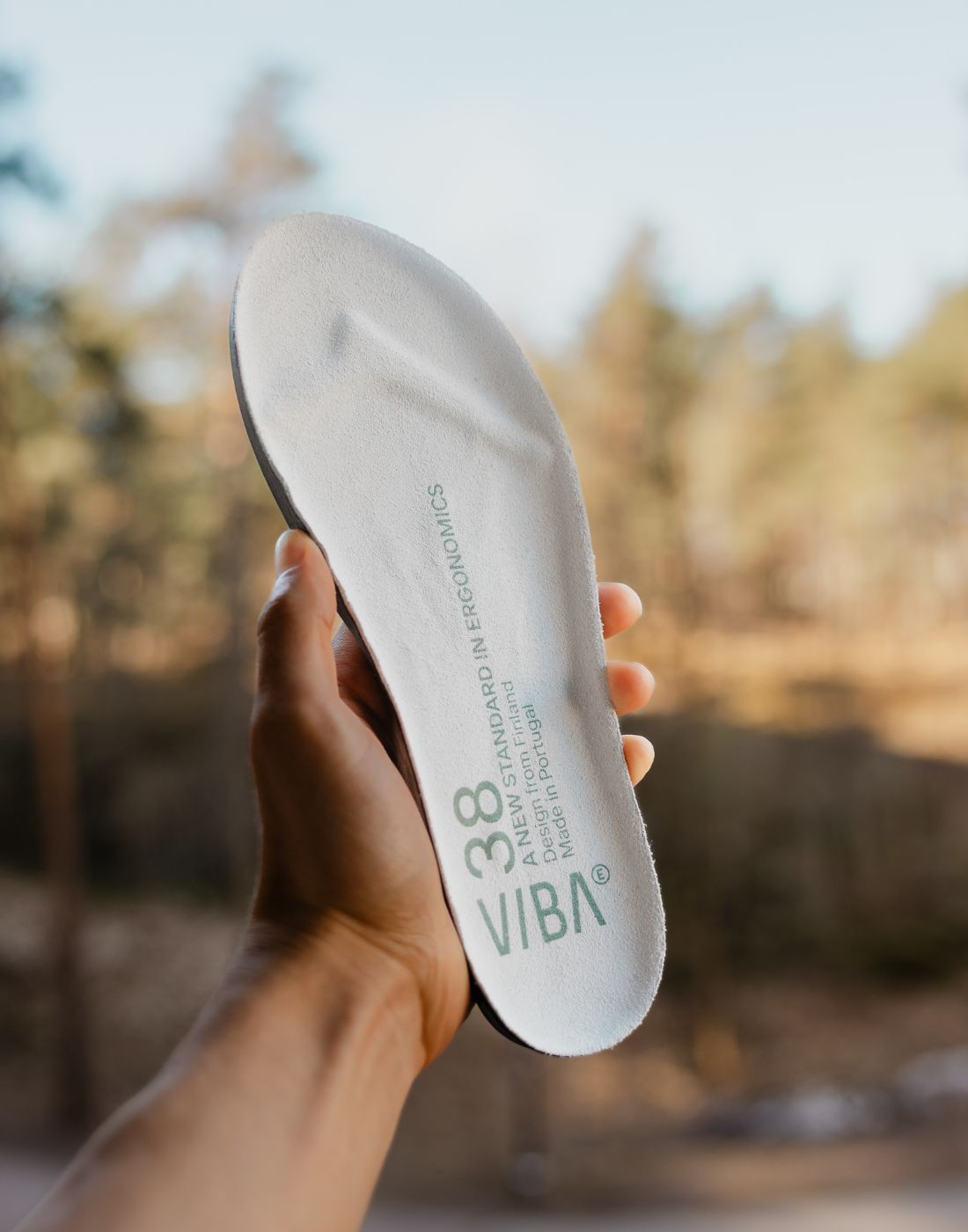
What matters practically is whether the footbed can be replaced. Ours can: the Carbon Step™ footbed lifts out, so the part that wears fastest is the part you swap. When the footbed flattens before the upper has aged, you replace the footbed. That is the point of making it removable.
Upper materials
Wool is the most forgiving indoor material. It regulates temperature in both directions, handles damp without feeling clammy, and stays comfortable through a day that runs from a cold hallway to a warm kitchen, which is the practical test for breathable indoor footwear. The ROMA Shearling model shows that most clearly in our range, and they're a sensible start if your flat runs cold in winter.
Vegetable-tanned leather is the other main option, tanned with plant tannins rather than chromium salts. It breathes well, softens to the shape of your foot in the first weeks, then holds that shape. Plainly stated: leather needs care. Left unbrushed in a dry, heated room it dulls and stiffens; brushed occasionally and conditioned a couple of times a season, it looks better for years. Lined uppers add warmth and a softer feel against the skin at the cost of some breathability, a fair trade in an unheated bedroom and a poor one if your feet run hot.
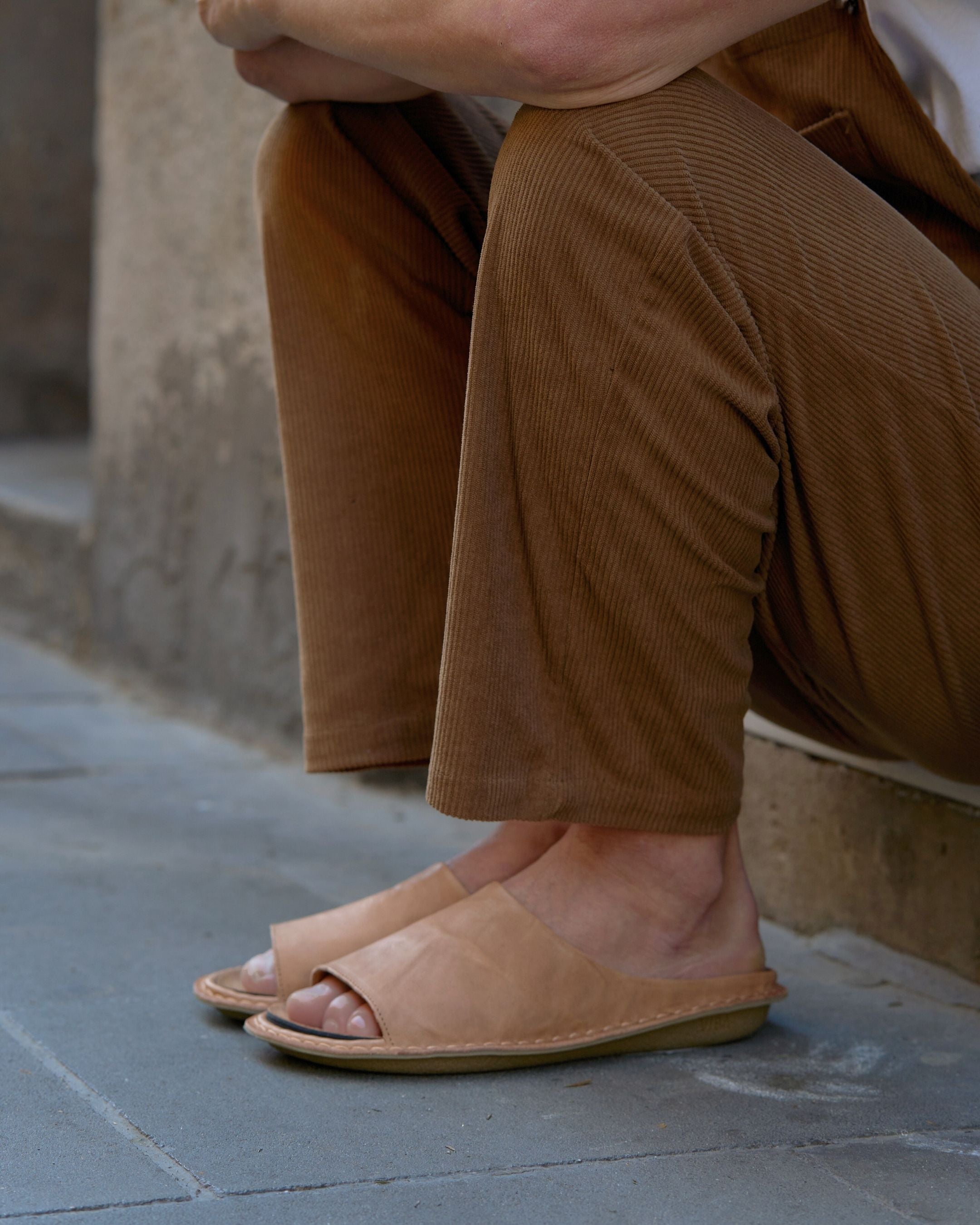
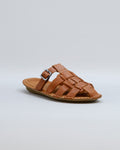
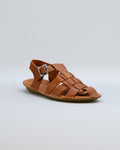
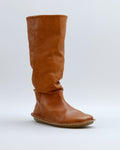
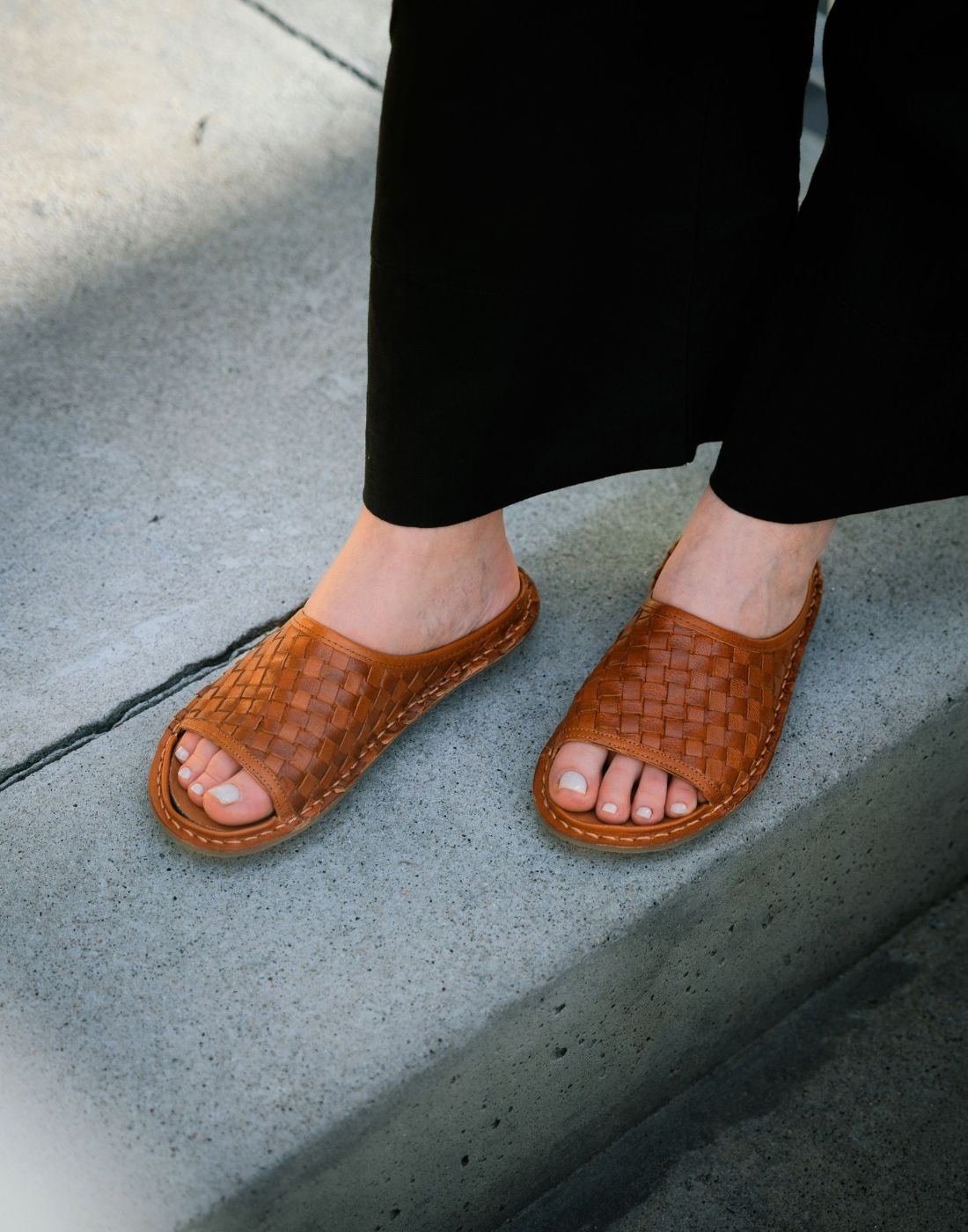
If you're leaning towards open leather silhouette the VIBAe ROMA range is worth a look.
Indoor shoes for home: matching the pair to how you live
Count the hours you spend upright indoors, then add your floors and your heating. Those three facts settle the type faster than any feature list, because a structured leather shoe suits long standing, a clog suits constant in-and-out, and a wool slipper suits a warm flat and short distances.
Working from home all day. You're on your feet more than you think, always on the same hard floor. Prioritise a secure heel and a consistent footbed over softness. If you've been searching for the best slippers for standing all day, the honest answer is that a structured house shoe usually serves that pattern better than any slipper does.
Standing in the kitchen. Grip and a wipeable outsole come first, because kitchen floors get wet. A closed upper also keeps the inevitable dropped fork off your toes.
Cold basement flats. Warmth and insulation from the floor matter most. Wool or a lined leather upper, and don't skimp on the sole: a cold, hard floor is two problems, not one.
Underfloor heating. The floor is already warm, so your issue is breathability rather than insulation. An unlined wool or leather upper will feel better across a whole day than anything plush.
Shoes-off households. If everyone changes at the door, a clog or an easy-entry shoe removes the daily friction, and a dedicated indoor pair keeps the outdoor grit outside.
Sensitive feet that ache on hard surfaces. Look for room first: length, width across the toe joints, and no pressure over the top of the foot. Then look for flexibility. Wide toe box slippers and shoes help because they stop compressing what's already sore. What they can't do is fix a structural problem. If the ache is persistent, sharp, or worse in the morning, that's a conversation for a health professional, not a purchase.
Shop Now — can't decide? Browse the whole unisex collection, sizes 35–48.
How should house shoes fit? Sizing across a 35–48 unisex range
House shoes should be a perfect fit, with your foot filling the footbed from heel to toe and enough width that your toes spread when you stand, and the heel held without gripping. There is no need to leave space ahead of your longest toe: the leather is soft, will gently stretch where needed, and moulds to your foot with wear. Indoor fit differs from outdoor fit mainly because of socks and hours: you'll wear thicker socks in winter and stay in the shoes far longer.
House shoe sizing has one wrinkle that trips people up. Because a barefoot-style shoe is roomy through the toe box, the instinct to size up for winter socks often backfires: you end up with excess length, your foot slides forward on each step, and your toes hit the front anyway. Room in a foot-shaped shoe comes from width and toe-box volume, not from added length. Our journal piece on how to get the correct fit with VIBAe shoes walks through the method. Measure your foot in the socks you wear indoors, in the evening when your feet are at their largest, and work from the measurement rather than the size you wore in your last pair of trainers.
Our range runs 35–48 as a single unisex collection, so there's no men's or women's conversion to work out. When you buy house shoes online in the UK you can't try before you commit, which makes the measurement step worth five minutes: check the size chart before you order, and treat the store as the source of truth for sizing, stock and price, since those change.
Care, longevity and what happens when they wear out
Indoor shoes last longer than outdoor pairs because they never meet grit, salt or rain, but they meet your feet for many more hours. Care splits by material: air wool, brush and condition leather, and keep the outsole clean so indoor shoes stay indoor shoes.
- Air them daily. Leave them somewhere with moving air, not in a cupboard. Both wool and leather shed moisture overnight if you let them, and that alone extends their life.
- Brush the leather weekly. A soft brush lifts dust out of the grain. Vegetable-tanned leather dries out in a heated room, so condition sparingly a couple of times a season and let it absorb before wearing.
- Wipe the outsole. A damp cloth once a week keeps the shoe indoor-only in practice as well as in principle, which is why your floors stay clean.
- Rotate if you can. Two pairs alternating dry fully between wears, and both last noticeably longer than one pair worn continuously.
Wool needs less: shake it out, spot-clean rather than machine-wash, and dry it away from a radiator so the fibres don't go brittle. Felted wool pills and softens with wear, which reads as character on an indoor pair.
Eventually something gives, and it's usually the footbed. Replace the footbed and the shoe carries on. That's the arithmetic behind slow fashion, and it's less romantic than the phrase suggests: one pair kept for six years with a footbed swap costs less and makes less than three pairs replaced whole. When a pair has done its years, the Pre-Loved route keeps it in circulation with someone else rather than in a bin. We're not perfect on any of this, and we'd rather say so than call ourselves sustainable and leave it there. Vegetable-tanned leather, handmade construction in Portugal, replaceable footbeds and resale are specific practices, and they're what our claims rest on.
Replace Your Footbed — love your pair? Give it a fresh start with a replaceable Carbon Step™ footbed.
Frequently asked questions about house shoes
Are house shoes better than going barefoot at home?
On hard floors, most people find house shoes more comfortable across a long day, because tile and laminate offer no compliance and no warmth. Barefoot on a warm, forgiving floor is fine. A house shoe adds a thin, resilient layer and grip on stairs without confining your toes the way an outdoor shoe does.
What's the difference between house shoes and slippers?
A house shoe is built like a shoe: structured upper, secure heel and a real outsole you can stand on for hours. A slipper puts softness and warmth ahead of structure and relaxes out of shape faster. Both are indoor footwear; only one is designed for long periods on your feet.
Do house shoes need arch support?
They need a stable, level base and room for the foot rather than a moulded arch. Barefoot-style design keeps the foot's own muscles working instead of propping the arch in one position. Neither approach treats a foot condition, so take persistent or worsening pain to a podiatrist or your GP.
Can you wear house shoes outside for short trips?
A quick step to the bin or the post box won't ruin them, and a clog is the easiest type for that. Regular outdoor use is different: grit, damp and salt shorten the life of any indoor sole and upper, and they get walked back into your home.
How long do good house shoes last?
It depends far more on hours worn and care given than on any figure we could quote. The footbed usually tires before the upper does, so a pair with a replaceable footbed can serve years longer than one without. Airing daily, brushing leather and rotating between two pairs all help.
The short version: choosing your pair
Answer one question before you buy: how many hours a day are you upright indoors? Under an hour, mostly on the sofa, and a wool slipper is plenty. Two to six hours on tile or laminate, and you want a closed upper, a held heel and an outsole with real tread. In and out of the door twenty times a day, and a clog saves you the bending. Then match the material to your rooms: wool if they run cold and variable, vegetable-tanned leather if you want a pair that keeps its shape into its third winter. The House collection is a sensible place to start looking.