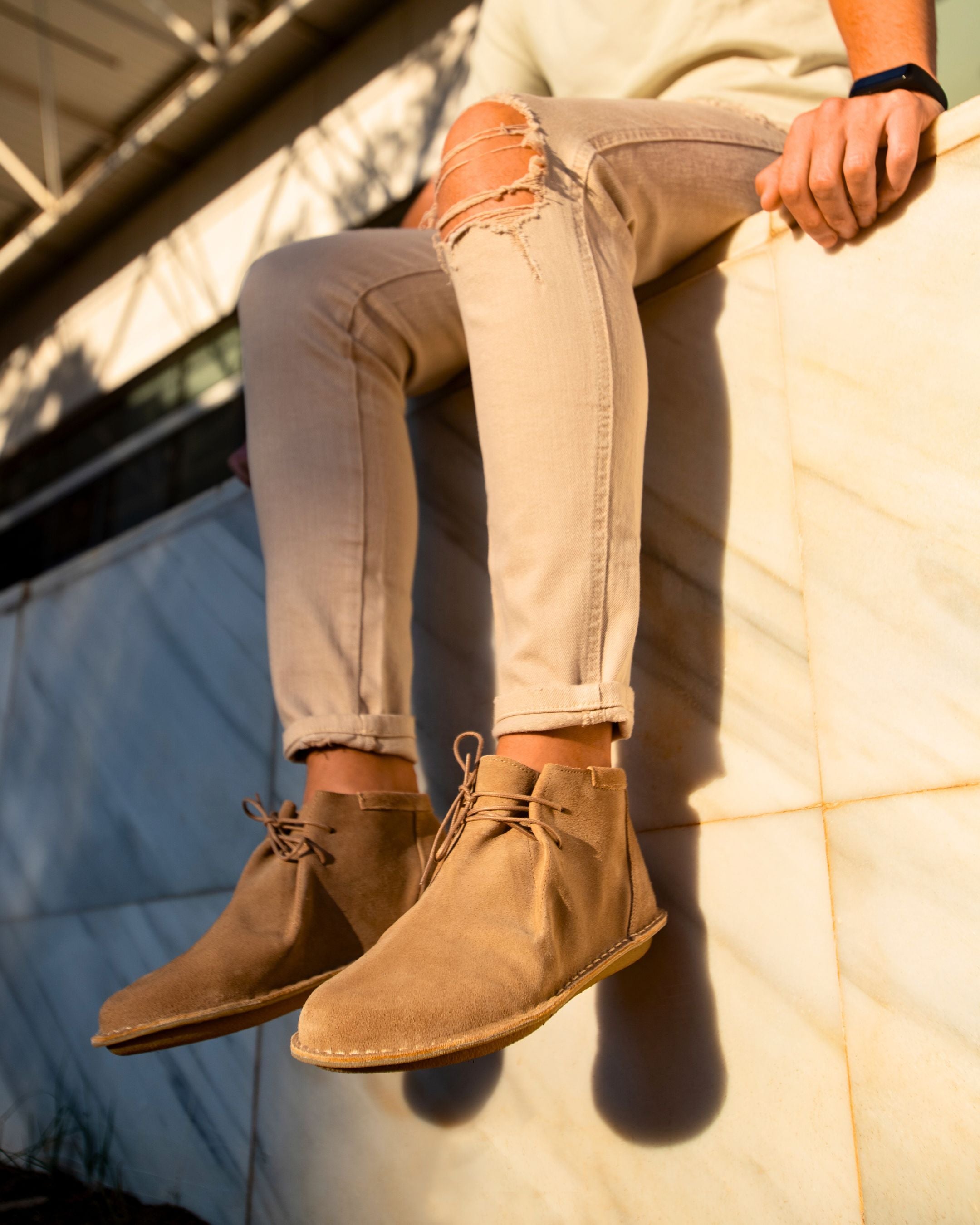


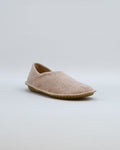
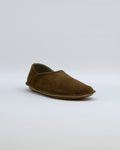
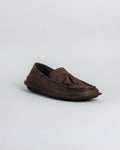
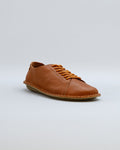
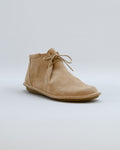

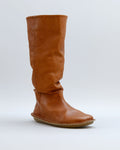
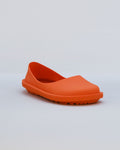
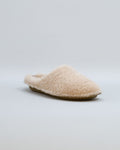

New leather shoes break in with regular wear rather than in a day: the leather softens and gently shapes to the foot. Short indoor sessions in thicker socks help. Pinching that never eases usually means the size is wrong; if you're between two sizes, go one size up.
This guide covers the first weeks with a new pair of leather shoes: what to put on your feet, how long breaking them in takes, and the point where firmness stops being normal. Deliberately stretching or softening a pair that pinches is a different job, so we leave it out here. Before day one, settle the size while the pair is still unworn. Try them on indoors on a clean floor and do the footbed check further down before you start wearing them in, because we can only exchange or refund pairs that haven't been worn.

What's happening inside new leather shoes
The payoff for a patient first few weeks is a pair shaped to your own feet, not to a generic last. Leather is a skin, and it behaves like one. Body heat, moisture and movement relax the fibres, so the upper softens where your foot pushes and folds where your foot bends. Leather creasing across the toes is not damage; it is the record of your own gait, and it is the reason a well-made pair looks better with years of wear than it did new; our 1,098-day wear test looks at how long leather shoes last.
Underneath, the natural rubber outsole flexes along the same lines, and the Carbon Step™ footbed gently compresses to the shape of your foot as it goes. The leather will gently stretch where needed, but a shoe does not change size. Our leather is vegetable-tanned; for the tanning detail, see our materials page and the comparison of vegetable-tanned and chrome-tanned leather.
How to break in leather shoes: the first two weeks
Three stages, no gadgets. The aim is short, repeated wears that let the leather warm and relax without giving your skin time to object.
-
Days one to three: short indoor sessions
An hour or two around the house, in a thicker wool sock. A thick sock does two jobs at once: it pads the places that feel firm and it encourages the leather to relax a little faster. On Preto Black pairs the dye may transfer during the first wears, so pick dark socks for these sessions. Walk, stand, go up and down the stairs. Then take them off while they still feel fine, not after they have started to nag.
-
The first week: short trips out
Errands, the school run, a walk to the shops. Pavements flex the sole differently from a kitchen floor, and that is the point. Alternate with another pair so each one has a day to dry out and recover between wears; leather that rests between outings softens more evenly than leather worn into the ground.
-
The second week onwards: full days
By now the instep should give where it used to press, the creases have found their lines, and a full day feels unremarkable. If anything still bites in exactly the same spot it did on the first wear, treat that as information rather than something to push through.

Some early sessions will feel firm, and that is normal rather than a fault. There is no shortcut worth the damage to the leather. If this is your first VIBAe pair, the low-drop Carbon Step™ footbed is also new to your feet, so give that time too.
Thick, warm wool socks, knitted in Finland on vintage 1930s machines.
Shop SAANA Wool Socks
Breaking in boots, loafers and mules
Shape changes the experience more than material does. How to break in leather boots is mostly a question of the shaft and the instep; how to break in loafers is mostly a question of the heel.
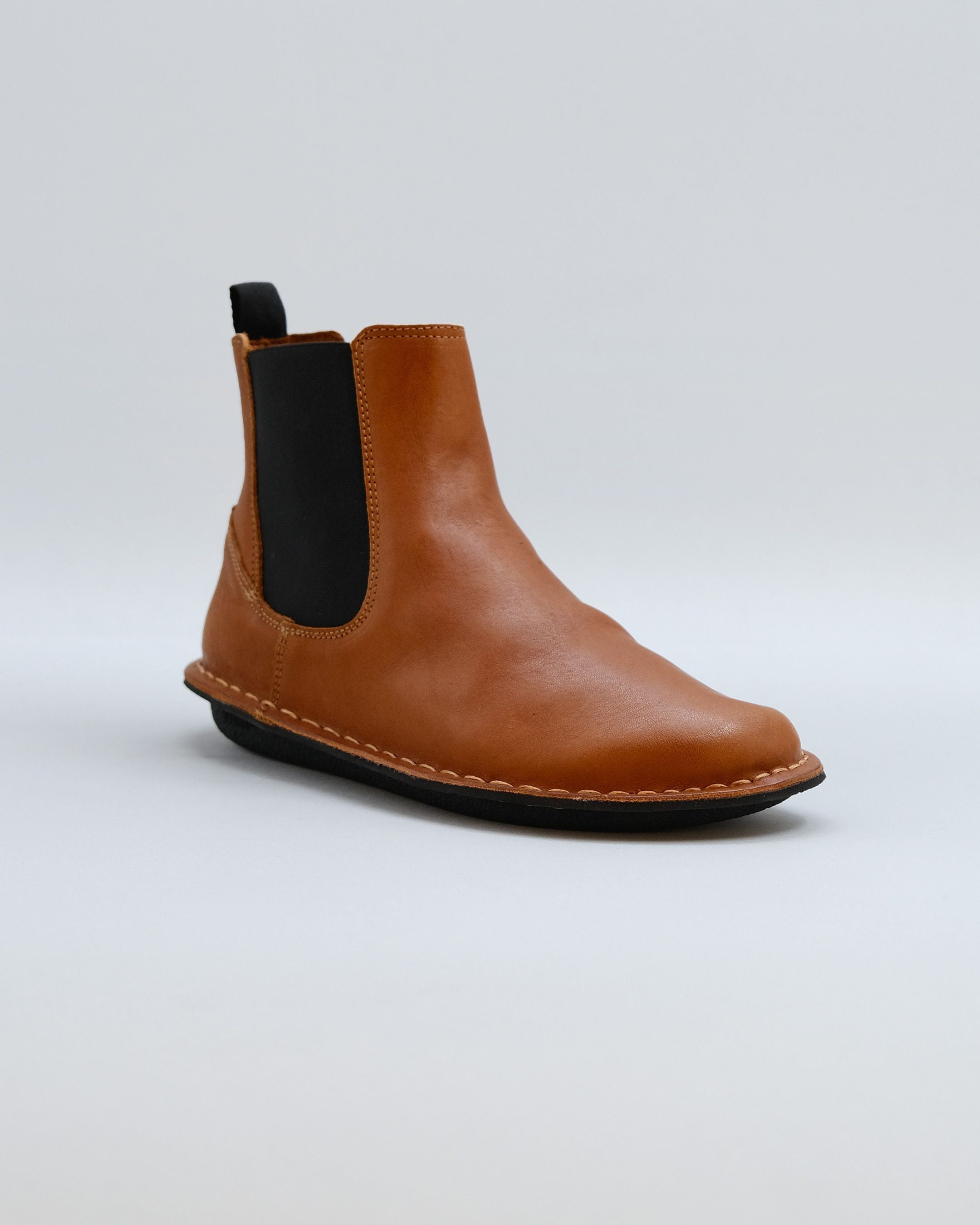
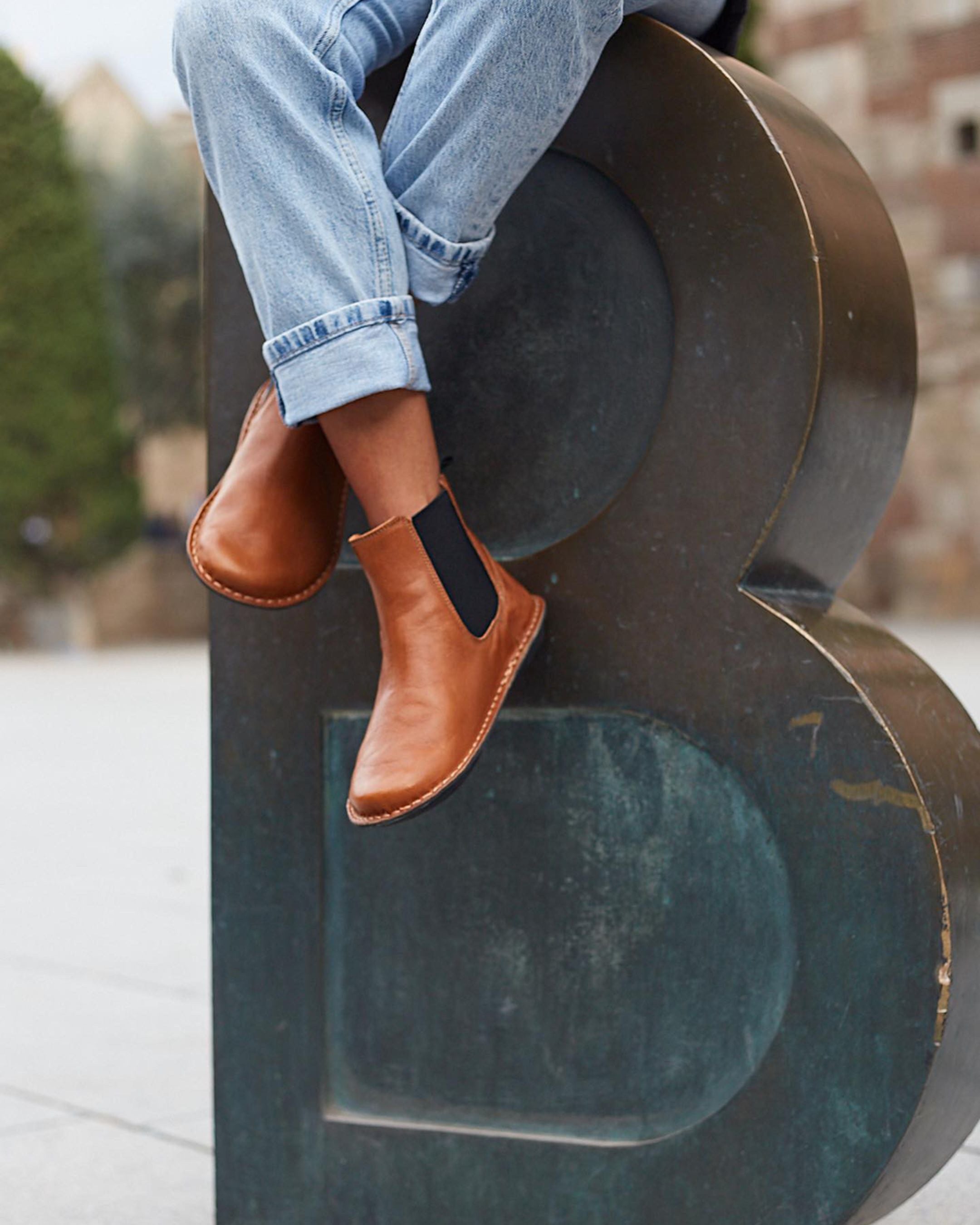
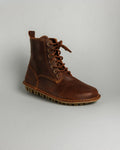
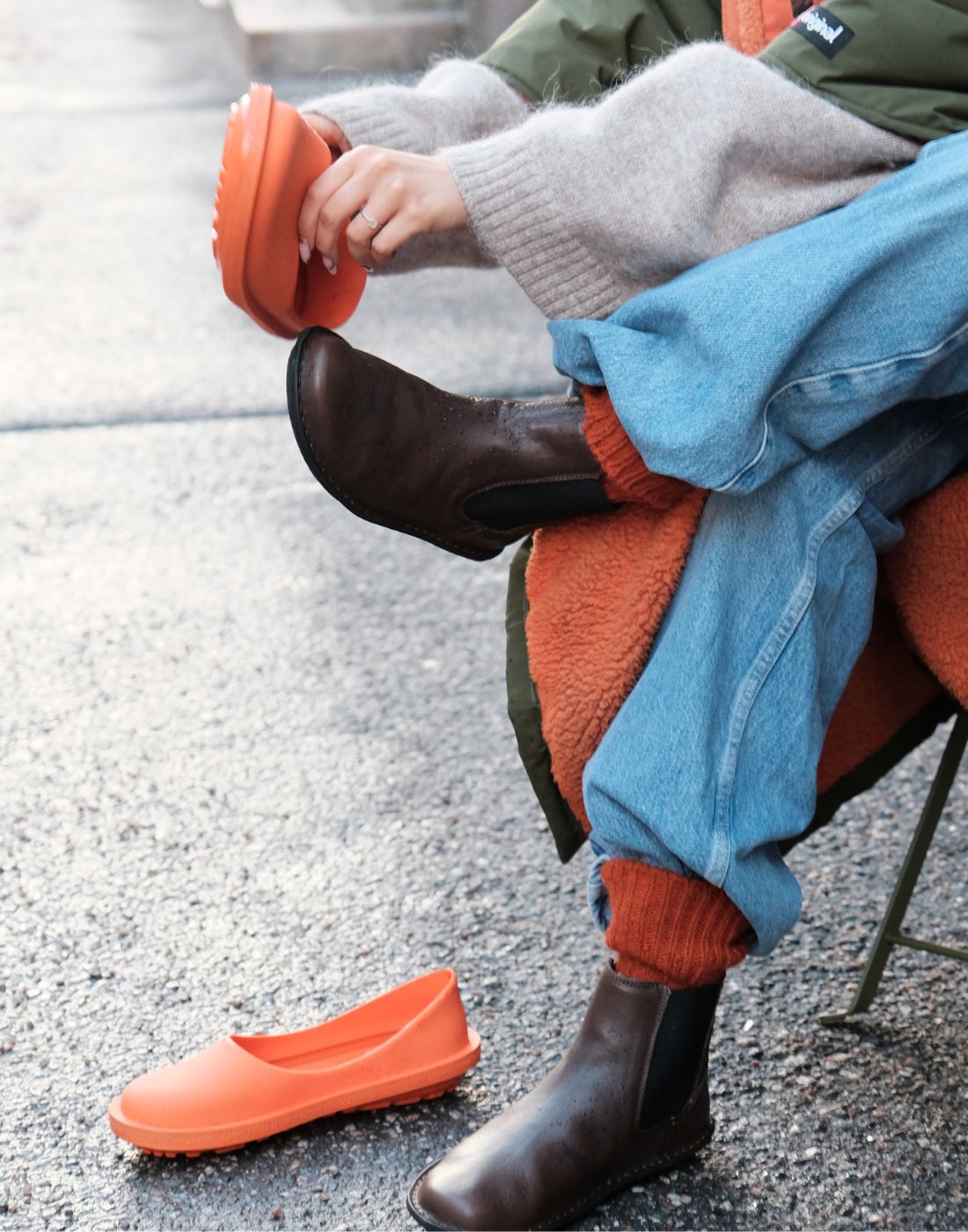
A higher shaft, as on our HELSINKI and WOODSTOCK boots, moves against your ankle and folds deeply across the instep every time you step. Wool socks and short indoor sessions matter most here. Heel rubbing in new boots can happen in the first days and eases as the counter softens and the upper creases where your foot hinges. Wearing in new boots indoors, on carpet, for an hour at a time keeps that friction manageable. Once settled, a leather boot should hold your heel securely and sit easily through the instep, close around the forefoot without pinching.
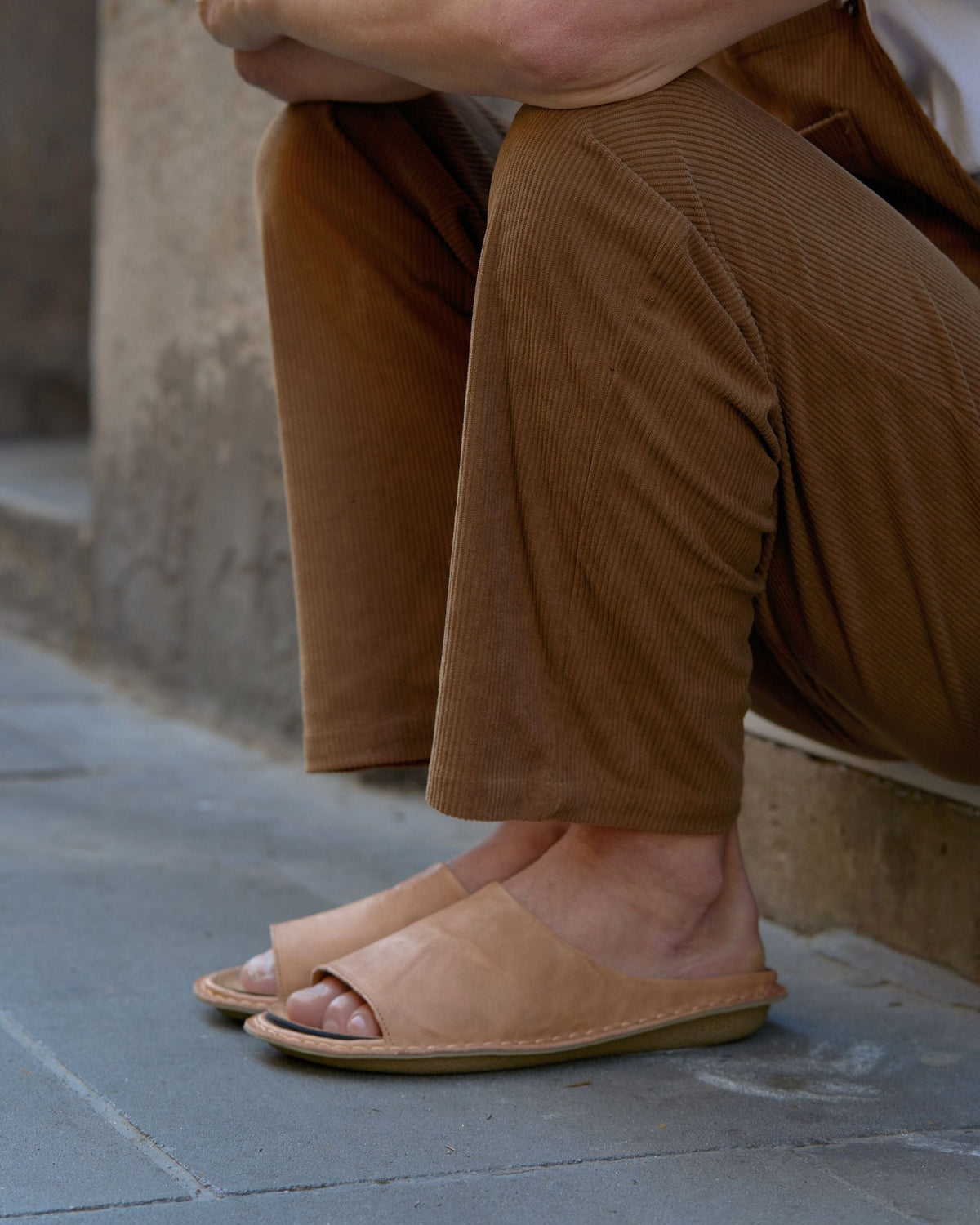
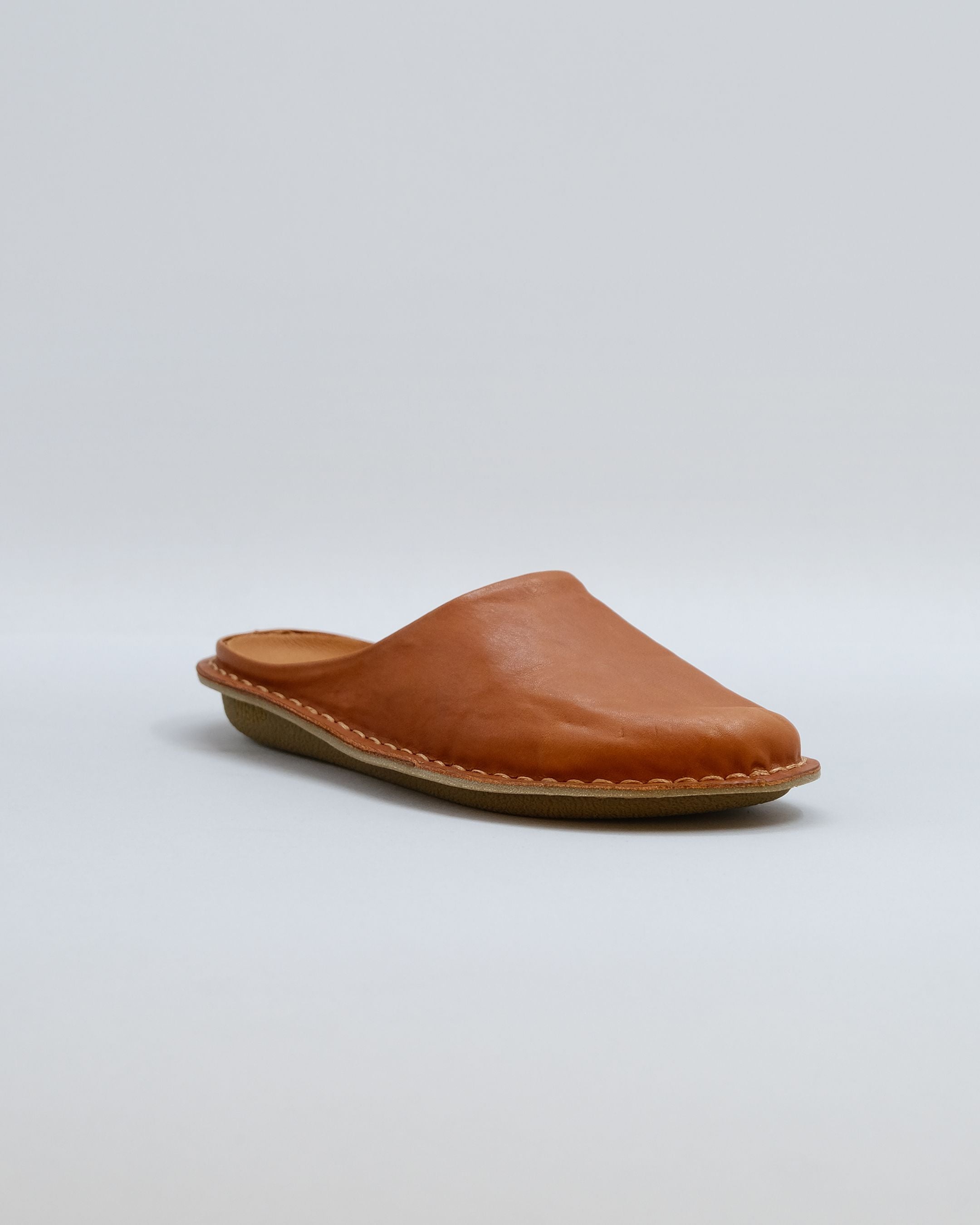
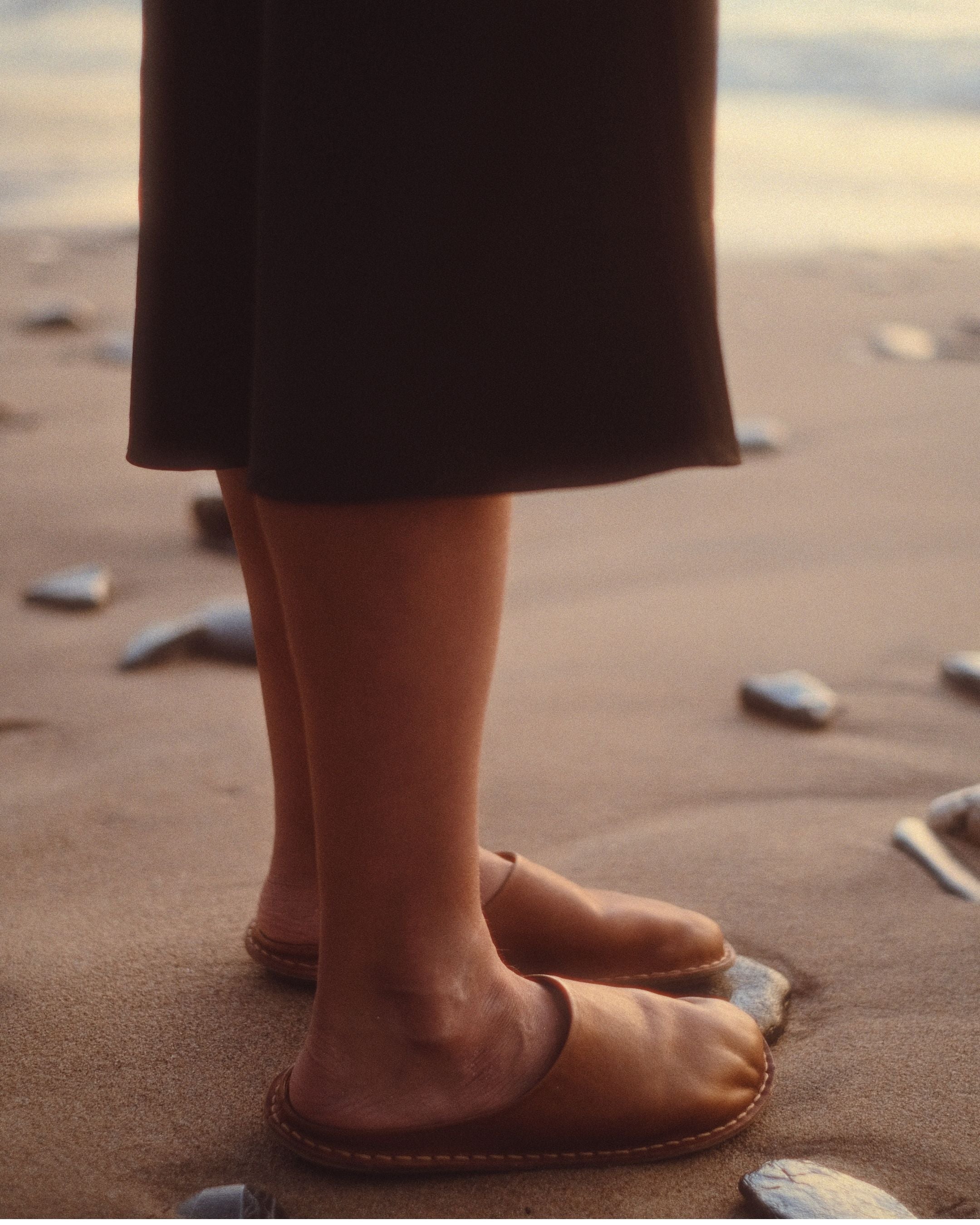
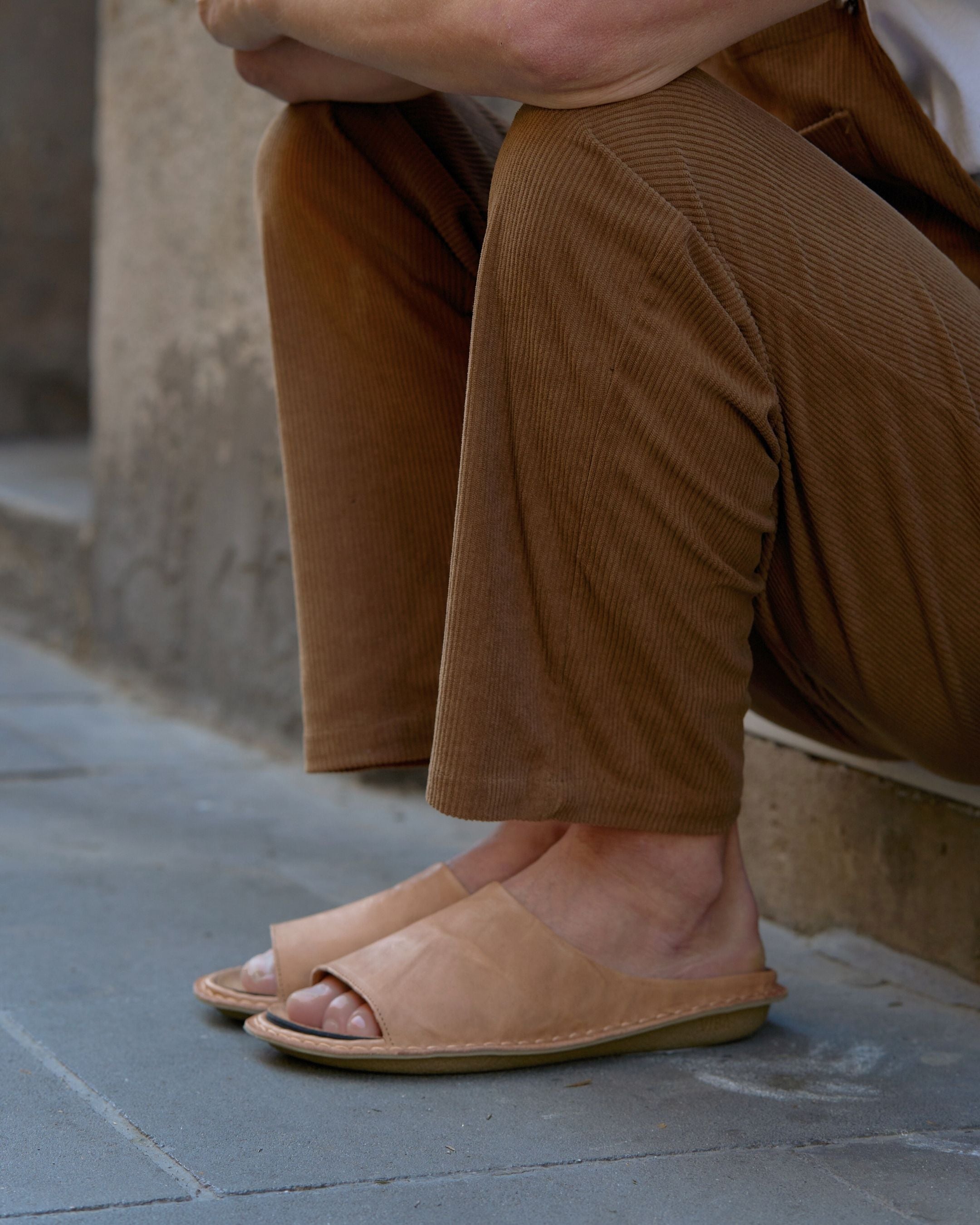
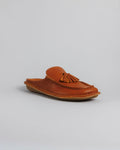
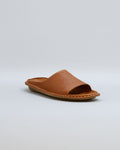
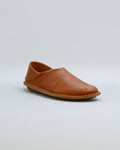
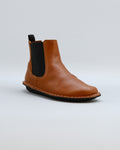
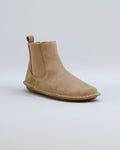
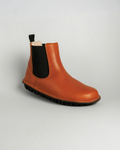
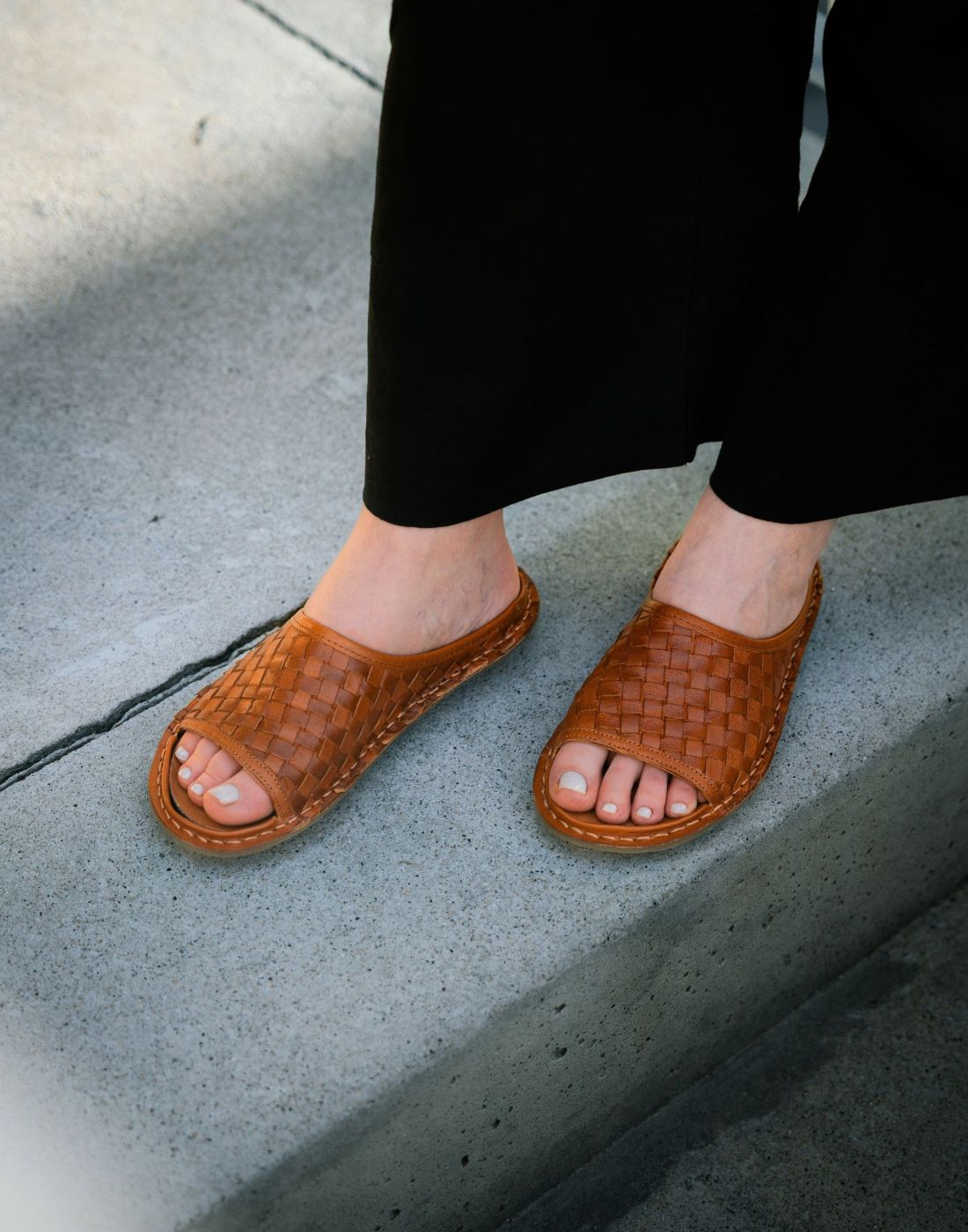
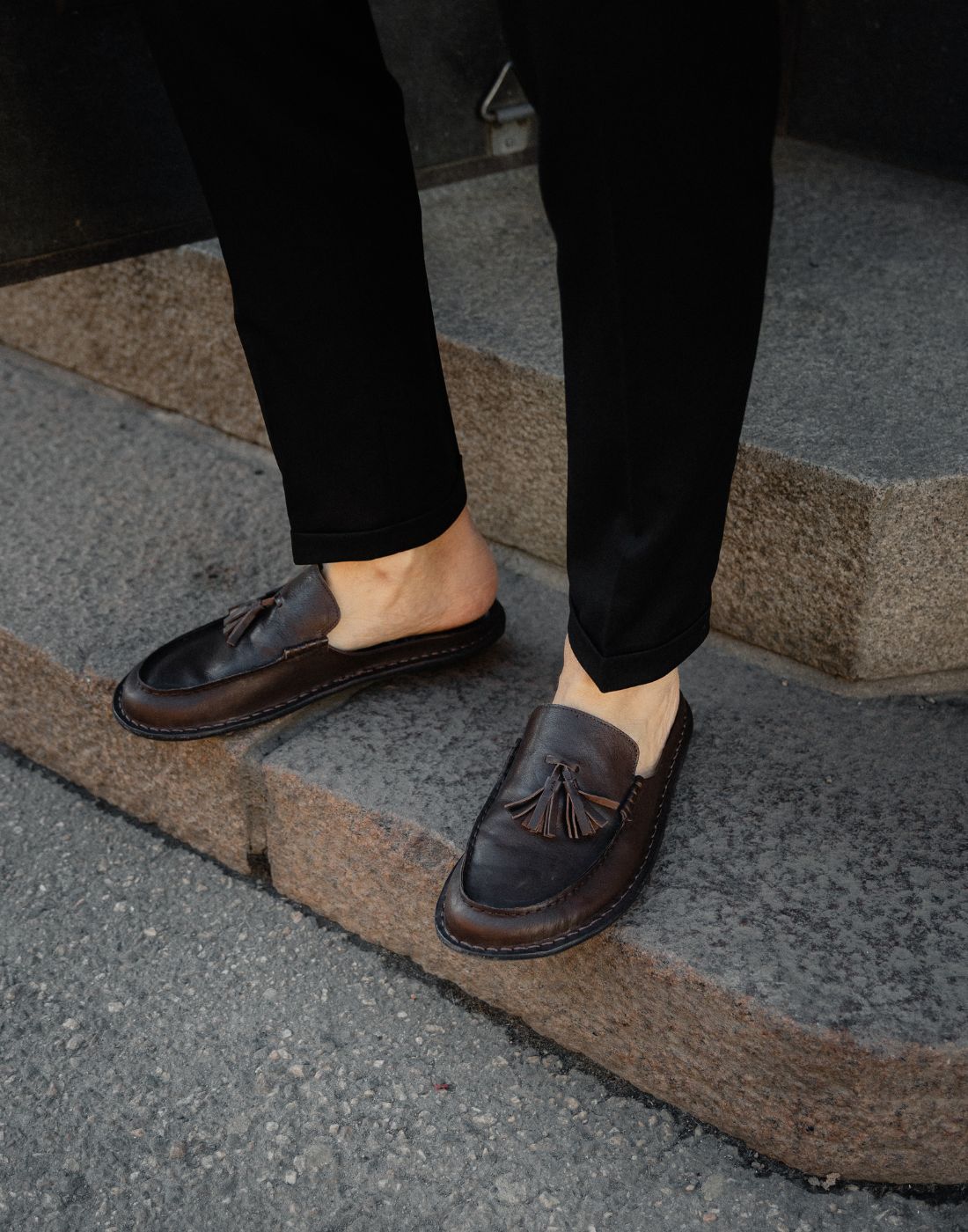
Low-cut and backless pairs behave differently. A ROMA mule or anything from loafers and mules tends to settle quickly because there is simply less leather to persuade, though the heel can lift for the first few wears until the vamp creases where your foot bends. That slight lift is normal; a heel that leaves the shoe entirely is not. If you are unsure what a finished fit should feel like, our guide to how loafers should fit walks through it properly.
Normal break-in or the wrong size? The signs
Firmness in the first week is not, by itself, a sign of the wrong size. The difference shows in whether a sign fades or repeats. Read the table against what your feet actually did yesterday.
| Sign | Normal break-in | Wrong size | What to do |
|---|---|---|---|
| Firmness across the instep | Firm on the first wear, easing noticeably week by week | Pressing just as hard after two weeks of regular wear | Stop persevering and recheck your size |
| Heel movement | Slight lift that settles as the leather creases | Heel slides clear of the shoe with every step | Try a thicker sock; if it still slips, the pair is too big |
| Toe pressure | Close, almost like a well-fitted glove at first, easing as the leather gently stretches where needed | Toes curled against the front, tingling or numbness | Check the size chart |
| Red marks after wearing | Faint marks that fade shortly after you take the shoes off | Marks that linger, or blistering in the same spot each wear | Pause, let your skin recover, reassess the size |
| How the second week feels | Softer, quieter, full days feel ordinary | Identical to the first wear, or worse | Recheck your size instead of waiting it out |
So here is the rule. Settle the size while the pair is unworn (our refund policy explains why). Once you're wearing them out, give a new pair a few weeks of regular wear before you judge it. If the same spot still presses by then, if your toes feel numb or curled against the front, if the marks linger, or if the second week feels exactly like the first wear, check the size chart before your next pair instead of hoping it will settle. We don't make half sizes, so when you fall between two shoe sizes, go one size up; the leather will gently stretch where needed. Do the same if you'll wear thick socks every day; the thicker socks in the first sessions are only for breaking the pair in.
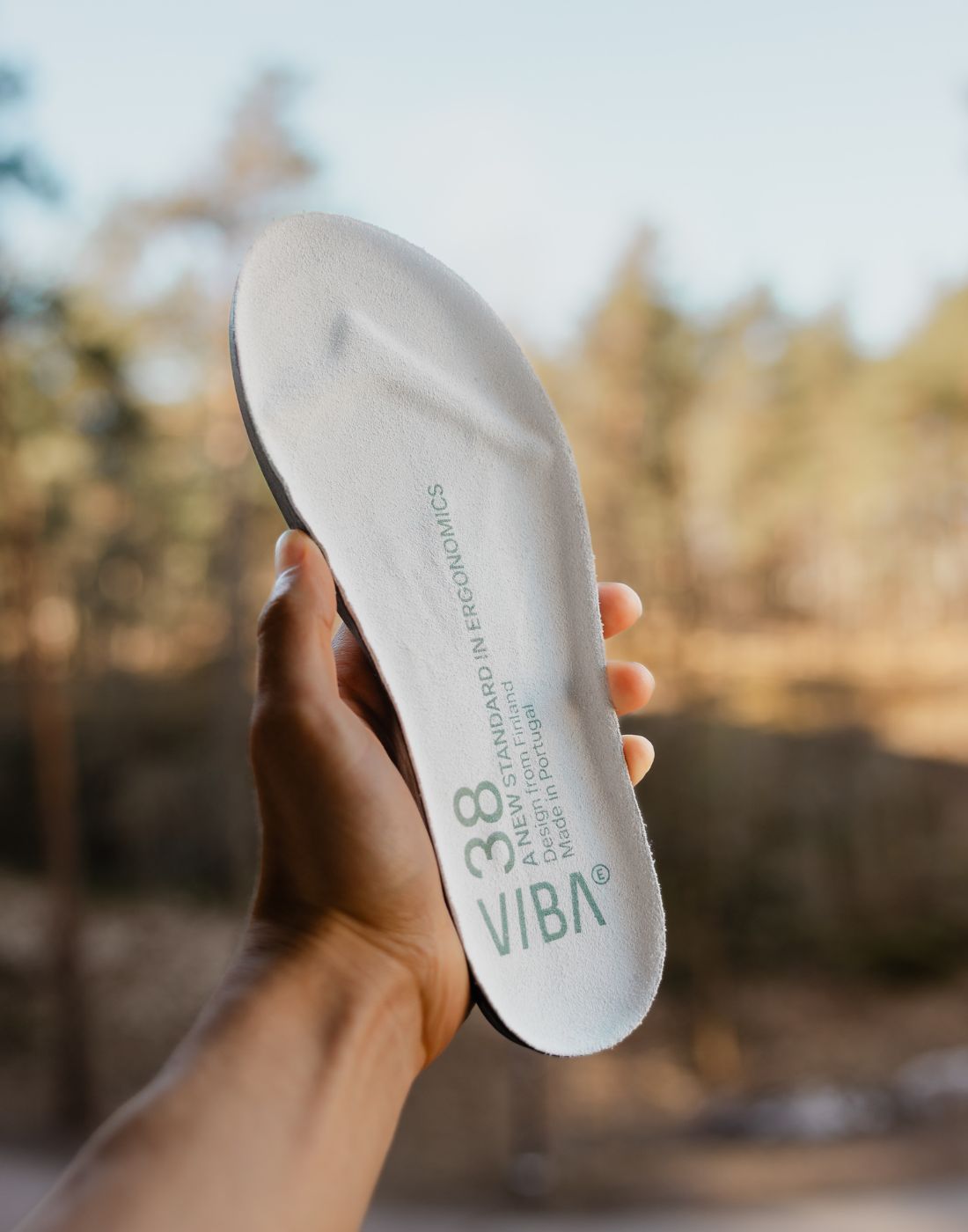
One useful check now that the pair is in your hands: on styles with a removable Carbon Step™ footbed, take out the insole and stand on it. It's OK if your foot fills it completely from heel to toe; if your foot fits neatly within it, that's your size. A looser fit would stop the Carbon Step™ footbed and the leather from working together to give you that perfect feel. On styles with a stitched-in Carbon Step™ insole, such as CAPRI, that check doesn't apply.
Sensitive feet, bunions or a history of heel pain can make the first weeks harder. If pain persists, see a health professional.
Questions we get about breaking in leather shoes
How long does it take to break in leather shoes?
Usually a few weeks of regular wear. How long to break in leather shoes depends on how often you wear them, your sock thickness and the cut of the style, and a boot with a taller shaft can take longer. Short daily wears get you there faster than one long day a week.
Should new shoes feel tight?
Close, not tight: a new pair can feel almost like a well-fitted glove at first; that's how it should be, and the leather will gently stretch where needed. Numbness, pinching that never eases, or toes curled against the front are the signs to check the size.
Do leather shoes stretch?
They relax and shape to the foot with wear, softening where you flex and gently stretching where needed. That is not the same as going up a size.
Is it OK to use heat to speed things up?
No. A hairdryer or a radiator dries leather out, which makes it brittle and shortens the life of the shoe. Ordinary leather shoe care, cleaning and conditioning, keeps the upper supple far better than any heat trick.
Can you break in boots faster?
Not meaningfully. The quickest safe route is simply more short wears: two separate hours beat one forced afternoon. The fast fixes people sell either dry the leather or force it, and both cost you years of wear.
A little care goes a long way: simple tips for leather, suede and shearling.
Read Care Instructions
Short wears at home in a thick sock do the work, and a sore spot that keeps coming back is the one to take seriously.