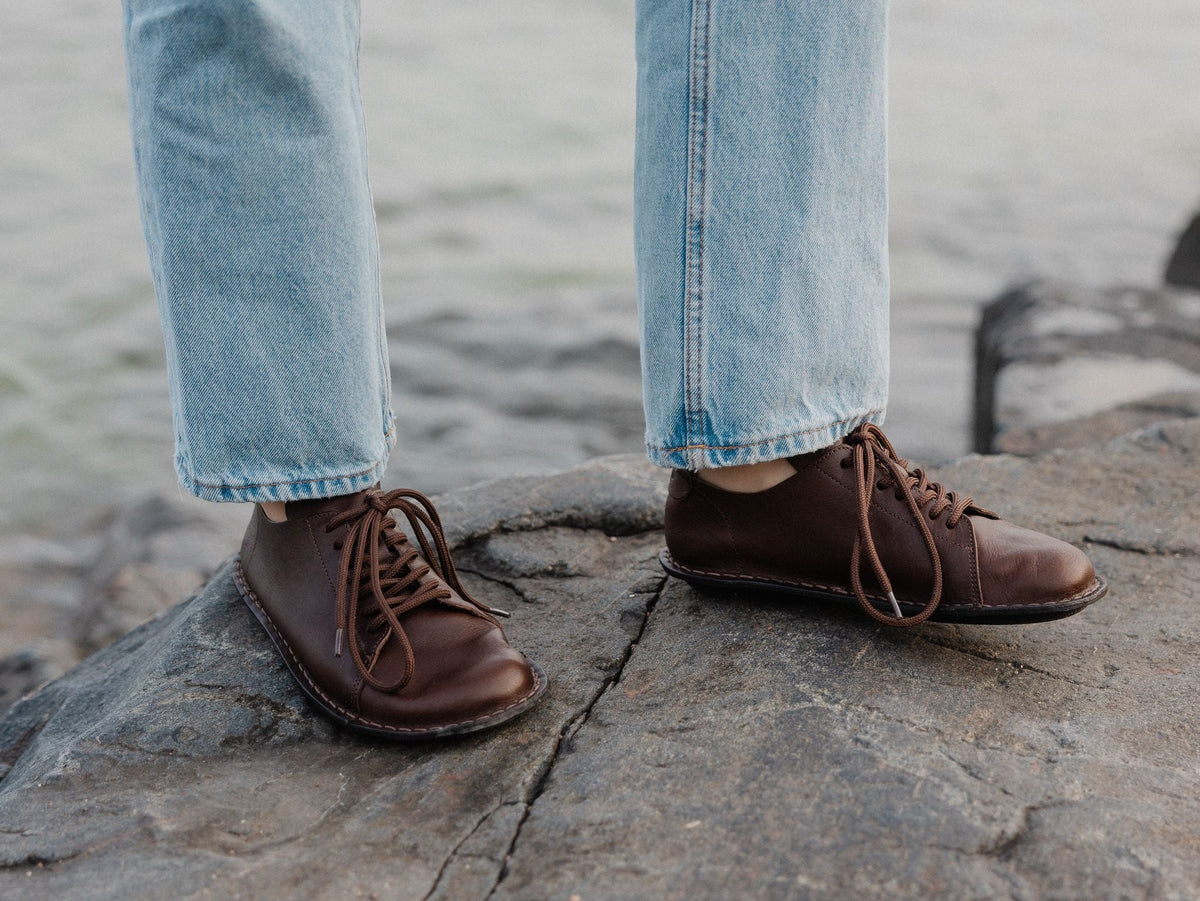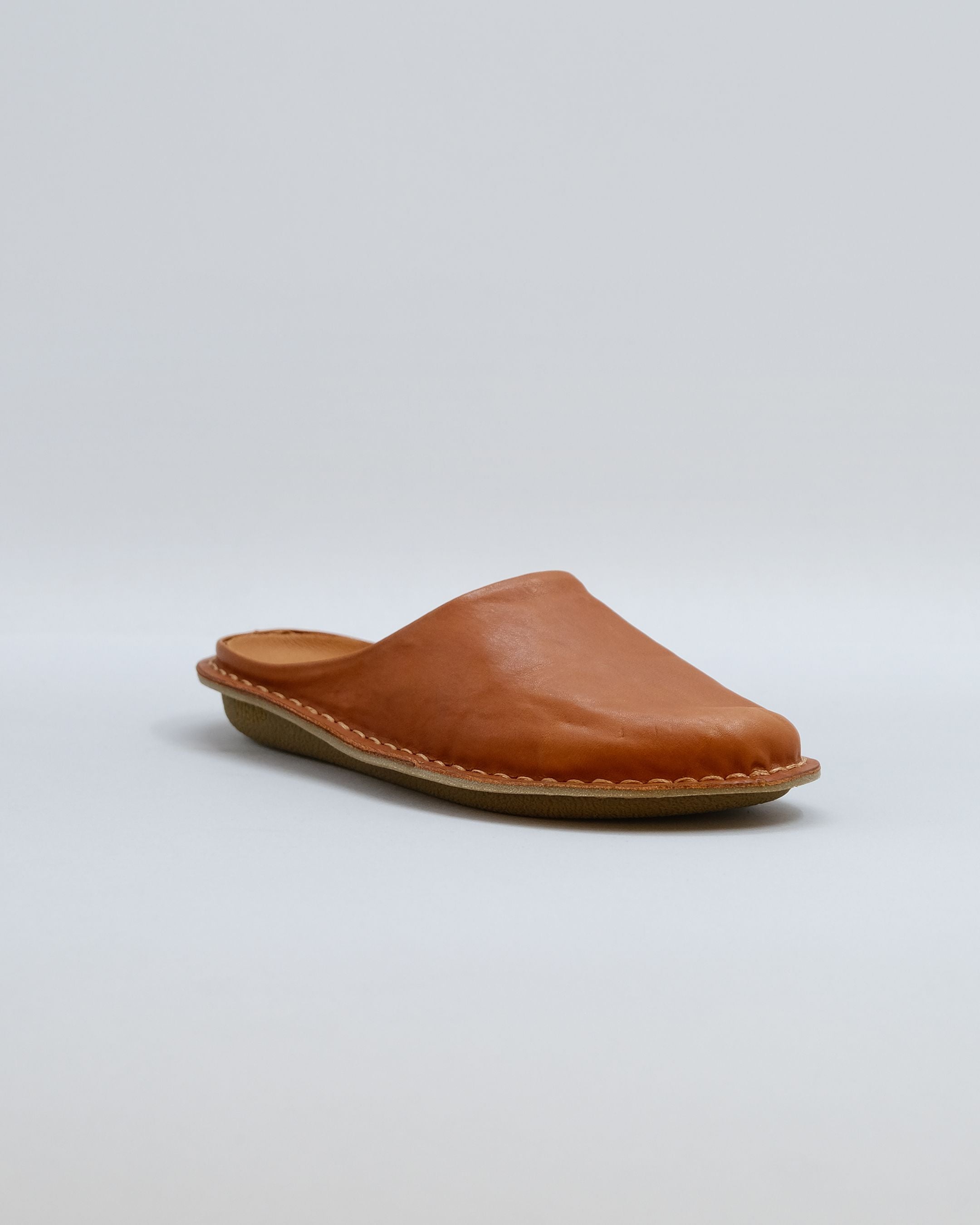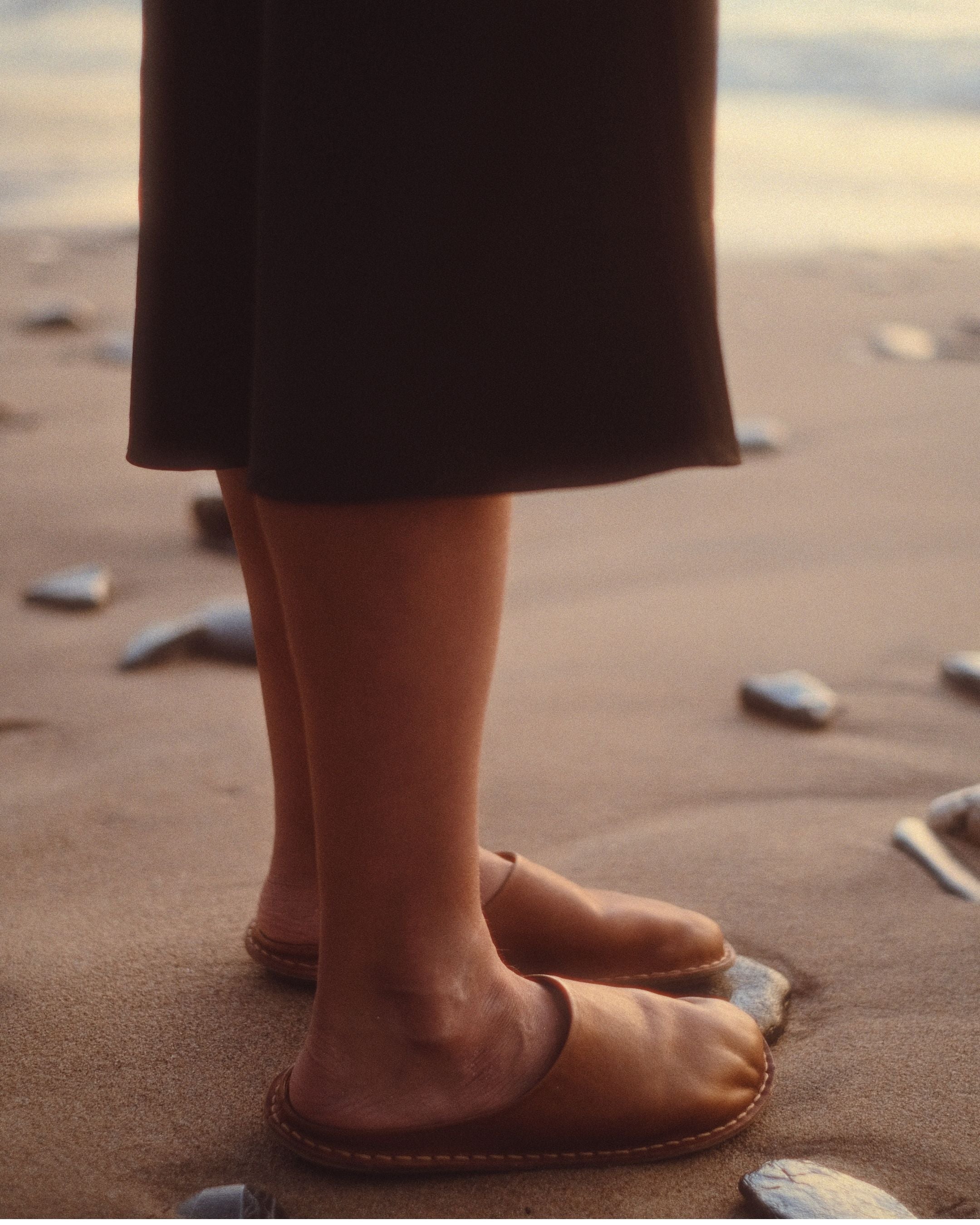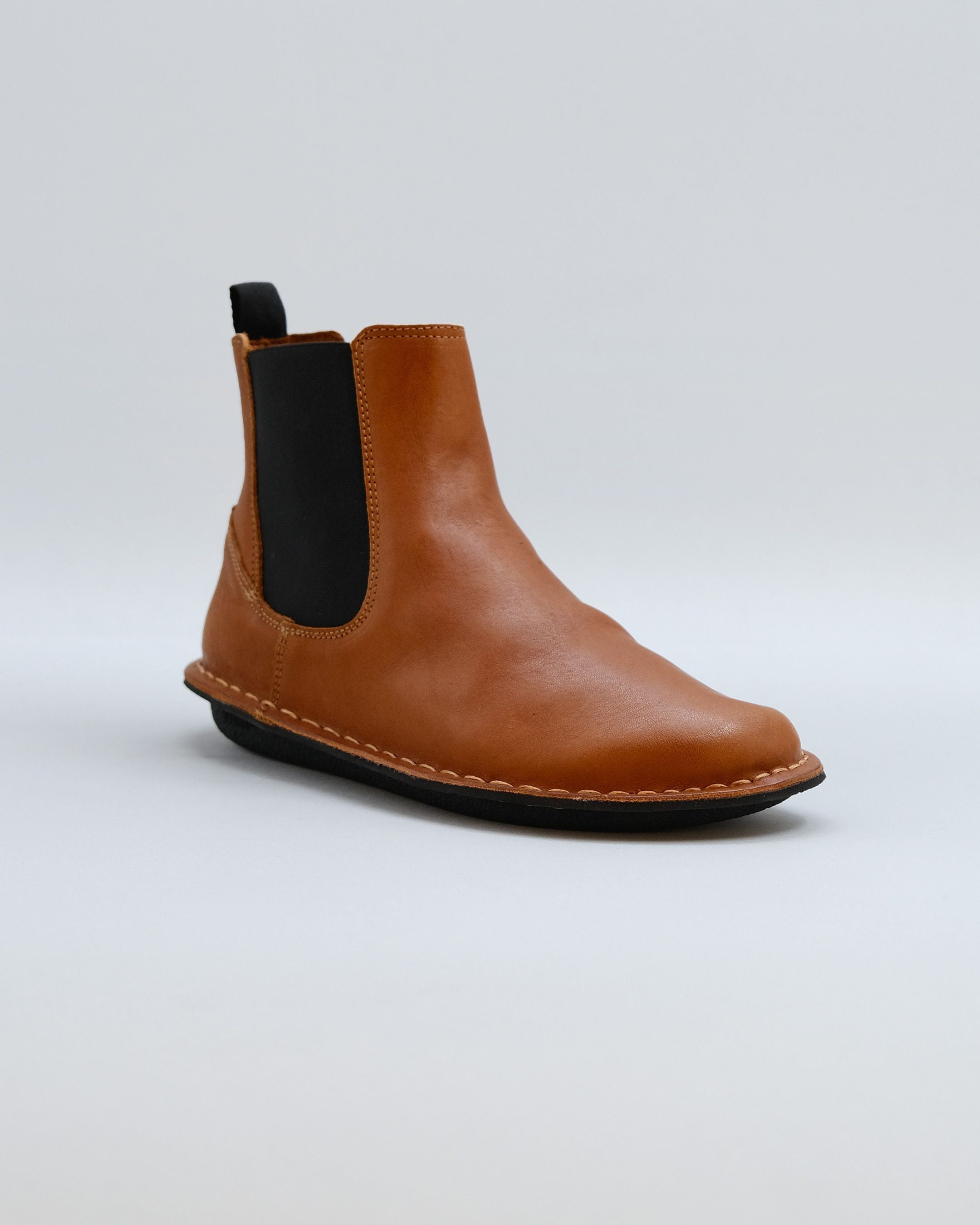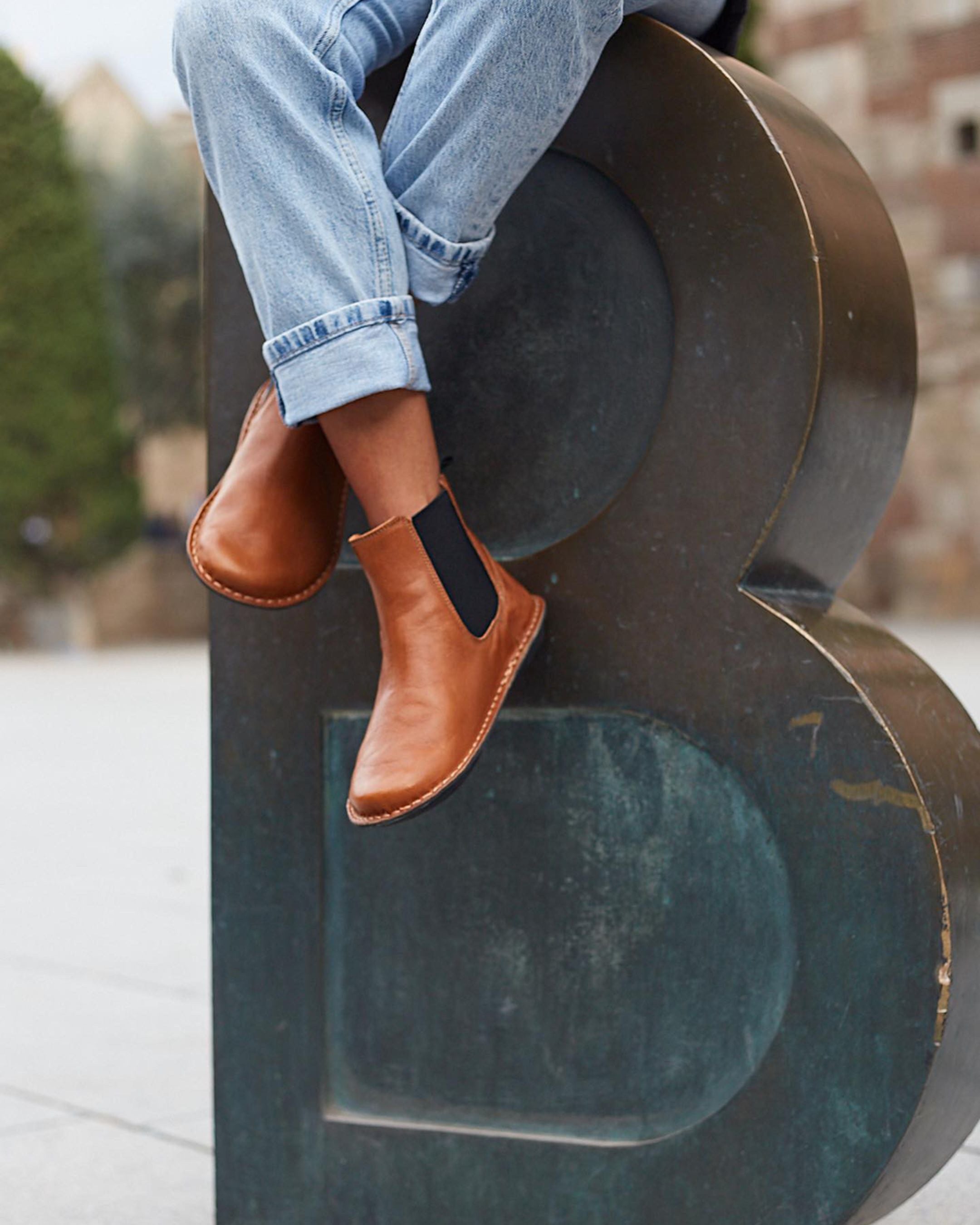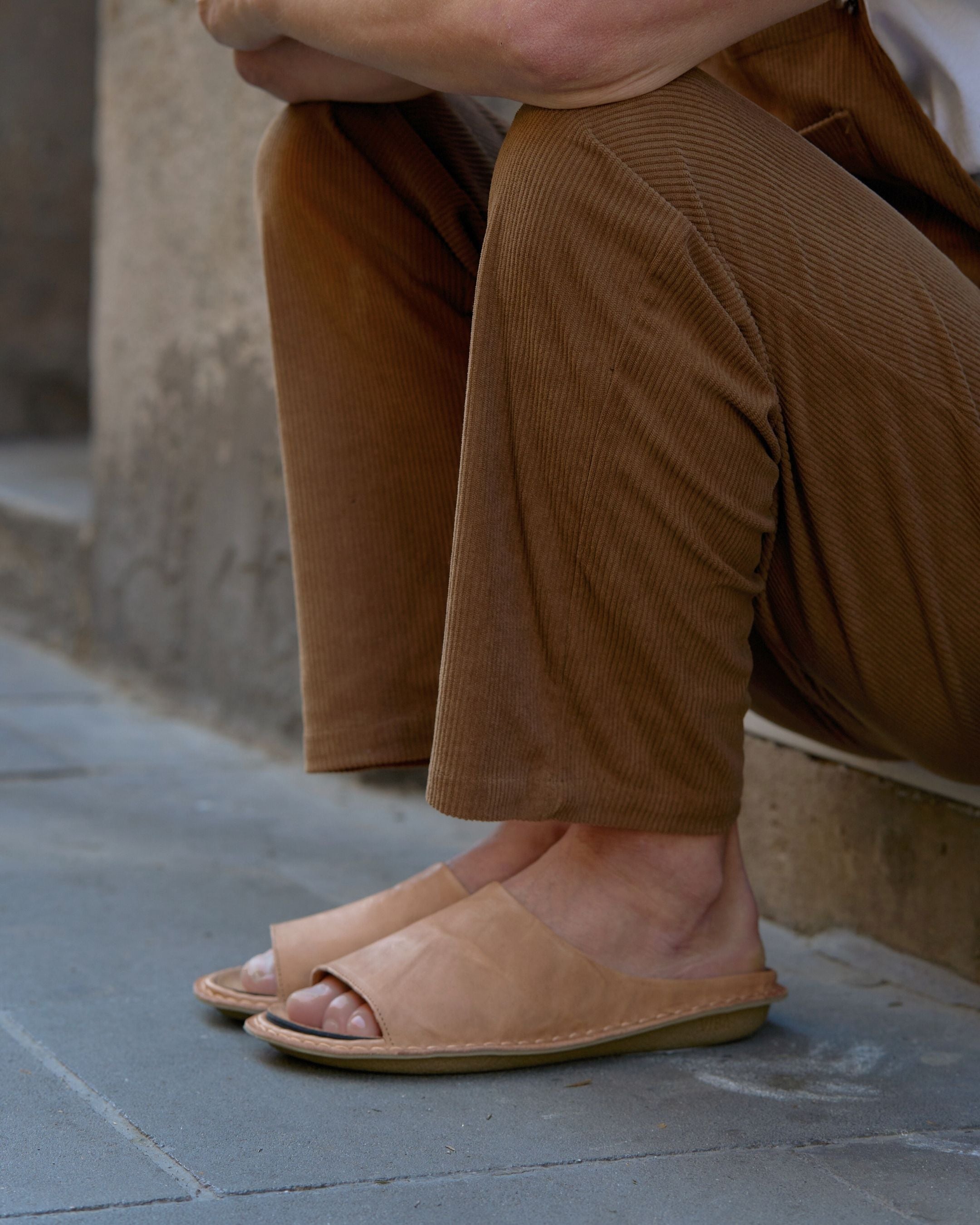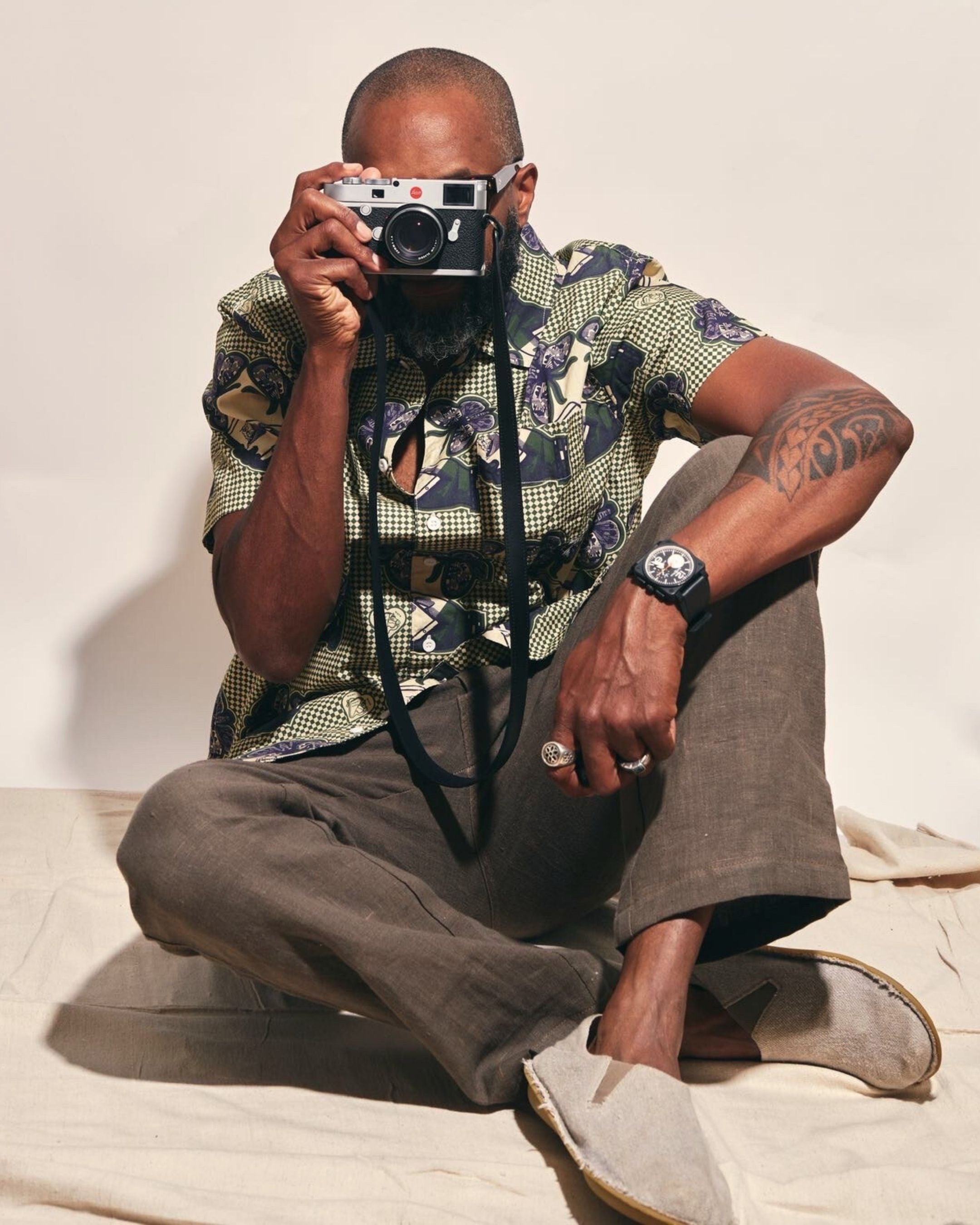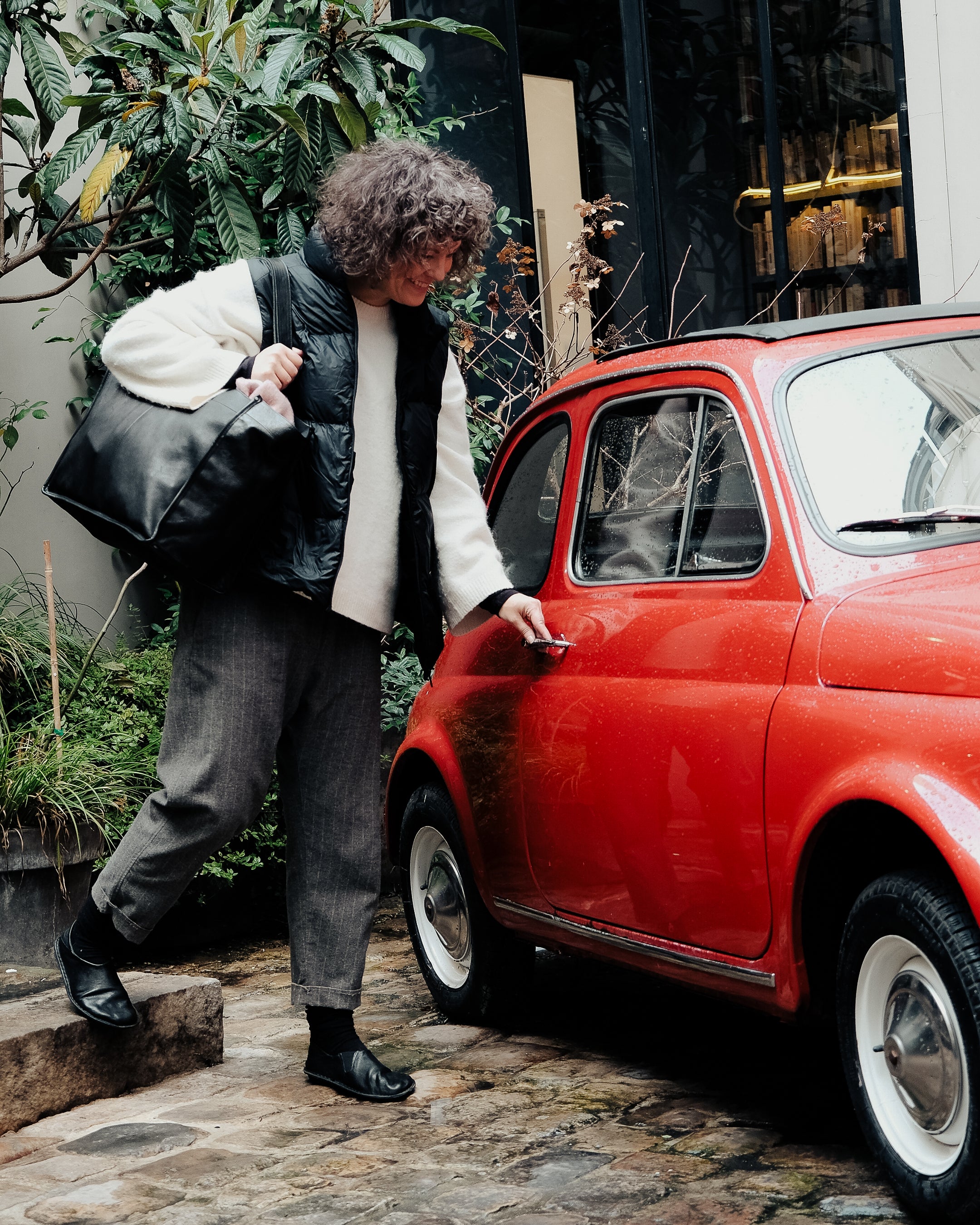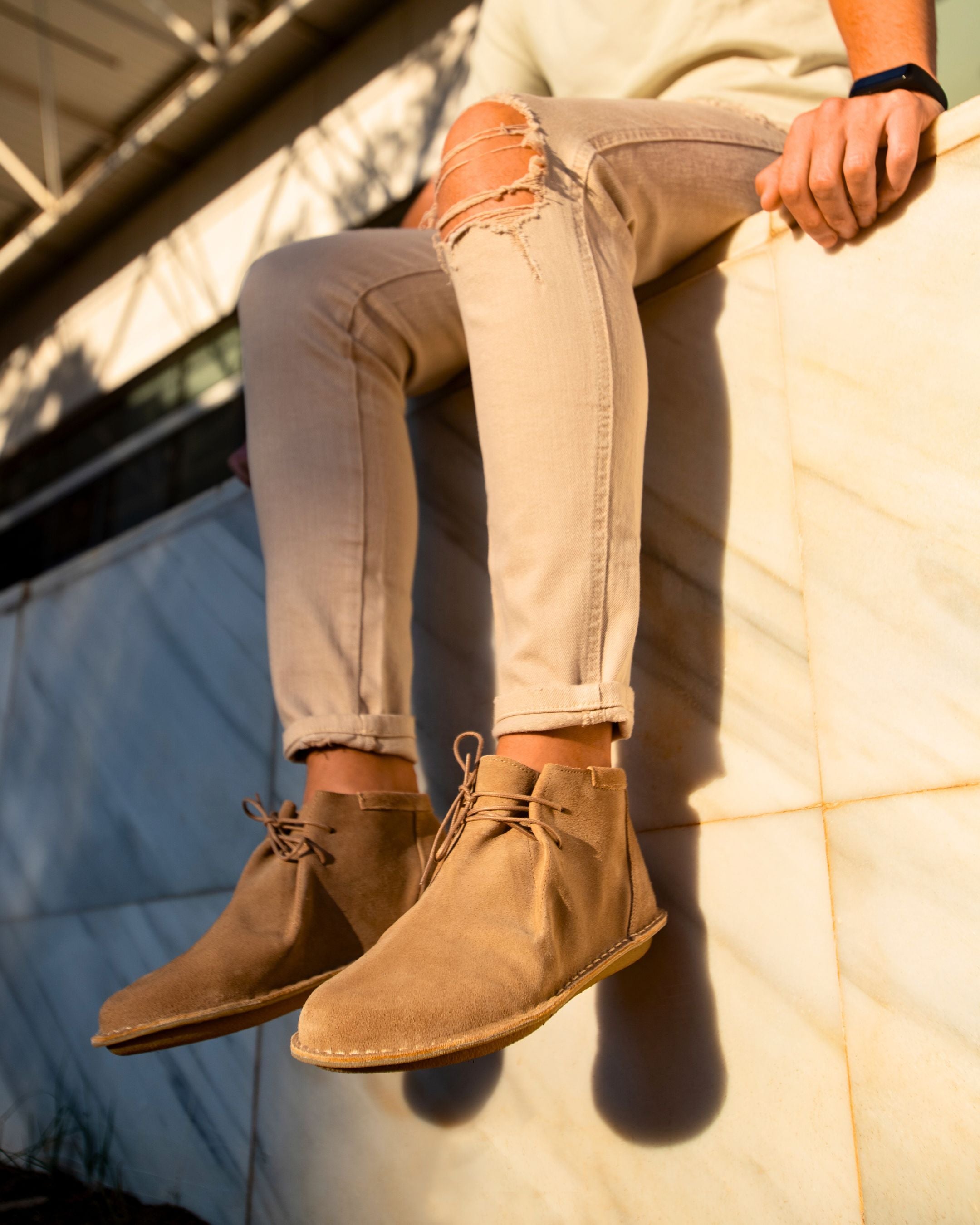

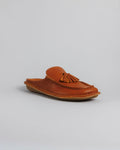
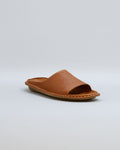

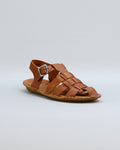
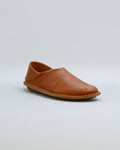
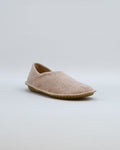
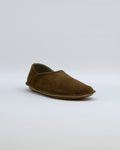
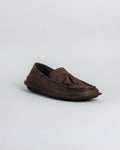
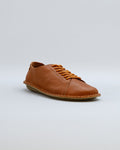
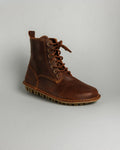
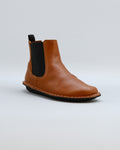
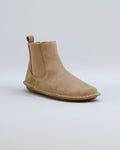
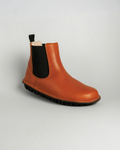
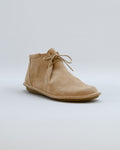
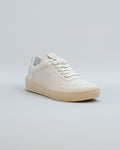
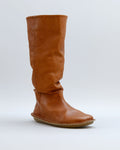
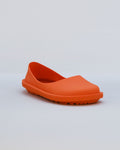
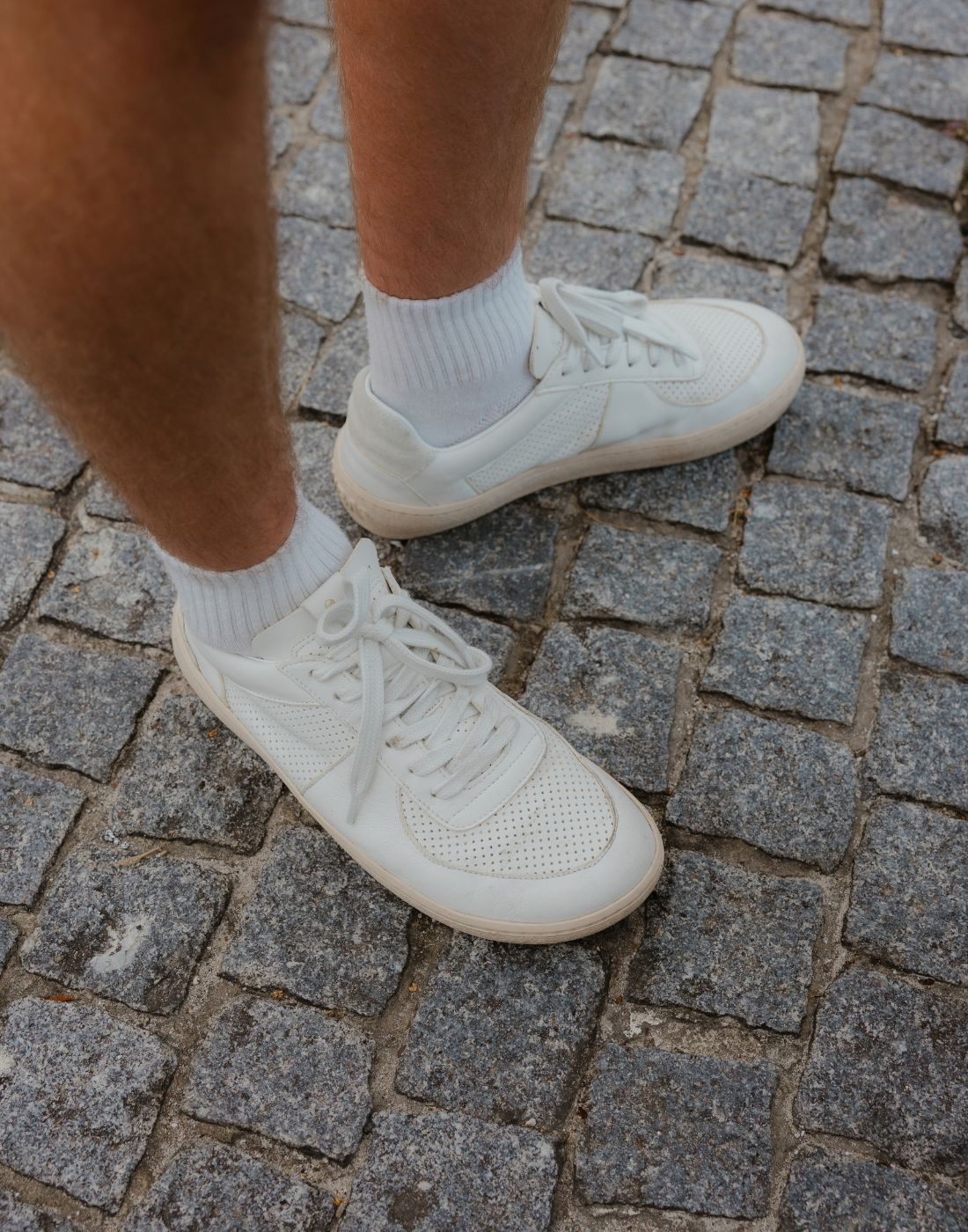
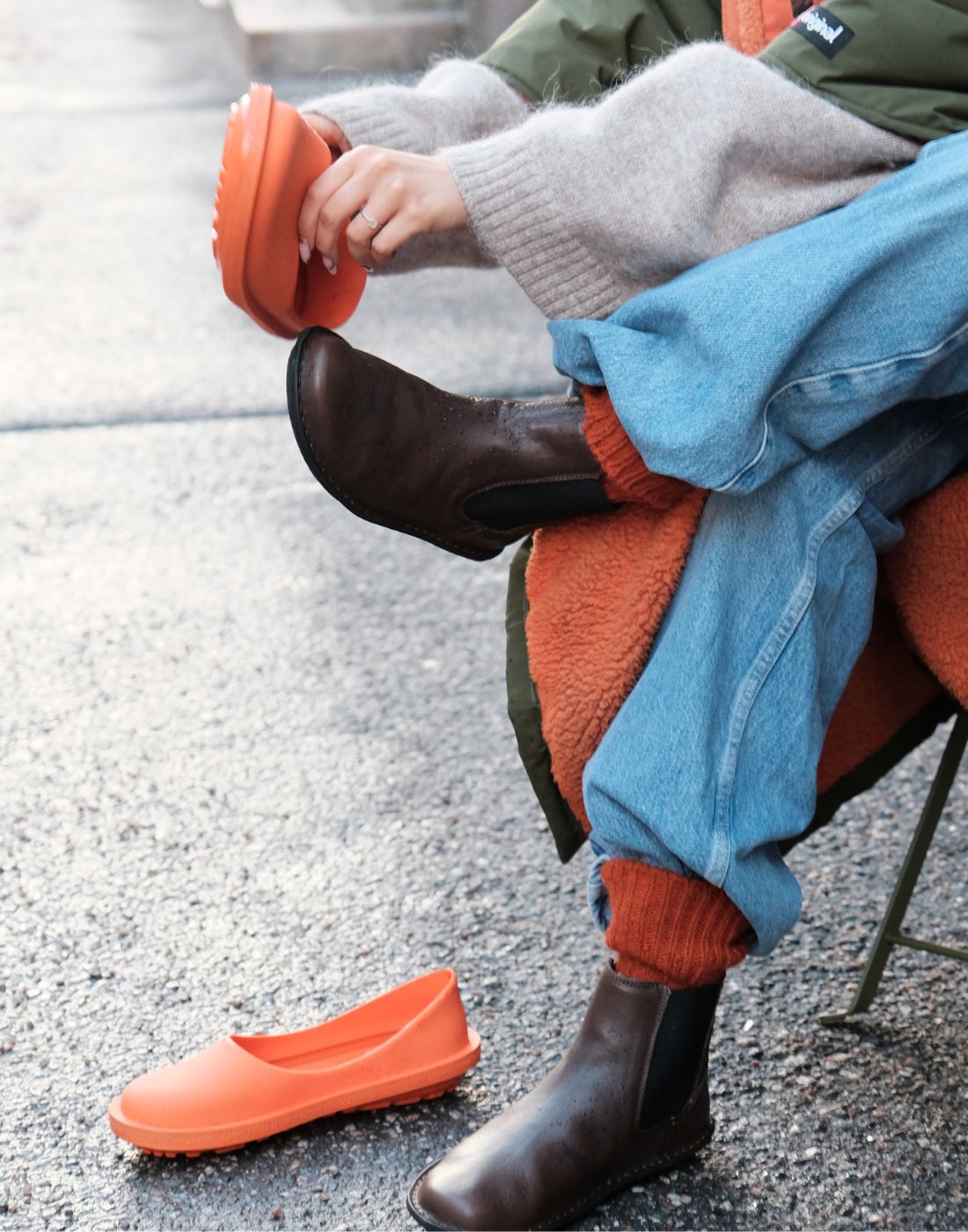

Barefoot trainers are minimalist trainers built on a flexible, low-drop sole with a wide toe box, so toes can spread and the foot can bend naturally. VIBAe's versions are handmade in Portugal with a removable Carbon Step™ footbed, so a worn footbed is replaced rather than the whole shoe.
Barefoot trainers are everyday shoes built on a foot-shaped last rather than a tapered one: a flexible sole, a low heel-to-toe drop, a wide toe box that lets toes spread, and a light overall weight. They suit commuting, standing days and work-to-weekend wear. The adjustment period is real, and worth planning for.
What are barefoot trainers, and who do they suit?
Barefoot trainers suit anyone who wants their foot to do its own work. Nothing steers the foot into a tapered point, nothing props the heel up above the forefoot, and the sole bends where your foot bends. The payoff is roomy, unforced comfort across a long day — the sort you stop noticing, which is the whole idea.
Most people who come to this category are on their feet a lot. School runs and station platforms, a shop floor or a studio, a day that starts at a desk and ends at a pub garden. If that's your week, minimalist trainers make sense because they're light enough to forget and flexible enough to move with you. Readers with sensitive feet, bunions or a history of plantar fasciitis often look here too, drawn by the room across the forefoot. Worth saying plainly: shoes are not a treatment, and persistent pain belongs with a health professional, not a new pair of shoes.
VIBAe's take on the category sits in the VIBAe sneakers collection: LONDON Bio Leather and SYDNEY Bio Suede, unisex, EU 35–48. One collection, everyone, no men's-and-women's split.

How barefoot trainers differ from standard trainers
The difference you feel first is ground contact. A thin, bendy sole tells you what you're walking on, so your foot adjusts to the pavement instead of the pavement being smoothed away. The second thing you notice is width. Toes spread instead of stacking, which is why people describe wide toe box trainers as a relief rather than a style choice.
Mechanically, four things change. Sole flexibility goes up, so the shoe rolls through the step with you. Heel-to-toe drop comes down, so the shoe isn't tipping your posture forwards. That's what people are usually after when they search for zero drop trainers: a lower heel, nothing more complicated. Toe-box shape follows the outline of a foot rather than a symmetrical oval. And weight drops, because there's less shoe to carry.
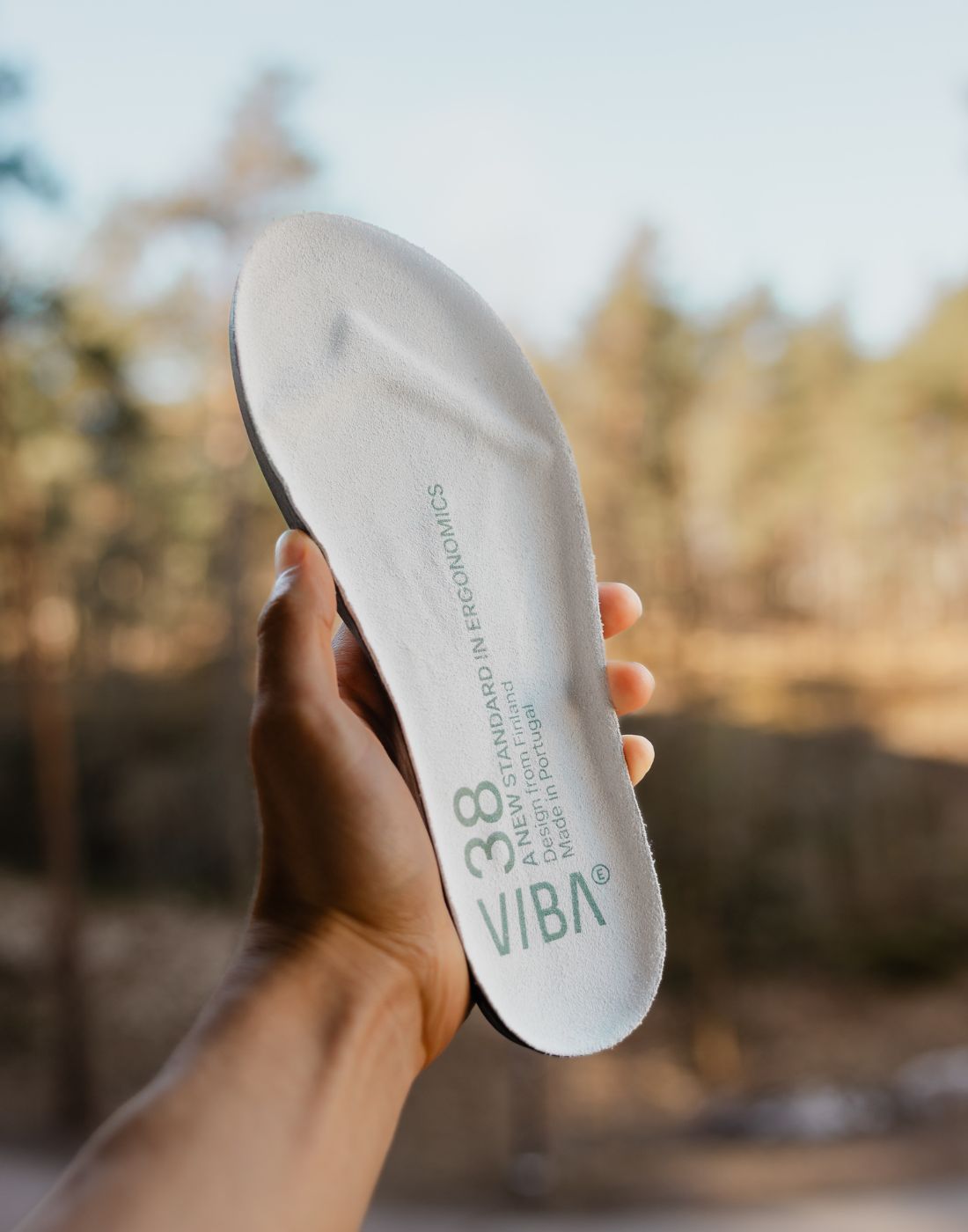
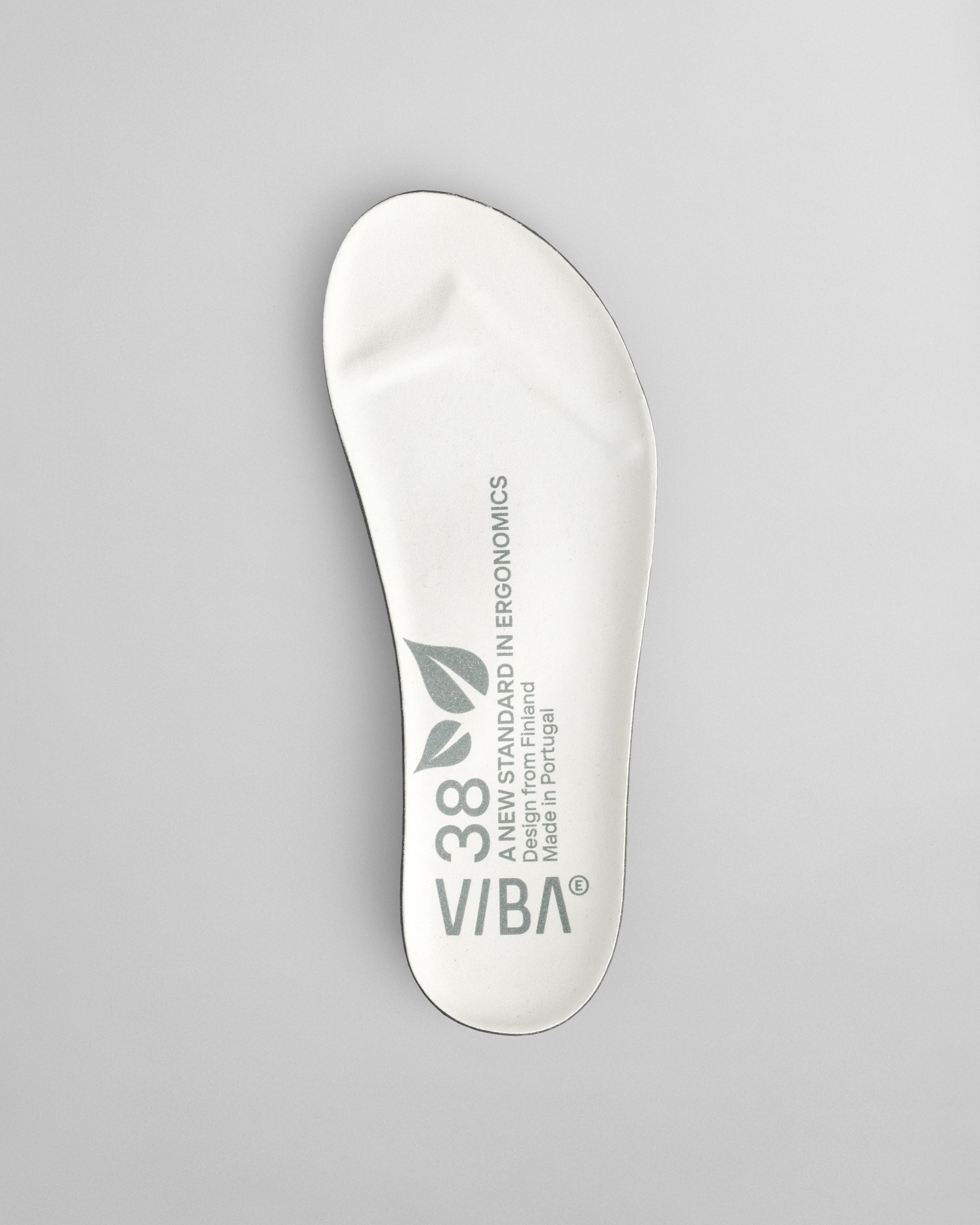
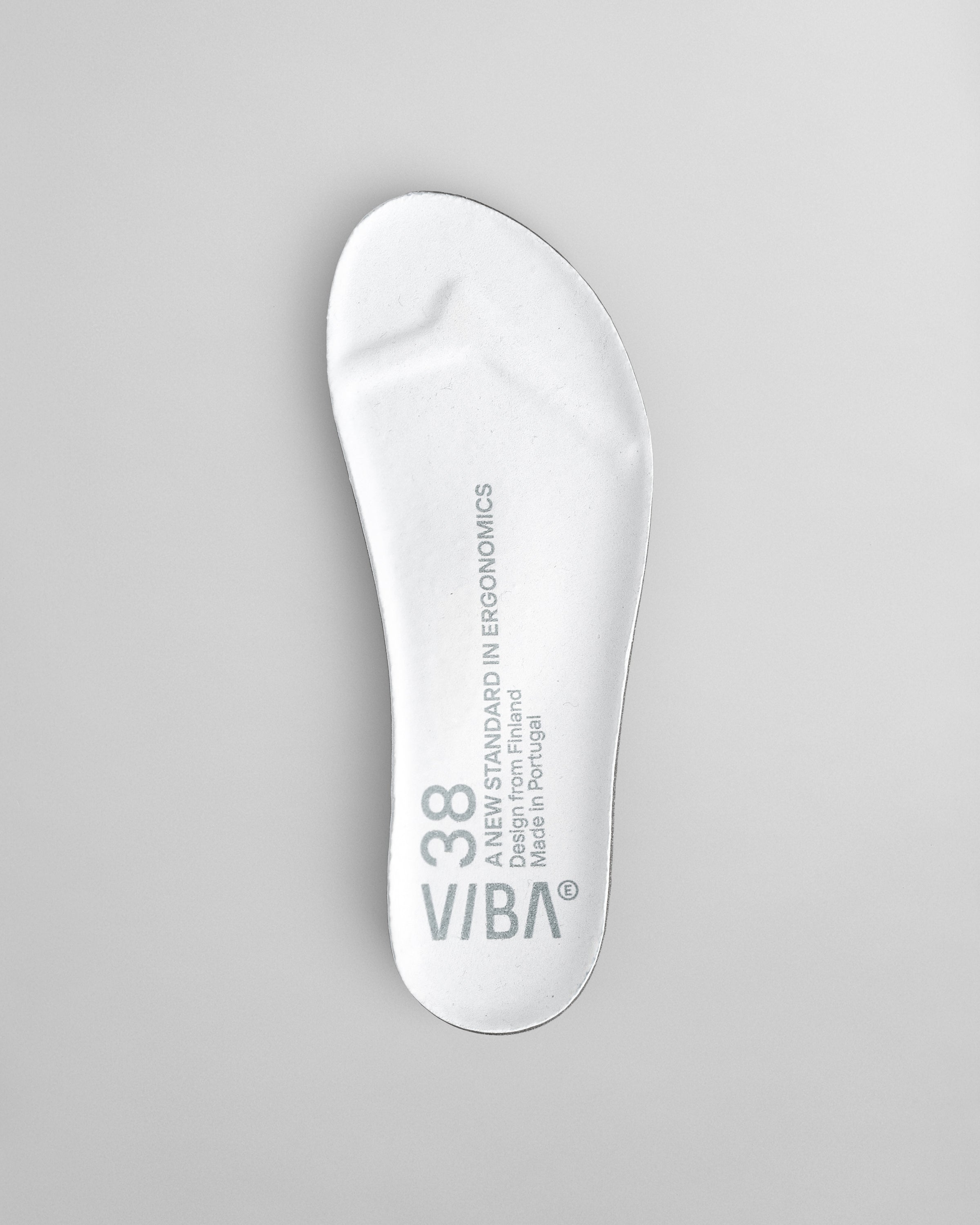
Low-drop does not have to mean bare. Every VIBAe pair carries the Carbon Step™ footbed, built on the 11/14/7 Formula: 11 mm of cushioning at the heel, 14 mm of support at the arch, 7 mm at the front. It's shaped support under a flexible shoe, not a wedge. And it lifts out. These are removable footbed trainers, so when the footbed wears before the shoe does, you replace the footbed.
| Feature | Barefoot trainer | Standard trainer |
|---|---|---|
| Weight | Light | Heavier |
| Sole flexibility | High — bends with the foot | Low to moderate — resists bending |
| Heel-to-toe drop | Low | Raised heel |
| Toe-box shape | Wide, foot-shaped | Tapered |
| Footbed replaceability | Removable and replaceable (Carbon Step™) | Often fixed or glued in |

Choosing a pair that matches your week
Pick on silhouette and colour, because the construction is the same across the two trainer models. A classic shape earns its keep twice: it goes with what's already in your wardrobe, and it still looks right in three years. That's the slow-fashion maths, and it's why we don't chase a seasonal shape. Colours, specifications and prices can change, so check the store for current details before you order.
Work-to-weekend versatility
LONDON Bio Leather White/Chalk reads cleaner and slightly dressier: smooth leather, quiet lines, fine with tailoring and fine with jeans. LONDON Bio Leather Black/Black does the same job in a lower key for anyone who'd rather not think about scuffs. On the softer side, the SYDNEY Bio Suede trainers in Black/Gum bring a gum sole and a relaxed nap, with SYDNEY Bio Suede Forest/Gum for a bit more colour. If you want leather barefoot trainers that pass in a meeting, start with LONDON; if your week is mostly casual, SYDNEY. For more on choosing minimalist shoes for work, see our dedicated guide.
When barefoot trainers are not the right call
If you need a stiff, heavily cushioned sole, or a health professional has advised you on specific footwear, follow that advice rather than this page. Long unbroken miles on hard ground also deserve a slower build-up than a single Saturday. Barefoot shoes for everyday wear reward gradual use; they punish a sudden 20 km debut.
Check the Size Chart — get the right fit first time, and go one size up if you're between sizes.
Getting the fit right: how to size barefoot shoes
Room for toes to spread is the point, so sizing matters more here than in a tapered trainer. VIBAe doesn't make half sizes. Go one size up if you're between sizes, if you plan on thicker socks, or if you simply prefer a looser feel. The leather will gently stretch where needed.
Measure your foot in centimetres rather than trusting the number in your last pair. Stand on a sheet of paper with your heel against a wall, mark where your longest toe lands, then measure the distance. Do it in the evening, when feet sit at their largest, and do both feet rather than assuming they match. The size chart maps EU 35–48 (22.0–30.7 cm) against centimetres plus US and UK equivalents, which is the bit that catches people out, because most barefoot trainers UK shoppers see are listed EU-first. These are unisex trainers in sizes 35–48, one run for everyone, so skip any gendered conversion and work from your own measurement.
If your feet differ in length, size for the longer one. And if you're ordering your second pair, your first VIBAe size is your best guide.
Breaking them in without punishing your feet
Transitioning to barefoot shoes works the same way as any new load: short wears, then longer ones. Your ankles may feel less steady on the first long walk, as the small muscles that stabilise your foot and ankle take on load a raised heel used to manage.
- Wear them for an hour or two indoors and around the neighbourhood for the first few days. Notice how your foot sits and where the shoe touches.
- Build up to half-days, a commute and a few errands, keeping an older pair on hand for the rest.
- Add longer walks and standing days gradually over the following weeks, then let them become your default.
Mild fatigue in the arches and calves in the first weeks is ordinary, much like the ache after starting a new exercise. It should ease between wears. Sharp pain, or aching that doesn't settle, is a signal to slow right down and speak to a health professional. There's no prize for rushing. Our journal post Viva la wiggling toes takes a lighter look at letting toes breathe.
Materials, care and what happens when they wear out
The reason a pair like this can last years comes down to what's in it and whether you can fix it: vegetable-tanned leather from LWG-audited tanneries and natural rubber outsoles, handmade in a family-run factory outside Porto.
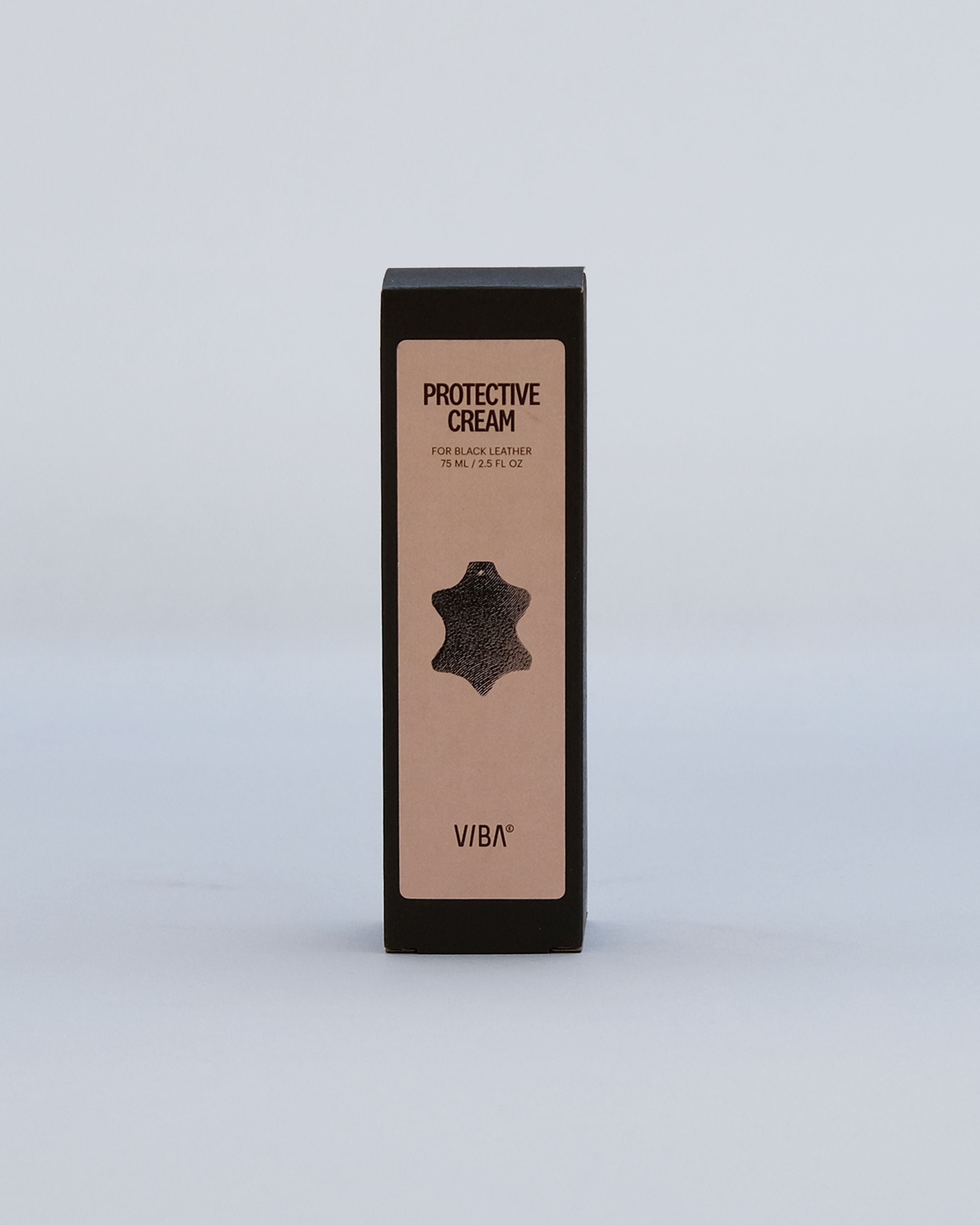
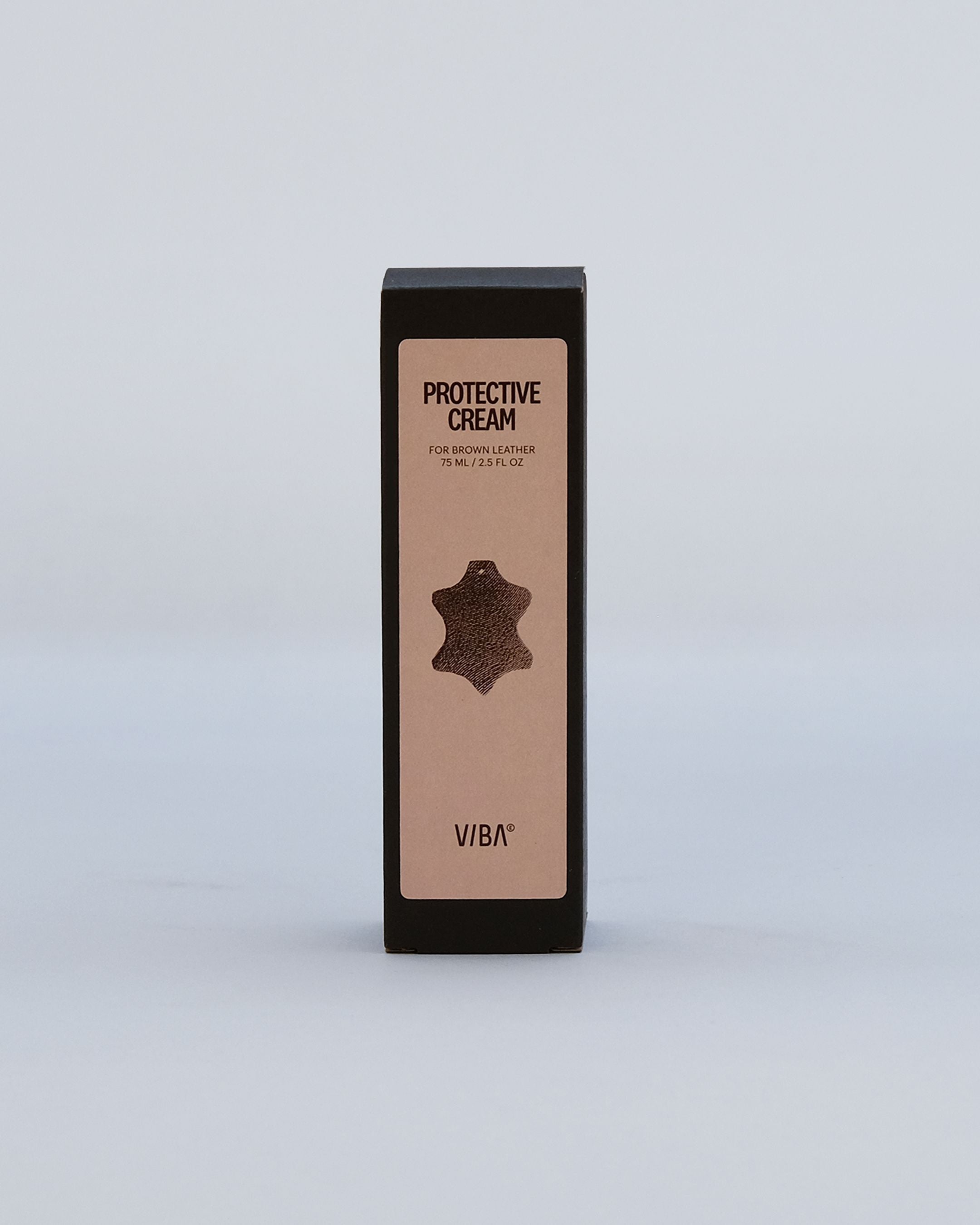
Leather asks for care, and it's a small ask. Clean the uppers regularly and use a protective cream; a vegetable-tanned leather shoe that gets ten minutes of attention a month ages well instead of just ageing. Suede wants a brush rather than cream.
When something wears, replace the part rather than the pair. A tired Carbon Step™ footbed swaps out for a fresh one. When you've finished with a pair, Pre-Loved, our resale and recycling programme with partner Ninyes, keeps them in circulation. We're not perfect on any of this, and we're honest about where we are.
Explore Our Materials — vegetable-tanned leather, no nasty shortcuts. See what goes into every pair.
Frequently asked questions
Are barefoot trainers comfortable enough for standing all day?
Many people wear them as trainers for standing all day once their feet have adapted. The room across the forefoot and the Carbon Step™ footbed (11 mm at the heel, 14 mm at the arch, 7 mm at the front) do a lot of that work. Build up to full days rather than starting with one.
What size should I order if I'm between sizes?
Go one size up. VIBAe doesn't make half sizes, and the same advice applies if you prefer thicker socks or a looser feel. The leather will gently stretch where needed.
Can I replace the footbed when it wears out?
Yes. The Carbon Step™ footbed lifts out and a replacement drops in, so a worn footbed doesn't mean a worn-out shoe.
Can barefoot trainers be worn with thicker socks?
Yes, and it's one of the reasons to size up. If thick socks are your winter default, order one size larger than your measured size.
Ready to choose? Browse the lightweight everyday trainers in the sneakers collection: flexible sole shoes in EU 35–48, whether you call them barefoot sneakers or barefoot trainers.